

Introduction: New Industry Challenges Under Market Volatility
1. Current State of Price Fluctuations in the Memory/DDR Market
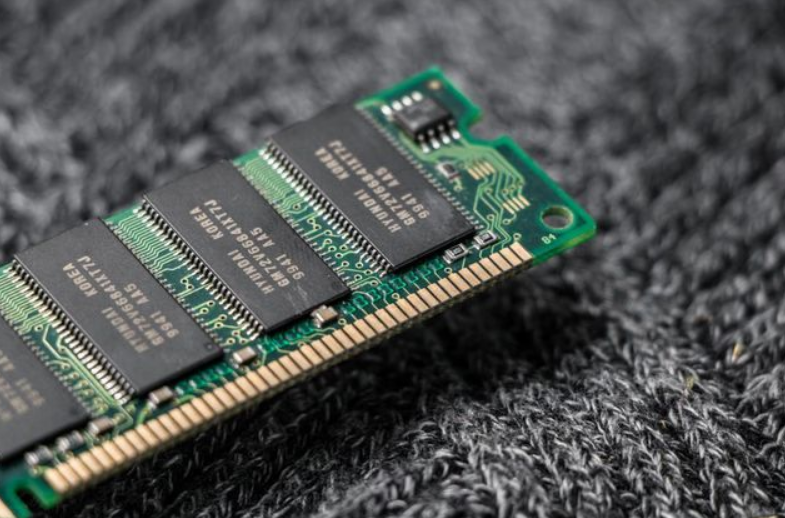
The global memory/DDR market is currently experiencing a significant price surge cycle, driven primarily by a profound supply-demand imbalance, explosive growth in AI server demand, and strategic adjustments by upstream manufacturers. Market data shows substantial increases in memory spot prices; for instance, the price of 16GB DDR4 modules surged over 90% month-on-month, while the more advanced 16GB DDR5 memory saw an even steeper increase of 102%, outpacing the price rise of gold during the same period (Chen, 2025). For end products, the price of a 32GB DDR4 memory stick skyrocketed from 350 yuan to 850 yuan in a short period, while the same capacity DDR5 product jumped from 550 yuan to 1600 yuan (Chen, 2025). This sharp volatility has led to chaotic spot market quotations, with some distributors suspending clear pricing and adopting an “inquiry-based model,” where prices can change within a single day, or even half a day (Chen, 2025).
2.The Commercial Display Industry’s Reliance on Memory Supply
The high dependency of the commercial display industry on memory supply is the core reason it faces severe challenges from these price fluctuations. This reliance extends beyond hardware costs to the core functionality, operational stability, and long-term reliability of the equipment.
(1) Memory: A “Vital Organ” for Commercial Display Devices
Commercial display devices, such as commercial large screens, digital signage, and interactive panels, are not simple display terminals. They are essentially specialized computer systems requiring continuous, stable data processing and caching.
- System Operation and Multitasking: The device’s own intelligent operating system (e.g., Android, Linux, Windows IoT) and applications like information publishing and human-computer interaction need to be loaded into memory. Memory capacity and speed directly determine system responsiveness and the ability to handle multiple tasks simultaneously, such as playing video, receiving touch commands, and updating network content.
- Rapid Scheduling of Massive Media Assets: Commercial display venues (e.g., shopping malls, exhibition halls, meeting rooms) often require playback of high-resolution images and 4K or even 8K video. These large files must be read into memory for fast access and decoding to ensure smooth, stutter-free screen transitions. For devices like outdoor advertising players, the local storage might need to hold terabytes of advertising material, placing extremely high demands on memory and data throughput.
- Stability Requirements for 24/7 Operation: Unlike consumer electronics, most commercial display devices need to operate year-round without interruption. This imposes stringent industrial-grade standards for memory reliability, durability, and adaptability to wide temperature ranges (Chuwo Industrial All-in-One PC, 2025). Standard consumer-grade memory modules struggle to maintain long-term stability under such demanding conditions.
(2) Industry Pressure from Supply-Demand Contradictions
The proportion of memory modules in the total Bill of Materials (BOM) cost of commercial display devices has significantly increased. Industry data indicates its share has risen from single-digit percentages to double digits, directly squeezing the profit margins of whole-machine manufacturers. Concurrently, supply-side tensions are a major concern. Several motherboard manufacturers have issued supply warnings, with lead times for some models extending to several weeks or even months, directly impacting the production and delivery capabilities of commercial display products (Chuwo Industrial All-in-One PC, 2025).Furthermore, the price increase for industrial-grade memory chips is particularly pronounced. Because commercial display products demand higher reliability and longevity, their cost is inherently higher than consumer-grade products. This price gap has widened further during the current price surge, intensifying cost pressures (Chuwo Industrial All-in-One PC, 2025).
Analysis of Core Drivers Behind Memory Price Fluctuations
The memory market is experiencing a perfect storm, where AI’s insatiable demand, strategic shifts in the supply chain, and speculative market behavior are collectively driving prices upward. The underlying causes are more complex than traditional cycles.
1. Structural Shifts in Global Supply and Wafer Capacity
The supply of memory chips is rooted in a highly concentrated and capital-intensive global semiconductor supply chain. A fundamental change has occurred in the capacity decisions of upstream manufacturers. Major memory chip producers like Samsung, SK Hynix, and Micron are strategically reallocating wafer capacity. Pursuing higher profits, they are shifting significant capacity away from producing traditional DDR4 standard memory towards more lucrative HBM and server-specific DDR5 memory (Gu and Li, 2025). This “peak-shaving and valley-filling” of capacity directly leads to a sharp reduction in the supply of legacy memory like DDR4. According to TrendForce analysis, global DDR4 memory module capacity is expected to decrease by 25% in 2025 (Huang, 2025). A more critical structural change is the irreversibility of capacity due to technological iteration. Once international majors advance their processes to DDR5, it becomes difficult to revert to producing older-standard DDR4 products (Gu and Li, 2025). This lends a long-term character to the DDR4 supply gap, leading the CEO of Winbond, a veteran memory maker, to judge that “the shortage of DDR5 and DDR4 is unlikely to change before 2027 ” (Gu and Li, 2025).
2.Structural Explosion in Downstream Demand
While supply is constrained, demand is showing robust strength characterized by an “AI explosion” coexisting with “traditional recovery.” AI server demand constitutes a disruptive new demand pole.
- AI’s Disruptive Appetite: The memory consumption of AI servers is revolutionary. Compared to ordinary servers, a single AI server’s DRAM demand is 8 times greater, and its NAND demand is 3 times greater (Wang, 2025). This demand is not just quantitative growth but a structural shift. Projects like OpenAI’s “Stargate” require immense monthly consumption of DRAM wafers, equivalent to twice the current global HBM capacity, massively squeezing out capacity resources for consumer-grade memory (Gu and Li, 2025).
- Traditional Demand Recovery: Alongside the AI boom, the traditional server and PC markets are recovering. With deepening enterprise digital transformation and the start of the Windows 11 replacement cycle, traditional demand is gradually rebounding, adding further pressure.
- Market Speculation and Channel Inventory DynamicsAmid expectations of tight supply-demand fundamentals, the psychology and behavior of intermediaries in the market act as an “amplifier,” exacerbating the magnitude and speed of price fluctuations.
- Inventory Cycle Reversal: After the destocking cycle of 2022-2023, inventory days in the global memory industry plummeted from 120 days to below 60 days, reaching historically low levels (Gu and Li, 2025). TechInsights data shows the DRAM inventory cycle drastically shortened from 31 weeks at the beginning of 2023 to just 8 weeks by October 2025, a record low (Qin, 2025).
- Panic Buying and Hoarding: Low inventory combined with bullish expectations has triggered channel hoarding and panic purchasing. Some well-funded intermediaries, seeing the sustained upward price trend, engage in hoarding, aiming to sell at even higher prices later (Huang, 2025). This speculative behavior disrupts normal market circulation and intensifies supply shortages.
- Safety Stock Building: To ensure supply security, end manufacturers tend to increase purchases and build safety stock, which artificially inflates real demand in the short term (Wang, 2025).
Cost Transmission: How Cost Pressures Impact the Commercial Display Industry
The commercial display industry is facing a profound reshaping of its cost structure. Rising upstream raw material prices, rationalized downstream demand, and rapid technological iteration are collectively pushing the industry from “price competition” towards “value competition.”
1.Changes in End-Device Cost Structure
The cost composition of commercial display equipment is undergoing significant changes.
- Rising Raw Material Costs: The prices of key raw materials are rising substantially. For LED display products, precious metals like gold, silver, and copper used in packaging have seen sustained price increases. Gold, which constitutes a significant portion of packaging costs, hit a record high in 2025, with these basic materials rising 25%-35% year-to-date (China Economic Times News Service, 2025). For LCD-based commercial displays, key components like PCBs (Printed Circuit Boards) are also under cost pressure due to rising copper prices and supply tightness, with raw material costs up 40% year-on-year (Display Home, 2025).
- Cost Shifts from Technology Upgrades: The industry’s shift towards more advanced technologies like finer pixel pitches (e.g., Micro LED) and COB packaging inherently carries higher costs. Simultaneously, to enhance product differentiation, manufacturers need to increase investment in smart features (e.g., AI voice interaction, meeting solutions), further altering the cost structure from pure hardware costs to a comprehensive “hardware + software + services” model.
- Divergent Supply Chain Strategies: Facing raw material price volatility, leading companies strengthen supply chain control through vertical integration (e.g., investing in PCB suppliers, building their own driver IC production lines), potentially reducing substrate procurement costs by 8-12% (Display Home, 2025). In contrast, smaller players might adopt riskier strategies, like sourcing from up to 5 different PCB factories simultaneously, but this increases management costs by 20% (Display Home, 2025).
Table: Overview of Key Raw Material Cost Changes for Commercial Display Equipment in 2025
| Raw Material/Component | Price Increase Range | Main Impact Area |
| Precious Metals (Gold, Silver, Copper) | 25%-35% | LED Display Packaging |
| PCB (Printed Circuit Board) | Raw material cost up ~40% YoY | All circuit-driven devices (e.g., LCD advertising players, interactive flat panels) |
| High-end HDI Boards, High-Frequency/High-Speed Boards | 8%-12% | High-performance servers, AI-applicable display equipment |
| Large-size LCD Panels | Mid-to-large sizes lead increase (e.g., $3-5) | Large-size commercial displays, interactive flat panels |
2.Narrowing Project Margins and Budgetary Pressures
Rising costs are directly impacting corporate profitability and the competitive landscape.
- Declining Industry Profitability: Fierce market competition makes it difficult for end-product prices to rise in sync with costs, leading to a decline in the industry’s average gross margin (reportedly down nearly 50% compared to previous years) (China Economic Times News Service, 2025). Some companies even face the operational dilemma of “cost-price inversion” (Display Home, 2025).
- Increased Price Sensitivity: Buyers (e.g., enterprises, educational institutions) are becoming more budget-conscious and rational in their demand due to macroeconomic influences, tending to opt for cost-effective or entry-level products. In the meeting market, some SMEs might prefer non-interactive large-screen displays over more expensive interactive panels, with this price difference potentially reaching 20-40%.
- Financial Pressure and Supply Chain Relations: To maintain cash flow, some companies might be forced to reduce inventory reserves, but this lowers their flexibility to cope with supply chain fluctuations. Industry consolidation is likely, where leading firms with stronger supply chain bargaining power and financial strength gain further market share, while some smaller players face greater survival pressure. The LED display sector saw a 15% failure rate among some agents in Q1 2025 (Display Home, 2025).
3.Potential Adjustments in Product Iteration and Launch Strategies
To cope with cost pressures and find new avenues, commercial display companies are actively adjusting their product strategies.
- Product Line Reorganization and Value Repositioning: Companies may streamline entry-level models with low profit margins, focusing resources on high-end, high-value-added products like fine-pitch LED and fully integrated meeting all-in-ones. Simultaneously, they might launch simplified or standard versions to meet the needs of price-sensitive markets while controlling costs.
- Shift in Technological Focus and Innovation: The industry is accelerating R&D and application of new technologies to counter specific raw material price hikes. For instance, BOE’s glass-based direct-display technology could reduce PCB usage by 70% (Display Home, 2025). The innovation focus is also shifting from purely pursuing hardware specs towards enhancing user experience and providing holistic solutions, such as integrating AI large language models for smarter meeting solutions.
- Adjustments in Launch Rhythm and Lifecycle Management: Companies may slow down the launch pace of entirely new hardware platforms, instead relying on software upgrades or modular updates to extend the lifecycle of existing products and create new value. Launch strategies are also becoming more targeted, with customized development and marketing for different segments (e.g., high-end boardrooms, education recording, digital signage).
Coping Strategies Across the Industry Chain and Market Reshaping
Facing the cost and supply challenges from memory price fluctuations, participants across the commercial display industry chain—from brand manufacturers to channel integrators and end-users—are actively adjusting strategies to build resilience and maintain competitiveness in a volatile market.
1. Brand Manufacturers: Product Structure Optimization and Shift to Value Competition
To counter soaring core component costs, brand manufacturers’ strategies are shifting comprehensively from “price competition” to “value competition.”
- Product Structure Optimization: Some manufacturers have begun reassessing memory configuration schemes, balancing cost and performance by optimizing memory architecture while ensuring system performance. For example, they are launching differentiated products for various segments: “economical” products with LPDDR3 or optimized DDR4 configurations for price-sensitive education and government markets; and high-value-added solutions with DDR5 or even HBM for high-performance meeting rooms and control rooms, transforming cost pressure into an opportunity to move up the value chain.
- Supply Chain Diversification: Seeking domestic memory solutions and strengthening strategic partnerships with supply chain partners through long-term agreements (LTAs) to stabilize supply relations is becoming a key strategy. The growing capacity and market share of local memory chip manufacturers like CXMT and YMTC provide crucial alternative supply sources, helping reduce procurement costs and dependence on single suppliers (AVC Revo, 2025).
2.Channels and Integrators: Risk Management and Customer Communication Strategies
Channel integrators, positioned between brands and end-users, focus on risk management.
- Supply Chain Assurance and Inventory Management: With lead times for core components like motherboards extending to weeks or months, establishing safety stock and enhancing supply chain early warning systems is crucial. Some integrators with sufficient capital engage in strategic stockpiling to hedge against future supply uncertainty, though this increases capital occupancy and inventory risk. Accurate demand forecasting and optimized inventory levels are key.
- Transparent Customer Communication: Transparent communication is essential for maintaining trust. Facing pressure on project margins, integrators need to proactively communicate market conditions to clients, discussing alternatives or adjusting project budgets and timelines. More integrators are focusing on providing Total Cost of Ownership (TCO) analysis, helping clients understand the relationship between short-term investment and long-term value, making price adjustments easier to accept.
3.End-Users: Procurement Plan Adjustments and TCO Considerations
The procurement behavior of end-users (e.g., enterprises, schools, government departments) is becoming more rational and strategic.
- Procurement Plan Adjustments: Many users are opting to extend the lifecycle of existing equipment or downgrade to lower-spec configurations to control upfront costs (AVC Revo, 2025). Some procurements may be postponed or implemented in phases due to budget constraints.
- Shift to TCO (Total Cost of Ownership): The decision-making basis is shifting from initial “purchase cost” to a comprehensive consideration of TCO. Users increasingly focus on product reliability, energy consumption, maintainability, and long-term value. For instance, low-power E-paper displays, while potentially having a higher upfront cost, demonstrate significant advantages in TCO models due to their ultra-low energy consumption (reportedly just 0.8% of LCD screens in sunlight) and long lifespan. This makes users more willing to pay for long-term stability and lower operating costs, fostering a value-based competition model.
Future Outlook: Opportunities and Industry Trends Within the Crisis
The current memory crisis presents not only challenges but also opportunities driving the industry towards a higher-quality development stage. In the coming years, the commercial display industry will undergo a new round of evolution and reshaping amidst volatility.
1.Short-Term Market Trend Predictions and Stocking Advice
Consensus analysis suggests the tight supply of memory chips may persist for a considerable time. Industry reports indicate that adjusting memory chip capacity requires a certain cycle, while AI-related demand remains strong. Counterpoint Research predicts that after a 50% cumulative increase in 2025, prices are expected to rise another 30% in Q4 2025 and potentially a further 20% in early 2026 (Chen, 2025). Thus, upward price pressure will likely remain in the short term.For industry players, stocking strategies need refinement. Evaluating the establishment of a 3-6 month safety stock for critical components is advised, but this must be balanced against the risk of inventory costs. Building closer strategic partnerships with core suppliers, including considering LTAs, is an effective way to ensure stable supply of key components.
2.Long-Term Mitigation Through Technological Innovation
Technological innovation is the long-term solution to break the current impasse and reduce dependence on single technology paths. Two directions are noteworthy:
- Adoption of Advanced Memory Technologies: The scaled application of new technologies like LPDDR5 and HBM will gradually improve efficiency and performance, alleviating supply pressure on mainstream DDR products. For example, LPDDR5, with its high bandwidth and low power consumption, is rapidly penetrating from mobile devices into high-end commercial display equipment (Chen, 2025).
- Diversification of Display Technology Routes: The industry is exploring beyond memory breakthroughs. New display technologies like E-paper (aligned with “low power and low carbon” trends), laser display, and Micro LED, with their unique advantages in specific scenarios (e.g., ultra-low power for digital signage, high brightness/contrast), are opening new avenues. This reduces the entire industry’s path dependence on traditional LCD technology and its associated memory configurations, enhancing overall supply chain resilience.
3.Potential Directions for Industry Reshuffle and Value Chain Restructuring
This wave of volatility will accelerate industry consolidation. Small companies lacking supply chain management capabilities and technical strength may be forced out, while firms with strong R&D, supply chain resources, and brand advantages are likely to gain greater market share. Market concentration is expected to increase.More profoundly, the value chain is being restructured. The commercial display industry’s value chain is shifting from pure “hardware sales” to a deeply integrated model of “hardware + software + content + services.” Future winners will be those capable of providing holistic solutions and creating sustained value. For instance, display companies collaborating with art and cultural institutions to create immersive experience scenarios blending technology and art can open up high-end customized markets. Simultaneously, the rise of the local supply chain (e.g., CXMT’s DDR5 products) will gradually enhance the domestic industry’s self-sufficiency, injecting new variables into the value chain (AVC Revo, 2025). Ultimately, a more resilient, innovation-driven, value-oriented new industry ecosystem is expected to mature from these challenges.
Conclusion: Building Resilience Amid Uncertainty
The severe fluctuations in memory and DDR prices represent far more than a simple cyclical cost test for the commercial display industry. It acts as a prism, refracting the fragility of global supply chains, long-accumulated structural contradictions within the industry, and the opportunities and challenges posed by paradigm shifts in the AI era.As detailed, this storm, fueled by multiple factors including AI demand explosion, strategic upstream capacity shifts, and market speculation, has deeply permeated the industry’s cost structure, profit models, product strategies, and competitive landscape. However, crisis also harbors turning points. The commercial display industry is being compelled to move from a relatively extensive growth model towards a profound transformation centered on supply chain resilience, technological innovation, and value re-creation.
First, this price crisis highlights the critical importance of building an elastic and diversified supply chain. The previous model, highly reliant on single technology paths (like DDR4) and a few international suppliers, appears particularly vulnerable amid heightened global uncertainty. This experience warns companies to elevate supply chain security to a strategic level. In the short term, establishing long-term strategic partnerships with core suppliers and precise inventory management are foundational responses. Medium to long term, actively qualifying and adopting domestic memory chips and promoting supply chain “localization” and “diversification” have become necessary choices to enhance risk resistance. Furthermore, modular product architecture design, improving compatibility with universal components, can provide greater buffer space during shortages of specific parts. Supply chain competition is evolving from pure “cost control” to a contest of “resilience” and “agility.”
Second, the core logic of industry competition is fundamentally shifting from “price war” to “value war.” When the cost of core components like memory becomes a hard constraint, strategies relying solely on low prices to capture market share are becoming unsustainable. This forces companies to escape the “red ocean” of homogeneous competition and instead create differentiated value through technological innovation and solution upgrades. On one hand, optimizing memory configuration architecture, developing low-power technologies, and enhancing product reliability to reduce the customer’s Total Cost of Ownership (TCO) are becoming new sources of competitiveness. On the other hand, deeply integrating hardware with software, content, and services to provide customers with one-stop solutions—from display devices to smart scenario applications (e.g., smart meetings, digital marketing)—is key to enhancing product added value and customer stickiness. This volatility accelerates industry shake-out. SMEs lacking core technology, supply chain management, and brand premium face greater pressure, while leading enterprises focusing on R&D investment, quality control, and ecosystem building are poised to expand their market share further, promoting higher market concentration and a healthier, more sustainable development track.Finally, looking ahead, the key to building resilience amid uncertainty lies in “proactive innovation” and “ecological collaboration.” Commercial display companies should not merely react passively to price swings but actively embrace technological trends to open new growth paths. Examples include developing intelligent display terminals integrated with edge computing capabilities for efficient local AI model processing targeting AI compute demands, and vigorously promoting commercial display applications based on ultra-low-power technologies like E-paper in line with low-carbon trends. Additionally, companies need to strengthen collaborative innovation with upstream and downstream partners, even across industries, to jointly build a more resilient and responsive industrial ecosystem.
In summary, the challenges posed by memory price fluctuations are severe. Yet, they also serve as a powerful catalyst, driving the commercial display industry through a deep self-renewal. The enterprises that ultimately emerge stronger will be the pioneers who embed supply chain resilience into their DNA, drive value creation through technological innovation, and build industrial ecosystems through open collaboration. The ultimate outcome of this test may well guide the commercial display industry away from internal involution and towards a new phase of high-quality development that emphasizes long-term value and innovation vitality. In an era where uncertainty is the new normal, building intrinsic resilience is no longer optional but a mandatory lesson for the survival and development of the commercial display industry.
References
Chen, Haoxing. 2025. “Necuntiao Jiage Biao de Bi Huangjin Meng, Richang Shenghuo Yao Shou Yingxiang Le?” [Memory Module Prices Surge Faster Than Gold, How Will Daily Life Be Affected?]. Guoshi Zhitongche[National Business Daily]. November 25, 2025. https://www.chinanews.com.cn/gsztc/2025/11-25/10521269.shtml.
Chuwo Industrial All-in-One PC, Memory Price Surge Sweeps Across the Market, Touch All-in-One PC Industry Faces Severe Challenges, NetEase Subscription, November 26, 2025, https://www.163.com/dy/article/KFA97MLU0556GSM1.html
Gu, Mengxuan, and Li Zhenghao. 2025. “Cunchu Xinpin Jiage Biaozhang Guonei Qiye Kuochan Tisu” [Storage Chip Prices Soar as Domestic Companies Accelerate Expansion]. Zhongguo Jingying Bao (China Business Journal). November 27, 2025. https://news.qq.com/rain/a/20251122A017E800
Huang, Lingyi. 2025. “‘Wait-and-See’ Gamers Hit Hard! Soaring Prices of Memory Modules and SSDs, What’s Happening? .” Financial Investment News. November 27, 2025. https://news.qq.com/rain/a/20251105A05Z9C00
Wang, Jing. 2025. “Storage Chips See ‘A New Price Every Day’: What Is Driving This Round of Price Hikes? .” National Business Daily (Mei Ri Jing Ji Xin Wen). November 27, 2025. https://news.qq.com/rain/a/20251106A06A9A00
Qin, Xiao. 2025. “International Storage Manufacturers Continue to Raise Prices, Affecting Downstream Players.” China Business Journal, October 24, 2025. Edited by Zhang Jingchao. Reviewed by Li Zhenghao. Proofread by Yan Jingning. https://news.qq.com/rain/a/20251024A06IQL00
China Economic Times News Service. 2025. “Cong ‘Tongzhi Hua’ Dao ‘Jiazhi Chuangzao,’ LED Hangye Yinglai Zhuanxing Guanjian Dian” [From ‘Homogenization’ to ‘Value Creation,’ the LED Industry Reaches a Key Turning Point]. Zhongguo Jingji Xinwen Wang[China Economic Times News], August 21, 2025. https://www.cet.com.cn/wzsy/kjzx/10244633.shtml
Display Home. 2025. “Chengben Kuangbiao Xia de Zhiliang Shishou: LED Hangye de Zhangjia Kunju yu Shengcun Fansi” [The Surge in Costs and the Loss of Quality: The LED Industry’s Price Hike Dilemma and Survival Reflection]. Xianshi Zhijia[Display Home], July 11, 2025. https://www.3qled.com/zixun/2243.html
AVC Revo. 2025. “DRAM Chixu Jinque, Pinpai Changshang Dui 2026 Nian de Chuhuo Jihua Jinshen” [DRAM Supply Remains Tight, Brand Manufacturers Cautious About 2026 Shipment Plans]. AVC Revo(blog). 2025. https://news.qq.com/rain/a/20251113A05HJJ00
Chen, Kai. 2025. Dianzi Hangye Zhoubao: DRAM Jinque Jiasu Manyan 2025Q3 Quanqiu OLED Xianshiqi Chuhuoliang Jizeng 12%[Electronics Industry Weekly: DRAM Shortage Accelerates and Spreads, Q3 2025 Global OLED Monitor Shipments Increase 12% QoQ]. Research report. Shanghai: Shanghai Securities Company Limited. November 26, 2025. https://stock.finance.sina.com.cn/stock/go.php/vReport_Show/kind/lastest/rptid/817485656768/index.phtml



Leave a Reply
You must be logged in to post a comment.