

What are the differences in reliability between PoE-powered and battery-powered wall mount tablets?
PoE-powered wall mount tablets and battery-powered wall mount tablets are two mainstream device types in commercial and industrial application scenarios. Reliability, as a core indicator of device performance, directly affects the smoothness of business operations and the cost of later maintenance. This article focuses on exploring the differences in reliability between the two types of tablets, analyzing the underlying causes of such differences from technical principles and application practices, and providing reference for enterprises to select suitable wall mount tablet types according to their actual needs.
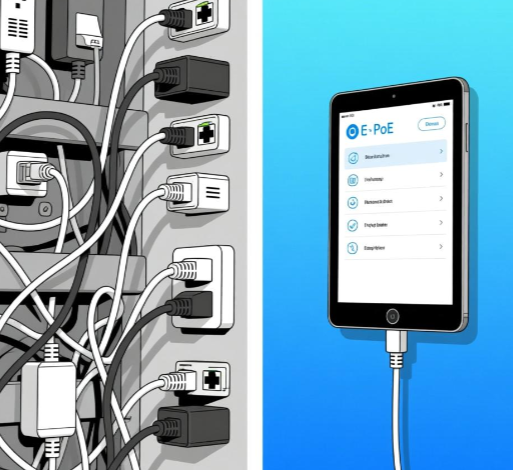
battery-powered wall mount tablet and poe tablet
- Introduction
With the deepening of digital transformation in various industries, wall mount tablets have been widely applied in retail, hospitality, industrial control, office and other fields. These devices undertake important tasks such as data collection, information display, and business interaction, and their continuous and stable operation is the basic guarantee for normal business development.
PoE-powered and battery-powered wall mount tablets differ significantly in power supply mode, which further leads to differences in reliability. PoE-powered wall mount tablets obtain stable power through Ethernet cables, while battery-powered wall mount tablets rely on built-in batteries for power supply. The differences in power supply stability, energy supplement mode, and environmental adaptability brought by these two power supply modes directly affect the reliability of the tablets in long-term operation.
In practical applications, enterprises often face the problem of selecting between the two types of tablets. For example, in 24-hour continuous operation scenarios such as smart factories and 24-hour convenience stores, which type of tablet can better ensure reliability? In mobile application scenarios such as temporary exhibition halls and outdoor activities, which type of power supply mode is more reliable? An in-depth understanding of the reliability differences between the two is crucial for enterprises to make scientific selection decisions.
This article will follow the logical framework of “technical principle analysis – reliability difference exploration – commercial impact discussion – typical case verification – conclusion summary”. Starting from the power supply characteristics of the two types of tablets, it will comprehensively analyze the differences in their reliability in terms of power supply stability, service life, environmental adaptability and maintenance convenience. Combined with typical application cases in various industries, it will verify the practical performance of the two types of tablets, providing a comprehensive and in-depth technical reference for relevant industry practitioners and enterprise decision-makers.
- Technical Explanation of Power Supply Modes and Reliability Influencing Factors
2.1 Power Supply Principles of PoE-powered and Battery-powered Wall Mount Tablets
PoE-powered wall mount tablets adopt the PoE power supply technology, which transmits power and data simultaneously through a single Ethernet cable. The power is injected into the Ethernet cable by a PoE switch or injector, and the tablet extracts and converts the power through the built-in PoE receiving module to meet its operating needs. This power supply mode relies on the existing Ethernet infrastructure, realizing the integration of power supply and data transmission.
Battery-powered wall mount tablets rely on built-in rechargeable batteries (such as lithium-ion batteries) for power supply. The battery stores electrical energy when charged, and releases electrical energy to supply power to the tablet during operation. The power supply process requires the coordination of a battery management system to monitor the battery’s charge and discharge status, voltage and current, so as to ensure the stability of power supply and the safety of the battery.
2.2 Core Factors Affecting the Reliability of Wall Mount Tablets
The reliability of wall mount tablets is affected by multiple factors, among which power supply stability is the most critical one. Stable power supply can ensure that the internal electronic components of the tablet work in a normal voltage and current range, avoiding performance degradation or damage caused by voltage fluctuations or power interruptions.
Another important factor is the durability of the power supply component. For PoE-powered wall mount tablets, the reliability of the PoE receiving module and the connection part of the Ethernet cable directly affects the overall reliability of the device. For battery-powered wall mount tablets, the service life and charge-discharge cycle performance of the battery are the core factors determining the long-term reliability of the device.
Environmental adaptability also has a significant impact on reliability. In harsh environments such as high temperature, high humidity, and strong electromagnetic interference, the power supply system and internal components of the tablet are easily affected, leading to a decline in reliability. Different power supply modes have different adaptability to the environment, which further amplifies the reliability differences between the two types of tablets.
In addition, maintenance convenience is also an indirect factor affecting reliability. Devices that are easy to maintain can quickly solve potential faults, reducing the duration of reliability problems. The maintenance methods and difficulty of the two types of tablets based on different power supply modes are quite different.
2.3 Technical Differences Leading to Reliability Gaps
The power supply stability of PoE-powered wall mount tablets is significantly higher than that of battery-powered ones. The PoE power supply system provides continuous and stable power, and the voltage and current fluctuations are small, which can meet the strict requirements of the tablet’s internal components for power supply quality. In contrast, the battery voltage of battery-powered wall mount tablets will gradually decrease with the consumption of electrical energy during discharge. Although the battery management system can perform voltage regulation, it is difficult to completely avoid voltage fluctuations, which may affect the stability of the tablet’s operation.
In terms of power supply durability, the PoE receiving module has a long service life and stable performance. Under normal use conditions, it can maintain reliable operation for a long time. The battery of battery-powered wall mount tablets has a limited charge-discharge cycle. With the increase of use time, the battery capacity will gradually decay, and the charge-discharge performance will decrease, which will lead to a significant decline in the reliability of the tablet. Eventually, the battery needs to be replaced to restore the device’s reliability.
In terms of environmental adaptability, PoE-powered wall mount tablets have obvious advantages in harsh environments. The PoE power supply system uses low-voltage power transmission, which is less affected by electromagnetic interference. Battery-powered wall mount tablets are greatly affected by the environment. High temperature will accelerate battery aging and even cause safety hazards such as battery swelling and leakage. High humidity will also affect the battery’s performance and the normal operation of the battery management system.
- Commercial Impact of Reliability Differences
3.1 Impact on Operational Continuity and Business Losses
The reliability difference between PoE-powered and battery-powered wall mount tablets directly affects the continuity of business operations. In scenarios requiring 24/7 continuous operation, such as smart factory production line monitoring and 24-hour retail self-checkout, PoE-powered wall mount tablets can provide stable power supply for a long time, ensuring uninterrupted operation of the device. This avoids business interruptions caused by sudden power failures of the device, such as production line shutdowns and customer checkout delays, and reduces direct economic losses.
Battery-powered wall mount tablets are prone to power exhaustion in continuous operation scenarios. Even if there is a backup battery, the process of replacing the battery will cause device downtime. For example, in a 24-hour convenience store, if the battery-powered self-checkout tablet runs out of power, it will lead to long queues of customers, and some customers may even give up shopping, resulting in sales losses. In addition, the sudden power failure of the tablet may also cause the loss of unsaved data, bringing additional business risks.
3.2 Impact on Maintenance Costs and Total Ownership Costs
The reliability difference between the two types of tablets also leads to significant differences in maintenance costs. The maintenance of PoE-powered wall mount tablets mainly focuses on the PoE receiving module and Ethernet cable connection. Due to the high stability of these components, the frequency of faults is low, and the maintenance work is relatively simple. Usually, only regular inspection of the connection status is needed, and the maintenance cost is low.
Battery-powered wall mount tablets require frequent battery maintenance and replacement. The battery has a limited service life. Generally, it needs to be replaced every 2-3 years. The cost of battery replacement is relatively high, and the replacement process also requires professional personnel to operate, which increases labor costs. In addition, the battery management system may also have faults, requiring professional testing and maintenance, further increasing maintenance costs. In the long run, the total ownership cost of battery-powered wall mount tablets is significantly higher than that of PoE-powered ones.
3.3 Impact on Application Scope and Business Expansion
The higher reliability of PoE-powered wall mount tablets in harsh environments expands their application scope. They can be deployed in high-temperature industrial workshops, high-humidity warehouses, outdoor open-air scenarios and other environments that are not suitable for battery-powered devices. This allows enterprises to deploy wall mount tablets according to their actual business needs, optimizing the layout of business processes and improving operational efficiency.
Battery-powered wall mount tablets are limited by their environmental adaptability and are mostly suitable for indoor environments with stable temperature and humidity, such as office buildings and shopping mall exhibition halls. This limits the application scenarios of the device and may restrict the business expansion of enterprises. For example, if an enterprise wants to carry out outdoor temporary business activities that require wall mount tablets, battery-powered devices may not be able to meet the reliability requirements, while PoE-powered devices can be used by deploying temporary Ethernet cables.
3.4 Impact on Enterprise Brand Image and Customer Satisfaction
The reliability of wall mount tablets also affects the enterprise’s brand image and customer satisfaction. In customer-facing scenarios, such as hotel check-in, retail checkout and airport information inquiry, the stable operation of the tablet can provide customers with a smooth service experience, enhancing customer satisfaction and recognition of the enterprise’s brand.
If the battery-powered wall mount tablet fails frequently or shuts down suddenly during service, it will cause customer complaints and dissatisfaction, damaging the enterprise’s brand image. For example, in a high-end hotel, if the battery-powered check-in tablet shuts down due to power failure during the peak check-in period, it will lead to long waiting times for guests and affect the hotel’s service quality evaluation. PoE-powered wall mount tablets can avoid such problems due to their high reliability, helping enterprises maintain a good brand image.
- Typical Use Cases
4.1 Smart Factory: Production Line Monitoring
A large electronic component manufacturing factory needs to deploy wall mount tablets on the production line to monitor the operating status of equipment in real time, collect production data and display process parameters. The factory workshop has high ambient temperature (up to 40℃ in summer) and strong electromagnetic interference from production equipment, which puts high requirements on the reliability of the tablets.
The factory initially tried to use battery-powered wall mount tablets, but problems such as frequent battery swelling, shortened battery life and sudden device shutdown occurred soon. The battery replacement cycle was only 1.5 years, and the maintenance cost was high. Later, the factory replaced all the tablets with PoE-powered wall mount tablets. The PoE power supply system has strong anti-electromagnetic interference ability, and the low-voltage power transmission is not affected by high temperature. The tablets have maintained stable operation for 3 years, with no power supply-related faults. The stable operation of the tablets ensures the continuity of production line monitoring, and the production efficiency has been improved by 20% compared with before. The maintenance cost has been reduced by 60%.
4.2 24-Hour Retail Store: Self-Checkout System
A chain 24-hour retail store deployed 5 self-checkout terminals in each store, initially using battery-powered wall mount tablets. During the operation process, it was found that the tablets often ran out of power during peak hours, and the battery replacement process caused the checkout terminal to be out of service for 15-20 minutes each time, leading to long customer queues and frequent complaints. In addition, the battery life in summer was significantly shortened due to high temperature, and the annual battery replacement cost for each store reached nearly 10,000 yuan.
In order to solve these problems, the retail store replaced the battery-powered tablets with PoE-powered wall mount tablets. The PoE power supply provides continuous and stable power, and the tablets have been operating 24 hours a day without power failure. The checkout process is smooth, and customer complaints have decreased by 80%. The annual maintenance cost of each store is only about 1,000 yuan, mainly used for regular inspection of Ethernet cable connections. The improvement of service quality has also led to a 10% increase in the store’s customer flow and sales.
4.3 Hotel Industry: Lobby Check-in and Guest Service
A high-end hotel deployed wall mount tablets in the lobby for guest check-in, room reservation inquiry and hotel facility introduction. Considering the aesthetic requirements of the lobby, the hotel initially chose battery-powered wall mount tablets to avoid the trouble of wiring. However, during the peak check-in period in holidays, the tablets often shut down due to power failure, causing guests to wait for a long time. The battery management system also had faults twice, leading to abnormal battery charging and potential safety hazards.
To improve service quality, the hotel reconstructed the wiring system and replaced the tablets with PoE-powered wall mount tablets. The PoE power supply ensures stable operation of the tablets, and there is no longer a problem of sudden shutdown. The tablets can also transmit check-in data and guest information through the Ethernet cable, realizing seamless connection with the hotel’s property management system. The smooth check-in experience has improved guests’ evaluation of the hotel, and the hotel’s customer satisfaction score has increased by 0.8 points (out of 10 points). The maintenance work is only regular inspection of the network cable connection, which is simple and efficient.
4.4 Outdoor Temporary Exhibition: Information Display
An exhibition company held a large outdoor temporary exhibition and needed to deploy wall mount tablets to display exhibition information and guide visitors. The outdoor environment has large temperature differences between day and night, and there is a risk of rain. The company initially considered using battery-powered wall mount tablets, but after evaluating the reliability risks, it finally chose PoE-powered wall mount tablets with temporary Ethernet cable deployment.
During the 15-day exhibition, the PoE-powered wall mount tablets maintained stable operation despite changes in outdoor temperature and occasional light rain. The information display was continuous and clear, providing effective guidance for visitors. In contrast, the battery-powered test tablets prepared by the company had obvious battery capacity decay after 3 days of use, and the power supply was unstable. The successful application of PoE-powered tablets ensured the smooth progress of the exhibition, and the exhibition company received high praise from visitors and exhibitors.
- Conclusion
There are significant differences in reliability between PoE-powered and battery-powered wall mount tablets, and these differences are essentially caused by the differences in their power supply modes. PoE-powered wall mount tablets have obvious advantages in power supply stability, environmental adaptability, durability and maintenance convenience, making them more reliable in long-term continuous operation and harsh environment scenarios.
From the technical level, the integration of power supply and data transmission of PoE-powered wall mount tablets ensures the stability of power supply. The low-voltage power transmission mode and sealed connection form enhance their adaptability to harsh environments. The long service life of PoE receiving components reduces the frequency of faults. In contrast, battery-powered wall mount tablets are limited by battery performance, and their reliability is easily affected by factors such as battery capacity decay, voltage fluctuation and environmental temperature and humidity.
From the commercial level, the high reliability of PoE-powered wall mount tablets can ensure the continuity of business operations, reduce maintenance costs and total ownership costs, expand the application scope of the device, and help enterprises maintain a good brand image and improve customer satisfaction. Battery-powered wall mount tablets have certain advantages in mobility, but their reliability defects limit their application in continuous operation and harsh environment scenarios, and the long-term use cost is higher.
With the continuous development of PoE technology, the power supply capacity and anti-interference ability of PoE-powered wall mount tablets will be further improved, and the reliability advantage will be more obvious. In the process of digital transformation, enterprises should pay more attention to the reliability of equipment, select suitable wall mount tablet types according to actual needs, and lay a solid foundation for the stable development of business.


Leave a Reply
You must be logged in to post a comment.