

What are the performance differences between quad-core and octa-core processors in PoE wall mount tablets?
Clear Quad-core vs Octa-core Processor Comparison
Quad-core vs octa-core processor is a core topic in the performance comparison of PoE wall mount tablets. As the core computing component of PoE wall mount tablets, the processor directly determines the equipment’s operating speed, response sensitivity and multi-task processing capability. With the continuous expansion of the application scenarios of PoE wall mount tablets, the performance requirements for processors are also increasing.
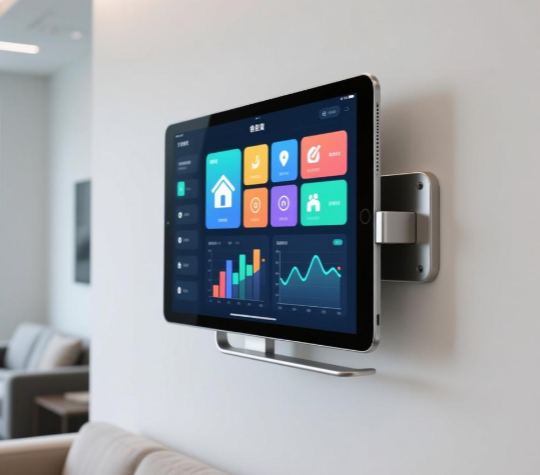
Quad-core vs octa-core processor, PoE wall tablet multitasking, Processor power efficiency
In practical applications, both quad-core and octa-core processors are widely used in PoE wall mount tablets, but there are obvious differences in their performance in different application scenarios. Understanding these differences is crucial for manufacturers to design products that meet market needs and for users to select suitable PoE wall mount tablets. This article will focus on exploring the performance differences between quad-core and octa-core processors in PoE wall mount tablets, and analyze their impact on equipment application.
This article will systematically analyze the performance differences between quad-core and octa-core processors in PoE wall mount tablets. Firstly, it will introduce the application background of PoE wall mount tablets and the role of processors in them. Then, it will technically explain the core performance differences between quad-core and octa-core processors, focusing on aspects such as PoE wall tablet multitasking and processor power efficiency.
Further, it will discuss the commercial impact of the performance differences between the two types of processors on manufacturers and users. Finally, it will verify the performance differences through typical application cases and summarize the selection suggestions of processors for PoE wall mount tablets.
- Introduction
1.1 Application Scenarios and Processor Requirements of PoE Wall Mount Tablets
PoE wall mount tablets are widely used in commercial display, industrial monitoring, smart office and other fields. Different application scenarios have different requirements for processor performance. For example, in industrial monitoring scenarios, PoE wall mount tablets need to process a large amount of real-time monitoring data, which requires the processor to have strong data processing capabilities.
In smart office scenarios, the tablets need to run multiple office applications at the same time, and the processor’s multi-task processing capability is particularly important. In commercial display scenarios, the processor mainly needs to ensure the smooth playback of multimedia content. These different application requirements make the selection of quad-core or octa-core processors become a key decision for PoE wall mount tablet manufacturers and users.
1.2 Overview of Quad-core vs Octa-core Processor
Quad-core processors are composed of four independent computing cores, which can perform four computing tasks simultaneously. Octa-core processors have eight independent computing cores, which theoretically have stronger parallel computing capabilities. However, the actual performance of the processor is not only related to the number of cores but also affected by factors such as core architecture, main frequency, and cache.
In the field of PoE wall mount tablets, due to the limitations of PoE power supply power and equipment heat dissipation space, the performance of processors cannot be infinitely improved. Therefore, how to balance the number of cores and performance under limited conditions has become a key issue for manufacturers. The performance differences between quad-core and octa-core processors in practical applications need to be analyzed in combination with specific application scenarios.
- Technical Explanation of Performance Differences Between Quad-core vs Octa-core Processor
2.1 Performance Differences in Quad-core vs Octa-core Processor Under Single-task Scenarios
Under single-task scenarios, the performance difference between quad-core and octa-core processors is not obvious. Single-task processing mainly depends on the main frequency and core architecture of the processor rather than the number of cores. If the main frequency and core architecture of a quad-core processor are relatively advanced, its single-task processing speed may not be lower than that of an octa-core processor with backward architecture and low main frequency.
In PoE wall mount tablets, many application scenarios are single-task operations, such as simple information display and single data collection. In these scenarios, quad-core processors can fully meet the application requirements. Octa-core processors cannot give full play to their multi-core advantages in single-task scenarios, and their performance is basically the same as that of quad-core processors.
2.2 Performance Differences in Quad-core vs Octa-core Processor in PoE Wall Tablet Multitasking
The most obvious performance difference between quad-core and octa-core processors lies in PoE wall tablet multitasking. When multiple applications run simultaneously, octa-core processors can allocate different tasks to different cores for parallel processing, which greatly improves the efficiency of task processing and avoids the problem of system lag caused by insufficient computing resources.
Quad-core processors, on the other hand, have fewer cores. When dealing with multiple tasks at the same time, they need to switch between different tasks frequently, which increases the system overhead and may lead to a decrease in operating speed. For example, in a PoE wall mount tablet used in a smart office, if it is necessary to run video conferencing software, document editing software and data transmission software at the same time, the octa-core processor can ensure the smooth operation of each software, while the quad-core processor may have problems such as video freezes and slow document response.
2.3 Performance Differences in Quad-core vs Octa-core Processor in Terms of Processor Power Efficiency
Processor power efficiency is another important performance indicator that distinguishes quad-core and octa-core processors. Processor power efficiency refers to the computing performance obtained per unit of power consumption. For PoE wall mount tablets, which are powered by PoE, power efficiency directly affects the operating time and stability of the equipment.
In general, quad-core processors have higher power efficiency than octa-core processors. Because octa-core processors have more cores, their power consumption is higher when running at full load. Under the limited power supply of PoE, octa-core processors may not be able to give full play to their performance due to power constraints. Quad-core processors, with lower power consumption, can maintain stable performance under PoE power supply, and have longer continuous operating time. However, with the continuous improvement of processor manufacturing technology, the power efficiency gap between octa-core and quad-core processors is gradually narrowing.
2.4 Other Performance Differences Between Quad-core vs Octa-core Processor
In addition to the above aspects, there are other performance differences between quad-core and octa-core processors. For example, in terms of graphics processing capabilities, if the integrated graphics card of the octa-core processor is more advanced, its performance in multimedia playback and graphic rendering will be better than that of the quad-core processor. This is particularly important for PoE wall mount tablets used in commercial display scenarios that require high-definition video playback and dynamic graphic display.
In terms of system response speed, octa-core processors can process user operation commands faster in multi-task scenarios, making the system more sensitive. Quad-core processors, in single-task scenarios, can also have a good response speed, but in complex multi-task scenarios, the response speed may be slightly slower. These performance differences need to be considered comprehensively when selecting processors for PoE wall mount tablets.
- Commercial Impact of Performance Differences Between Quad-core vs Octa-core Processor
3.1 Impact on Product Pricing and Cost Control of Manufacturers
The performance differences between quad-core and octa-core processors directly affect the product pricing and cost control of PoE wall mount tablet manufacturers. Octa-core processors have higher performance and higher production costs, so PoE wall mount tablets equipped with octa-core processors are usually priced higher. Quad-core processors have lower costs, and the products equipped with them have more advantages in pricing.
For manufacturers, choosing different types of processors can target different market segments. High-end market products can be equipped with octa-core processors to meet the needs of users with high performance requirements; mid-to-low-end market products can be equipped with quad-core processors to gain price advantages. Reasonable selection of processors is conducive to manufacturers’ cost control and market competitiveness improvement.
3.2 Impact on User Selection and Application Experience
The performance differences between quad-core and octa-core processors also have a significant impact on user selection and application experience. Users in application scenarios that require strong multi-task processing capabilities, such as industrial monitoring and smart office, will tend to choose PoE wall mount tablets equipped with octa-core processors to ensure smooth application operation.
Users in simple application scenarios, such as ordinary information display and single-function data collection, can meet their needs by choosing products equipped with quad-core processors, and at the same time save purchase costs. The correct selection of processors based on application needs can help users obtain a better application experience and avoid unnecessary cost waste.
3.3 Impact on Market Competition Pattern
The performance differences between quad-core and octa-core processors also affect the market competition pattern of PoE wall mount tablets. Manufacturers that can accurately grasp the performance differences between the two types of processors and launch products that meet market needs can gain an advantage in market competition. For example, launching high-performance products equipped with octa-core processors in the high-end market and cost-effective products equipped with quad-core processors in the mid-to-low-end market can cover a wider market range.
In addition, with the continuous advancement of processor technology, the performance of quad-core processors is constantly improving, and the cost of octa-core processors is gradually reducing. This will change the market competition pattern, prompting manufacturers to continuously optimize product configurations and improve product performance to meet the changing market needs.
- Typical Use Cases
4.1 Case of Quad-core vs Octa-core Processor in Smart Office Scenarios
A company deployed PoE wall mount tablets in its office area to realize smart office functions such as video conferencing, document sharing and data statistics. In the initial stage of deployment, the company purchased some tablets equipped with quad-core processors and some equipped with octa-core processors for comparison.
In the process of use, it was found that the tablets equipped with octa-core processors performed well in multi-task scenarios such as simultaneous video conferencing and document editing, with smooth video playback and fast document response. The tablets equipped with quad-core processors occasionally had problems such as video freezes and slow document loading when running multiple applications at the same time.
Therefore, the company decided to purchase more tablets equipped with octa-core processors for areas that need to run multiple applications at the same time, and use tablets equipped with quad-core processors for simple office areas that only need to display information. This configuration method not only meets the office needs but also controls the purchase cost.
4.2 Case of Quad-core vs Octa-core Processor in Commercial Display Scenarios
A shopping mall deployed a large number of PoE wall mount tablets in public areas to display promotional videos, store guides and other information. The mall initially considered using tablets equipped with octa-core processors, but after understanding the performance differences between quad-core and octa-core processors, it chose to use tablets equipped with quad-core processors.
Because the main task of the tablets in this scenario is to play promotional videos and display static information, which belongs to single-task operation. The quad-core processors can fully meet the needs of smooth video playback and information display. The use of quad-core processors also reduces the mall’s purchase cost and operation cost. In the actual use process, the tablets operate stably, and the promotional information is displayed clearly and smoothly.
4.3 Case of Quad-core vs Octa-core Processor in Industrial Monitoring Scenarios
A factory deployed PoE wall mount tablets in its production workshop to monitor the operation status of production equipment in real time and transmit monitoring data to the background management system. Due to the need to process a large amount of real-time monitoring data and run monitoring software at the same time, the factory chose tablets equipped with octa-core processors.
In the actual application process, the octa-core processors efficiently processed the real-time monitoring data, ensuring the timely transmission of data and the smooth operation of the monitoring software. The monitoring personnel could grasp the equipment operation status in real time, which was conducive to the timely discovery and solution of equipment faults. If tablets equipped with quad-core processors were used, there might be problems such as data transmission delay and software lag, which would affect the monitoring effect.
- Conclusion
The performance differences between quad-core and octa-core processors in PoE wall mount tablets are mainly reflected in PoE wall tablet multitasking, processor power efficiency and other aspects. Under single-task scenarios, the performance difference between the two is not obvious; under multi-task scenarios, octa-core processors have obvious advantages in processing efficiency; in terms of power efficiency, quad-core processors are more outstanding.
These performance differences have important commercial impacts on manufacturers’ product pricing, cost control and market competition, as well as on users’ selection and application experience. Manufacturers should select appropriate processors according to market positioning and application scenarios to launch products that meet user needs; users should choose PoE wall mount tablets equipped with corresponding processors based on their own application requirements to balance performance and cost.
The typical cases in smart office, commercial display and industrial monitoring scenarios fully verify the performance differences between quad-core and octa-core processors in different application scenarios. With the continuous development of processor technology, the performance gap between the two types of processors may change, and the application scenarios of PoE wall mount tablets will also continue to expand.
In the future, PoE wall mount tablet manufacturers should pay close attention to the development trend of processor technology, continuously optimize product design, and improve product performance and cost-effectiveness. At the same time, they should strengthen the research on the matching degree between processors and application scenarios to provide users with more suitable products. For users, they should fully understand the performance characteristics of quad-core and octa-core processors and make scientific selections based on actual needs.


Leave a Reply
You must be logged in to post a comment.