

Essential CPU and GPU Considerations for High-Efficiency Smart Home Control Panels
Smart home control panels, as the core hub of intelligent home systems, rely heavily on the performance of CPU and GPU to ensure smooth operation and excellent user experience. Understanding the key CPU and GPU considerations for smart home control panels is essential for developers and project managers to select the right hardware and optimize system performance.
This article explores the critical role of CPU and GPU in smart home control panels, delves into the technical considerations for selecting CPU and GPU, analyzes the commercial impact of these choices, showcases typical use cases, concludes with practical selection guidelines, and introduces related smart home control panel products.
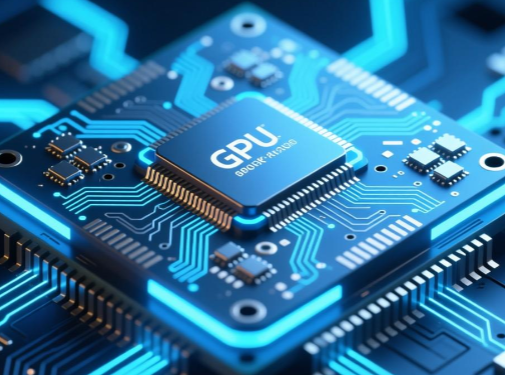
CPU and GPU
- Introduction
The rapid development of smart home technology has made smart home control panels an indispensable part of modern households. These panels serve as the interface between users and smart devices, enabling functions such as device control, scene customization, real-time monitoring, and data visualization. Behind these seamless interactions lies the support of CPU and GPU, which determine the response speed, multitasking capability, and visual performance of the control panel.
CPU, as the “brain” of the smart home control panel, is responsible for processing user commands, managing device connections, and running application logic. A well-chosen CPU ensures fast response to user operations and stable operation of multiple concurrent tasks. GPU, on the other hand, handles graphics rendering, supporting high-resolution displays, smooth animation transitions, and video playback—key factors in enhancing the user experience of smart home control panels.
However, many project teams face challenges in selecting CPU and GPU for smart home control panels. Overlooking the specific requirements of smart home scenarios may lead to over-equipped hardware that increases costs or under-equipped hardware that results in poor performance. Therefore, clarifying the CPU and GPU considerations for smart home control panels is of great practical significance for improving product quality and market competitiveness.
This article aims to systematically elaborate on the CPU and GPU considerations for smart home control panels. It starts with the technical roles of CPU and GPU, then discusses the key factors to consider when selecting them, analyzes the commercial impact of these choices, presents typical use cases, provides actionable selection advice, and introduces related products.
This article serves as a valuable reference for developers, engineers, and decision-makers involved in smart home control panel development, guiding them to make rational CPU and GPU selections based on actual application needs.
- Technical Explanation
To understand the CPU and GPU considerations for smart home control panels, it is necessary to first clarify their technical roles in the system, then analyze the key technical indicators that affect their performance in smart home scenarios, and finally explore the compatibility and optimization requirements between CPU, GPU and other hardware and software components.
2.1 Technical Roles of CPU in Smart Home Control Panels
The CPU of a smart home control panel undertakes multiple core tasks, the most important of which is processing user input commands. When a user taps the screen to turn on a light or adjust the temperature, the CPU quickly parses the command, transmits it to the corresponding smart device through communication modules (such as Wi-Fi, Bluetooth, or Zigbee), and receives feedback from the device to update the interface status.
Another key role of the CPU is managing multiple concurrent device connections. A typical smart home control panel may connect to dozens of smart devices, including lights, sockets, thermostats, security cameras, and door locks. The CPU needs to maintain stable communication with each device, process real-time data transmitted by the devices (such as temperature data from thermostats and motion detection data from security sensors), and ensure that there is no lag or disconnection during multi-device interaction.
Additionally, the CPU is responsible for running the operating system and application software of the smart home control panel. Most smart home control panels use lightweight operating systems such as Android or Linux. The CPU needs to support the smooth operation of the operating system, as well as various functional applications such as scene mode management, energy monitoring, and remote control.
2.2 Technical Roles of GPU in Smart Home Control Panels
The GPU of a smart home control panel mainly focuses on graphics rendering and visual output. With the increasing demand for high-quality user interfaces, modern smart home control panels are equipped with high-resolution touch screens (usually 1080p or higher). The GPU needs to render the interface elements (such as icons, menus, and widgets) clearly and smoothly, ensuring that the interface is responsive to user operations without blurring or stuttering.
Animation and transition effects are another key area where GPU plays a role. For example, when switching between different functional interfaces (such as from the lighting control interface to the security monitoring interface), the GPU renders smooth transition animations, enhancing the user experience. Similarly, when adjusting the brightness or temperature through a slider control, the GPU ensures that the slider moves smoothly and the interface updates in real time.
In smart home control panels with video monitoring functions, the GPU also undertakes video decoding tasks. It decodes the real-time video stream transmitted by security cameras and displays it on the screen, ensuring clear and smooth video playback. For control panels that support multi-camera simultaneous monitoring, the GPU needs to handle multi-channel video decoding simultaneously, which puts higher requirements on its performance.
2.3 Key Technical Indicators for CPU and GPU Selection
When selecting a CPU for a smart home control panel, several key technical indicators need to be considered. The first is the number of cores and core architecture. Dual-core or quad-core CPUs based on ARM Cortex-A55 or Cortex-A73 architectures are commonly used in smart home control panels. These CPUs balance performance and power consumption, which is crucial for control panels that operate 24/7 on battery or low-power power supplies.
Clock speed is another important indicator of CPU performance. A higher clock speed means faster data processing capability. For smart home control panels that need to handle complex tasks such as multi-device concurrent management and real-time data analysis, a CPU with a clock speed of 1.2GHz or higher is usually required to ensure smooth operation.
For GPU selection, the number of execution units and support for graphics APIs are key indicators. GPUs with more execution units can handle more graphics rendering tasks simultaneously, ensuring smooth interface and video playback. Support for mainstream graphics APIs such as OpenGL ES 3.2 and Vulkan 1.1 is also essential, as it ensures compatibility with modern user interface frameworks and video decoding standards.
Power consumption is another critical consideration for both CPU and GPU. Smart home control panels are often designed to be compact and energy-efficient. High-power-consuming CPU and GPU will increase the device’s power supply requirements, affect battery life (for battery-powered models), and generate more heat, which may require additional heat dissipation components and increase the overall size and cost of the device.
2.4 Compatibility and Optimization Requirements
The CPU and GPU of a smart home control panel must be compatible with the selected operating system and application software. For example, if the control panel uses the Android operating system, the CPU and GPU must support the corresponding Android version and have the necessary driver support. Incompatible hardware may lead to system crashes, application errors, or poor performance.
In addition to hardware-software compatibility, there is also a need for optimization between CPU and GPU. For example, in scenarios where the control panel needs to display real-time video while processing user commands, the CPU and GPU need to coordinate work to avoid resource conflicts. Developers can optimize the system through task scheduling algorithms, ensuring that the CPU focuses on command processing and the GPU focuses on video rendering, thereby improving overall system efficiency.
Compatibility with other hardware components, such as memory and storage, is also important. A high-performance CPU and GPU need to be matched with sufficient memory (usually 2GB or more) and fast storage (such as eMMC 5.1 or higher) to avoid bottlenecks in data transmission and storage, which may affect the overall performance of the smart home control panel.
- Commercial Impact
The selection of CPU and GPU for smart home control panels has a significant impact on the product’s cost, market positioning, user acceptance, and long-term profitability. Understanding these commercial impacts helps enterprises make rational hardware selection decisions that balance performance and cost.
3.1 Cost Impact
CPU and GPU account for a significant proportion of the hardware cost of smart home control panels. High-performance CPU and GPU (such as quad-core Cortex-A76 CPUs and Mali-G610 GPUs) are significantly more expensive than entry-level models (such as dual-core Cortex-A53 CPUs and Mali-400 GPUs). Selecting high-performance hardware will directly increase the BOM cost of the control panel, leading to higher product selling prices.
However, the cost impact is not one-sided. In high-end smart home markets, consumers are willing to pay a premium for control panels with fast response speeds, smooth interfaces, and rich functions. High-performance CPU and GPU can support these advanced features, helping products gain competitive advantages in the high-end market and offsetting the increased cost through higher profit margins.
In the mid-to-low-end market, cost sensitivity is high. Selecting entry-level CPU and GPU that meet basic functional requirements can effectively control product costs, making the product more price-competitive. Over-equipping high-performance hardware in this market will lead to overpriced products that are difficult to be accepted by consumers, affecting sales volume.
3.2 Market Positioning and Competitiveness
The selection of CPU and GPU directly determines the market positioning of smart home control panels. High-end smart home control panels targeting high-income families and luxury real estate projects usually adopt high-performance CPU and GPU to support advanced functions such as 4K video monitoring, multi-scene intelligent linkage, and AI-based user behavior analysis. These functions rely on the strong computing and rendering capabilities of CPU and GPU, enabling the product to stand out in the high-end market.
Mid-to-low-end smart home control panels, on the other hand, focus on basic control functions such as device switching and simple scene setting. They usually adopt cost-effective entry-level CPU and GPU to meet the basic needs of ordinary consumers. The competitive advantage of these products lies in their low price and reliability, and the selection of CPU and GPU should focus on stability and energy efficiency rather than high performance.
In addition, the performance of CPU and GPU also affects the user reputation and brand image of smart home control panels. Products with smooth operation and excellent visual performance are more likely to receive positive reviews from users, enhancing brand credibility and promoting long-term sales. Conversely, products with laggy interfaces and poor video playback effects due to inappropriate CPU and GPU selection may damage the brand image and affect market competitiveness.
3.3 Long-Term Investment and Maintenance Costs
Selecting CPU and GPU with good scalability and long-term technical support is crucial for reducing long-term maintenance costs. High-performance CPU and GPU usually have longer product lifecycles and better support for future software updates and function expansions. This allows smart home control panels to adapt to the continuous development of smart home technology, avoiding the need for frequent product replacements and reducing the maintenance costs for both enterprises and users.
Entry-level CPU and GPU may have shorter lifecycles and limited support for new technologies. As smart home applications become more complex, these hardware may no longer meet the functional requirements, forcing enterprises to launch new products or provide hardware upgrade services, which increases R&D and maintenance costs. Therefore, when selecting CPU and GPU, enterprises need to consider not only the current cost and performance but also the long-term technical support and scalability.
- Typical Use Cases
The CPU and GPU considerations for smart home control panels vary according to different application scenarios. The following typical use cases illustrate how to select CPU and GPU based on actual needs to ensure optimal product performance and user experience.
4.1 High-End Smart Home Control Panels with Multi-Scene Linkage
High-end smart home control panels with multi-scene linkage functions need to connect to dozens of smart devices and support complex scene modes such as “morning mode”, “night mode”, and “away mode”. When a user activates a scene mode, the control panel needs to send commands to multiple devices simultaneously, process feedback data, and update the interface status in real time.
For such control panels, a quad-core Cortex-A73 CPU with a clock speed of 1.5GHz or higher is recommended. This CPU has strong multi-tasking processing capabilities, ensuring smooth operation of multi-device concurrent management and complex scene logic. The GPU should be a Mali-G52 MP2 or equivalent, which supports 1080p high-resolution display and smooth animation transitions, providing an excellent visual experience for users when switching between different scenes.
In practical applications, such control panels often integrate AI voice assistants. The CPU needs to support real-time voice recognition and processing, while the GPU renders the voice interaction interface. The coordinated work of CPU and GPU ensures that the voice command is responded to quickly and the interface feedback is timely, enhancing the user experience of multi-scene linkage.
4.2 Smart Home Control Panels with 4K Video Monitoring
Smart home control panels with 4K video monitoring functions need to decode and display real-time 4K video streams from multiple security cameras. This puts high requirements on the GPU’s video decoding capability and the CPU’s data processing capability.
For such control panels, a CPU with strong data processing capabilities, such as a quad-core Cortex-A76 CPU, is required to manage the transmission of multi-channel 4K video data and ensure stable communication with security cameras. The GPU should support 4K video decoding at 60fps, such as the Mali-G610 MP4, which can smoothly render 4K video images and display them on the high-resolution screen of the control panel.
In addition, the CPU and GPU need to be optimized for video processing to avoid resource conflicts between video decoding and other functions (such as device control). For example, when a user views 4K video monitoring while adjusting the temperature, the CPU and GPU should allocate resources reasonably to ensure that both the video playback and the temperature adjustment command are processed smoothly.
4.3 Mid-to-Low-End Smart Home Control Panels with Basic Control Functions
Mid-to-low-end smart home control panels focus on basic control functions, such as turning on/off lights, adjusting the brightness of lights, and controlling smart sockets. These control panels usually connect to a small number of smart devices (no more than 10) and have simple user interfaces.
For such control panels, a dual-core Cortex-A53 CPU with a clock speed of 1.0GHz is sufficient. This CPU has low power consumption and stable performance, meeting the needs of basic command processing and device connection management. The GPU can be an entry-level model such as the Mali-400 MP2, which supports 720p or 1080p display and basic animation effects, ensuring clear interface display and smooth user operations.
The selection of CPU and GPU for these control panels focuses on cost-effectiveness and energy efficiency. The low-power CPU and GPU reduce the power supply requirements of the device, allowing it to use a smaller power adapter or longer-lasting battery, which is conducive to the compact design of the product and reduces the selling price.
4.4 Smart Home Control Panels with Energy Monitoring and Data Visualization
Smart home control panels with energy monitoring and data visualization functions need to collect real-time energy consumption data from smart meters, air conditioners, and other devices, process the data, and display it in the form of charts (such as line charts, bar charts) on the interface. This requires the CPU to have good data processing capabilities and the GPU to have strong chart rendering capabilities.
For such control panels, a quad-core Cortex-A55 CPU is recommended. This CPU balances performance and power consumption, capable of processing large amounts of energy data in real time. The GPU should support vector graphics rendering, such as the Mali-G31 MP2, which can smoothly render various data charts, ensuring that users can clearly view energy consumption trends and make informed decisions on energy conservation.
In addition, the CPU and GPU need to be compatible with data visualization software libraries (such as Chart.js). The optimized hardware-software collaboration ensures that the data charts are updated in real time and the interface responds quickly when the user zooms in or out of the charts.
- Conclusion
CPU and GPU are core components that determine the performance and user experience of smart home control panels. The key considerations for selecting CPU and GPU include technical indicators such as core number, clock speed, and graphics rendering capability, as well as commercial factors such as cost, market positioning, and long-term maintenance costs. Different application scenarios have different requirements for CPU and GPU, and it is necessary to make rational selections based on actual needs.
For high-end smart home control panels with complex functions such as multi-scene linkage and 4K video monitoring, high-performance CPU and GPU should be selected to ensure smooth operation and excellent visual performance. For mid-to-low-end control panels with basic control functions, cost-effective entry-level CPU and GPU are more appropriate, focusing on stability and energy efficiency.
In addition to performance and cost, compatibility with operating systems and software, scalability, and long-term technical support should also be considered when selecting CPU and GPU. This helps reduce long-term maintenance costs and ensure that the smart home control panel can adapt to the continuous development of smart home technology.


Leave a Reply
You must be logged in to post a comment.