

What are the differences in OTA update mechanisms between Android and Linux based wall mount tablets?
Android & Linux wall mount tablet OTA mechanism is a key research direction in the field of intelligent wall mount tablet applications. Equipped with LCD IPS panels, these wall mount tablets rely on OTA update mechanisms to maintain system stability and functional iteration. Exploring the differences in OTA update mechanisms between Android and Linux based wall mount tablets is of great significance for enterprises and users to select appropriate wall mount tablet systems and ensure the efficient operation of equipment.
This article focuses on Android & Linux wall mount tablet OTA mechanism, elaborating on the basic concepts of OTA update mechanisms for Android and Linux based wall mount tablets, analyzing their differences in update principles, implementation processes, security mechanisms and other aspects, discussing the commercial impact brought by these differences, listing typical application scenarios to reflect the practical application effect of different OTA update mechanisms, and finally summarizing the selection suggestions and development trends of OTA update mechanisms for wall mount tablets.
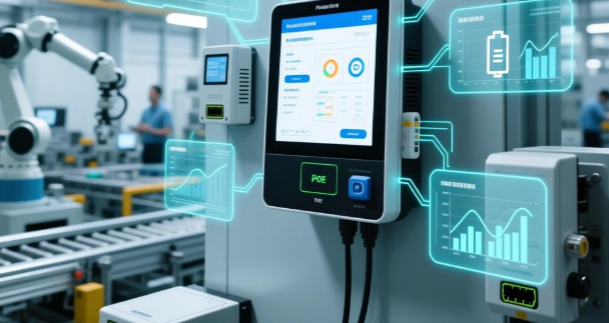
Android & Linux wall mount tablet OTA mechanism, Cross system OTA update difference, Embedded system firmware update
- Introduction
1.1 Background of OTA Update Application in Wall Mount Tablets
With the continuous development of intelligent technology, wall mount tablets have been widely used in various fields such as retail, catering, logistics and smart homes. As an important part of the intelligent system, the timeliness and stability of system updates directly affect the performance and user experience of wall mount tablets. OTA update, as a remote update technology, enables wall mount tablets to complete system upgrades and function updates without manual on-site operation, which greatly improves the update efficiency and reduces the maintenance cost.
Android and Linux are two mainstream operating systems applied in wall mount tablets. Due to the differences in their architectural design, ecological environment and application scenarios, their OTA update mechanisms also have obvious differences. Understanding these differences is crucial for equipment manufacturers to design OTA update solutions and for users to choose suitable wall mount tablets. Android & Linux wall mount tablet OTA mechanism has become a key factor affecting the market competitiveness of wall mount tablets.
1.2 Current Research Status of OTA Update Mechanisms for Wall Mount Tablets
At present, the research on OTA update mechanisms for Android based wall mount tablets is relatively mature. Relying on the perfect ecological system of Android, many manufacturers have developed specialized OTA update platforms, which can realize functions such as push update notifications, differential updates and rollback after update failures. However, there are still problems such as large update package size and high network bandwidth requirements in the OTA update mechanism of Android based wall mount tablets.
The research on OTA update mechanisms for Linux based wall mount tablets is relatively scattered. Due to the openness and customization of Linux systems, different manufacturers often develop OTA update solutions according to their own needs, resulting in poor standardization and compatibility of OTA update mechanisms for Linux based wall mount tablets. In addition, the security of OTA updates for Linux based wall mount tablets also needs to be further improved. The research on Android & Linux wall mount tablet OTA mechanism is mainly focused on the optimization of update efficiency and the improvement of security.
1.3 Significance of Studying Android & Linux Wall Mount Tablet OTA Mechanism
Studying Android & Linux wall mount tablet OTA mechanism helps to improve the performance and stability of wall mount tablets. By clarifying the differences in OTA update mechanisms between the two systems, equipment manufacturers can optimize the update solutions according to the characteristics of different systems, reducing update failures and system crashes caused by inappropriate update mechanisms.
For users, understanding the differences in OTA update mechanisms can help them choose wall mount tablets that are more in line with their actual needs. For example, users with high requirements for update efficiency and ecological perfection may prefer Android based wall mount tablets, while users with high requirements for system customization and resource occupation may prefer Linux based wall mount tablets. In addition, studying the OTA update mechanisms of the two systems can also promote the innovation and development of OTA update technology in the field of wall mount tablets.
- Technical Explanation
2.1 Basic Concepts of OTA Update Mechanism
OTA update, short for Over the Air update, refers to a technology that realizes remote transmission of update packages and completion of system or application updates through wireless networks. The core of the OTA update mechanism is to realize the safe and efficient transmission of update packages and the reliable installation of updates. For wall mount tablets, the OTA update mechanism usually includes modules such as update package generation, update notification push, update package transmission, update verification and update installation.
The OTA update mechanism of wall mount tablets needs to take into account factors such as system stability, update efficiency and security. During the update process, it is necessary to ensure that the normal operation of the wall mount tablet is not affected, and at the same time, prevent the update package from being tampered with or intercepted to ensure the security of the system. The LCD IPS panel of the wall mount tablet will display the update progress and related prompts during the OTA update process, facilitating users to grasp the update status.
2.2 OTA Update Mechanism of Android Based Wall Mount Tablets
The OTA update mechanism of Android based wall mount tablets is based on the Android system’s native OTA framework. The update package is usually generated by the equipment manufacturer or the system provider. After the update package is generated, it is uploaded to the cloud server. The cloud server pushes the update notification to the Android based wall mount tablet through the network. After receiving the notification, the tablet will prompt the user to update, and the user can choose to update immediately or delay the update.
The update package of Android based wall mount tablets can be divided into full update packages and differential update packages. Full update packages contain the complete system files, which have the advantages of high update reliability but large file size and long update time. Differential update packages only contain the files that have changed compared with the current system version, which can reduce the size of the update package and shorten the update time. During the update process, the Android system will first verify the integrity and signature of the update package to ensure that the update package is not tampered with.
After the verification is passed, the system will enter the recovery mode to install the update package. During the installation process, the system will back up the original system files. If the update fails, the system can roll back to the original version through the backup files. After the update is completed, the system will restart automatically to realize the activation of the new version. The OTA update mechanism of Android based wall mount tablets has the advantages of perfect functions, good user experience and strong compatibility with applications.
2.3 OTA Update Mechanism of Linux Based Wall Mount Tablets
The OTA update mechanism of Linux based wall mount tablets is more flexible due to the openness of the Linux system. Different manufacturers will design different OTA update solutions according to their own product positioning and application scenarios. The common OTA update solutions for Linux based wall mount tablets include image-based update and package-based update.
Image-based update is to generate a complete system image file as the update package. During the update process, the system will directly overwrite the original system partition with the new system image. This update method has the advantages of simple implementation and high update efficiency, but it requires a large storage space and cannot roll back to the original version after the update fails. Package-based update is similar to the differential update of Android systems, which only updates the changed files. This update method has the advantages of small update package size and low storage space requirements, but the implementation is relatively complex.
The OTA update notification push of Linux based wall mount tablets usually adopts a custom communication protocol. The cloud server sends the update notification to the tablet through the protocol, and the tablet receives the notification and then downloads the update package from the server. During the update process, the Linux system will also verify the update package, but the verification method is more flexible, which can be realized through digital signature, hash verification and other methods. The OTA update mechanism of Linux based wall mount tablets has the advantages of strong customization and low resource occupation.
2.4 Differences in OTA Update Mechanisms Between Android and Linux Based Wall Mount Tablets
In terms of update package types, Android based wall mount tablets support both full update packages and differential update packages, while Linux based wall mount tablets mainly adopt image-based update packages and package-based update packages. The differential update packages of Android systems are more mature in technology and widely used, while the package-based update of Linux systems is less used due to the complexity of implementation.
In terms of update notification push, Android based wall mount tablets rely on the native push framework of the Android system, which has the advantages of high push efficiency and good stability. Linux based wall mount tablets adopt custom communication protocols for push, which is more flexible but requires manufacturers to develop their own push systems, resulting in uneven push efficiency and stability.
In terms of update verification mechanisms, both Android and Linux based wall mount tablets adopt digital signature and hash verification methods, but the Android system has a more perfect verification system, which can better prevent the update package from being tampered with. The verification mechanism of Linux based wall mount tablets is relatively simple, and the security depends on the design level of manufacturers.
In terms of update rollback functions, Android based wall mount tablets can easily roll back to the original version through system backups, while most Linux based wall mount tablets do not support rollback functions or have relatively complex rollback operations. This is because the image-based update of Linux systems overwrites the original system partition, making it difficult to restore the original system.
In terms of resource occupation, the OTA update mechanism of Android based wall mount tablets occupies more system resources, such as memory and storage space, due to the complexity of the system. The OTA update mechanism of Linux based wall mount tablets occupies fewer system resources, which is more suitable for wall mount tablets with limited hardware resources.
- Commercial Impact
3.1 Impact on Equipment Manufacturers
The differences in Android & Linux wall mount tablet OTA mechanism have a significant impact on equipment manufacturers. For manufacturers of Android based wall mount tablets, they can rely on the mature OTA framework of the Android system to reduce the research and development cost and cycle of OTA update solutions. However, they also need to face the problems of large update package size and high network bandwidth requirements, which may increase the user’s update cost and affect the user experience.
For manufacturers of Linux based wall mount tablets, the flexible OTA update mechanism allows them to customize update solutions according to the needs of different customers, improving the market competitiveness of products. But the lack of a unified standard makes the research and development of OTA update solutions more difficult, and the compatibility between different solutions is poor, which increases the maintenance cost of manufacturers. In addition, the relatively simple security mechanism of Linux OTA updates may lead to security risks of products, affecting the brand image of manufacturers.
3.2 Impact on Users
The differences in OTA update mechanisms directly affect the user experience of wall mount tablet users. Users of Android based wall mount tablets can enjoy a more convenient and stable OTA update experience. The perfect update rollback function ensures that the system can be restored to the original state in case of update failure, reducing the risk of system crashes. However, the large update package size may lead to long update time and high network traffic consumption.
Users of Linux based wall mount tablets can get more personalized OTA update services. Manufacturers can customize update cycles and update contents according to user needs. The small resource occupation of Linux OTA updates ensures that the normal use of the tablet is not affected during the update process. But the lack of update rollback functions and the uneven stability of update push may bring troubles to users. For example, update failures may cause the tablet to fail to work normally, and users need to ask professional personnel for maintenance.
3.3 Impact on the Wall Mount Tablet Market
Android & Linux wall mount tablet OTA mechanism is an important factor affecting the competition pattern of the wall mount tablet market. Android based wall mount tablets occupy a dominant position in the consumer market due to their perfect OTA update mechanisms and rich application ecology. Linux based wall mount tablets are more popular in the industrial and professional markets due to their strong customization and low resource occupation.
The continuous optimization of OTA update mechanisms will promote the development of the wall mount tablet market. For example, the improvement of differential update technology for Android based wall mount tablets can reduce update package sizes and improve update efficiency, further enhancing their market competitiveness. The formulation of unified standards for Linux based wall mount tablet OTA update mechanisms will improve their compatibility and stability, expanding their application scope in the consumer market.
3.4 Impact on Related Industries
The development of Android & Linux wall mount tablet OTA mechanism also drives the development of related industries. The cloud server industry benefits from the increase in OTA update data transmission, and needs to provide more stable and efficient cloud services to support the OTA update of a large number of wall mount tablets. The network communication industry also needs to continuously improve network bandwidth and stability to meet the needs of large-volume update package transmission.
In addition, the security industry has also gained new development opportunities. With the widespread application of OTA updates, the security of update packages has become increasingly important. Security technology companies can develop specialized security solutions for OTA updates of wall mount tablets, such as encrypted transmission of update packages and enhanced verification of update packages, to ensure the security of the update process.
- Typical Use Cases
4.1 Retail Industry Application Scenario
In the retail industry application scenario, wall mount tablets are used for commodity price display, sales data collection and member information management. Android based wall mount tablets rely on their perfect OTA update mechanisms to quickly update commodity price information and sales management software. The update rollback function ensures that the system can be restored to normal in case of update failure, avoiding the impact on normal sales work. Linux based wall mount tablets are used in some special retail scenarios that require low resource occupation, such as small convenience stores and unmanned retail cabinets. Their OTA update mechanisms can customize update cycles according to the actual needs of retail stores, reducing the impact of updates on business operations.
4.2 Catering Industry Application Scenario
In the catering industry application scenario, wall mount tablets are used for menu display, order taking and payment. Android based wall mount tablets can quickly update menu information and order taking software through OTA updates. The rich application ecology allows them to be connected with various payment systems and catering management software. Linux based wall mount tablets are used in some catering scenarios with high requirements for system stability, such as high-end restaurants and chain catering stores. Their OTA update mechanisms adopt image-based updates, which have high update efficiency and can complete system updates in a short time, reducing the impact on the dining experience of customers.
4.3 Logistics Industry Application Scenario
In the logistics industry application scenario, wall mount tablets are used for waybill scanning, cargo information tracking and staff scheduling. Android based wall mount tablets can update scanning software and logistics management systems in a timely manner through OTA updates, ensuring the accuracy and timeliness of cargo information. The good compatibility of the Android system allows them to be connected with various scanning devices and positioning systems. Linux based wall mount tablets are used in some logistics scenarios with harsh working environments and limited hardware resources, such as logistics warehouses and transportation vehicles. Their OTA update mechanisms occupy fewer resources, ensuring the stable operation of the system in harsh environments.
4.4 Smart Home Application Scenario
In the smart home application scenario, wall mount tablets are used as smart home control terminals to control various smart home devices. Android based wall mount tablets can update control software and device drivers through OTA updates, supporting the connection of new smart home devices. The rich application store provides a variety of smart home control applications, improving the user experience. Linux based wall mount tablets are used in some smart home scenarios that require high customization, such as custom smart home systems. Their OTA update mechanisms can customize update contents according to the needs of users, realizing personalized smart home control functions.
4.5 Industrial Control Application Scenario
In the industrial control application scenario, wall mount tablets are used for equipment monitoring, data collection and control command issuance. Linux based wall mount tablets are widely used here due to their strong customization and low resource occupation. Their OTA update mechanisms can customize update strategies according to the operation status of industrial equipment, avoiding updates during the peak operation period of equipment. Android based wall mount tablets are used in some industrial control scenarios that require rich human-computer interaction, such as industrial production workshops and monitoring centers. Their OTA update mechanisms can update monitoring software and human-computer interaction interfaces in a timely manner, improving the efficiency of industrial control.
- Conclusion
5.1 Summary of Android & Linux Wall Mount Tablet OTA Mechanism Differences
Android & Linux wall mount tablet OTA mechanism have obvious differences in update package types, update notification push, update verification mechanisms, update rollback functions and resource occupation. Android based wall mount tablets have the advantages of perfect OTA update functions, good user experience and strong compatibility, but they occupy more system resources and have high requirements for network bandwidth. Linux based wall mount tablets have the advantages of strong customization, low resource occupation and flexible update strategies, but they lack unified standards, have poor compatibility and do not support update rollback functions well.
These differences are determined by the architectural design and ecological environment of the two systems. Android systems focus on user experience and application ecology, so their OTA update mechanisms are more perfect and user-friendly. Linux systems focus on openness and customization, so their OTA update mechanisms are more flexible and suitable for personalized needs. The LCD IPS panels of both types of wall mount tablets play an important role in the OTA update process, displaying update information and ensuring the interaction between users and the system.
5.2 Suggestions for Equipment Manufacturers
For manufacturers of Android based wall mount tablets, they should focus on optimizing the differential update technology to reduce the size of update packages and improve update efficiency. At the same time, they should strengthen the optimization of system resources to reduce the resource occupation of OTA updates. In addition, manufacturers should improve the security of OTA updates, enhance the verification of update packages, and prevent security risks such as update package tampering.
For manufacturers of Linux based wall mount tablets, they should promote the formulation of unified OTA update standards to improve the compatibility and stability of update mechanisms. They should strengthen the research and development of package-based update technology to reduce the size of update packages and improve user experience. At the same time, manufacturers should add update rollback functions to Linux based wall mount tablets to reduce the risk of system failures caused by update failures. In addition, manufacturers should strengthen the security design of OTA updates and improve the security of the update process.
5.3 Suggestions for Users
When selecting wall mount tablets, users should fully consider their own application scenarios and needs, and choose appropriate OTA update mechanisms. If users have high requirements for update efficiency, user experience and application compatibility, they can choose Android based wall mount tablets. If users have high requirements for system customization, resource occupation and stability in special environments, they can choose Linux based wall mount tablets.
In addition, users should pay attention to the security of OTA updates when using wall mount tablets. They should avoid updating in unsafe network environments to prevent the update package from being tampered with. At the same time, users should back up important data before updating to avoid data loss caused by update failures. For Linux based wall mount tablets that do not support rollback functions, users should confirm the stability of the update package before updating to reduce the risk of system failures.
5.4 Future Development Trend
The future development of Android & Linux wall mount tablet OTA mechanism will tend to be more efficient, secure and intelligent. For Android based wall mount tablets, the differential update technology will be further optimized, and the update package size will be further reduced. The OTA update mechanism will be more closely integrated with artificial intelligence technology to realize intelligent update reminder and update package optimization according to user usage habits.
For Linux based wall mount tablets, the formulation of unified OTA update standards will be accelerated, and the compatibility and stability of update mechanisms will be significantly improved. The package-based update technology will be more mature and widely used, and the update rollback function will be gradually improved. In addition, the security of OTA updates for both systems will be further enhanced, and new security technologies such as blockchain will be applied to the verification and transmission of update packages to ensure the absolute security of the update process.
In terms of cross-system integration, the OTA update mechanisms of Android and Linux based wall mount tablets may learn from each other’s advantages. Android systems may absorb the flexible customization characteristics of Linux OTA updates, and Linux systems may learn from the perfect update rollback and verification mechanisms of Android OTA updates. This will promote the common development of OTA update mechanisms for both systems, providing better technical support for the intelligent development of wall mount tablets.
Excellent Android & Linux Wall Mount Tablet OTA Mechanism Guide 6


Leave a Reply
You must be logged in to post a comment.