

How does the heat dissipation design of battery-free PoE tablets ensure 24/7 operation?
Battery-free PoE tablets have become core devices in continuous-operation commercial and industrial scenarios, where 24/7 stable performance is a basic requirement. Heat dissipation design directly determines whether these devices can maintain reliable operation under long-term working conditions, avoiding performance degradation or hardware damage caused by overheating. This article explores the internal logic and practical implementation of heat dissipation design in ensuring uninterrupted operation of such tablets.
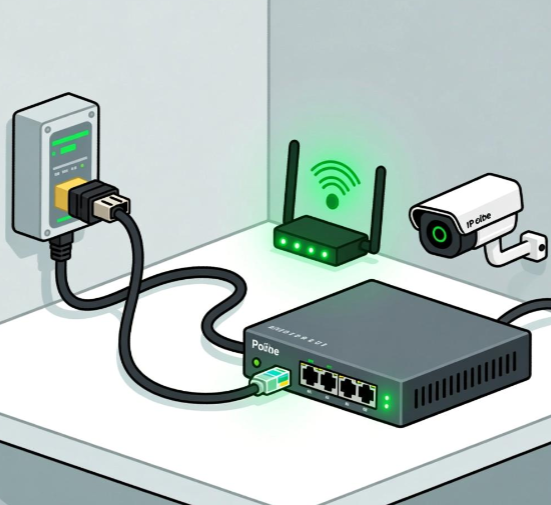
heat dissipation design
- Introduction
The acceleration of industrial digitization and commercial intelligence has driven the widespread application of electronic devices that require 24/7 operation. From smart factory production lines to 24-hour retail convenience stores, from intelligent transportation hubs to remote environmental monitoring stations, battery-free PoE tablets have been widely deployed due to their advantages of stable power supply and no need for frequent charging.
Continuous operation brings a key challenge: heat accumulation. Electronic components in the tablets generate heat during operation, and the compact and often sealed structure of battery-free PoE tablets (to adapt to harsh environments) makes heat dissipation difficult. Once heat accumulates excessively, it will affect the working efficiency of components, shorten their service life, and even cause sudden shutdowns, which will disrupt normal business operations and cause economic losses.
Against this background, heat dissipation design has become a core technical link in the research and development of battery-free PoE tablets. This article focuses on how heat dissipation design ensures the 24/7 operation of battery-free PoE tablets. It starts with the heat generation characteristics of such tablets, analyzes the core design elements of heat dissipation systems, discusses the commercial impact brought by effective heat dissipation, and verifies the practical effect through typical application cases, providing a comprehensive technical reference for relevant practitioners and enterprises.
The research content of this article is based on electronic thermal management theory, technical parameters of battery-free PoE tablets and field test data. It aims to clarify the important role of heat dissipation design in ensuring continuous operation, and provide ideas for the optimization and upgrading of heat dissipation technology for such devices in the future.
- Technical Explanation of Heat Dissipation Design for Battery-free PoE Tablets
2.1 Heat Generation Characteristics of Battery-free PoE Tablets
The heat generation of battery-free PoE tablets has obvious uniqueness compared with traditional battery-powered devices. First, the power supply mode determines stable heat output. Different from battery-powered tablets whose power consumption fluctuates during charging and discharging, battery-free PoE tablets obtain continuous and stable power from the PoE system, so the heat generated by internal components is relatively stable, which provides a predictable basis for heat dissipation design.
Second, the heat source distribution is relatively concentrated. The main heat sources include the processor, PoE power reception module and power management unit. The processor generates a large amount of heat when processing data and executing tasks; the PoE power reception module converts the power transmitted by the Ethernet cable, and energy loss during conversion is converted into heat; the power management unit adjusts the voltage and current to match the needs of various components, and also generates a certain amount of heat during work.
Third, structural constraints increase heat dissipation difficulty. To meet the needs of dustproof, waterproof and anti-corrosion in commercial and industrial environments, battery-free PoE tablets are usually designed with sealed enclosures. This design blocks the direct exchange of heat between the inside and outside of the device, and the compact internal space also limits the circulation of air, making heat easy to accumulate.
2.2 Core Design Principles of Heat Dissipation Systems
The heat dissipation design of battery-free PoE tablets follows three core principles: efficiency, stability and compatibility. Efficiency means that the heat dissipation system must quickly transfer the heat generated by the components to the external environment to ensure that the internal temperature of the device is always within the safe working range; stability requires that the heat dissipation performance does not degrade significantly under long-term operation or changes in external environmental conditions; compatibility means that the heat dissipation design must be coordinated with the overall structure, size and PoE power supply characteristics of the tablet, without affecting other functional modules.
Based on these principles, the heat dissipation system of battery-free PoE tablets adopts a multi-dimensional integrated design idea, combining passive heat dissipation and active heat dissipation, and integrating software and hardware management to form a comprehensive heat dissipation solution.
2.3 Key Components and Implementation of Heat Dissipation Design
Passive heat dissipation is the basic part of the heat dissipation system of battery-free PoE tablets, mainly relying on heat conduction and natural convection to dissipate heat. In terms of heat conduction enhancement, high-thermal-conductivity materials are widely used. For example, the shell is made of aluminum alloy or magnesium alloy with excellent thermal conductivity, which can quickly transfer the heat inside the device to the surface. At the same time, heat sinks or heat pipes are installed on key heat-generating components. Heat pipes use the phase change of the internal working fluid to quickly conduct heat, realizing the rapid transfer of local high heat to the shell or other low-temperature areas.
Natural convection optimization is another key link of passive heat dissipation. The shell of the tablet is designed with heat dissipation fins or grooves, which increase the contact area between the shell and the air, thereby enhancing the heat exchange efficiency. The arrangement of the fins is usually designed according to the installation mode of the tablet. For wall-mounted tablets, vertical fins are adopted to conform to the direction of natural air flow and promote air circulation.
For scenarios with high heat generation, such as tablets running high-load industrial control software, active heat dissipation is added on the basis of passive heat dissipation. The most common form is to install miniature silent fans inside the device. These fans adopt low-speed and high-efficiency designs to reduce noise while ensuring heat dissipation effect, which is suitable for commercial environments with high noise requirements. The fan layout is optimized to form a unidirectional air flow path, which can effectively take away the heat inside the device. To ensure the sealed performance of the device, the fan vents are equipped with high-precision dust-proof nets to prevent dust from entering the inside of the device.
Software-assisted thermal management is an important supplement to the hardware heat dissipation system. The built-in temperature sensor of the tablet monitors the temperature of key components in real time. When the temperature approaches the safe threshold, the thermal management software will dynamically adjust the working state of the device. For example, appropriately reducing the operating frequency of the processor or lowering the brightness of the display panel reduces heat generation from the source. This active adjustment mechanism ensures that the device can maintain stable operation even when the external environment changes or the load fluctuates.
In addition, the heat dissipation design is closely integrated with the PoE power supply characteristics. The PoE power reception module and power management unit are designed with high energy conversion efficiency, which reduces heat generation from the source. At the same time, the layout of these modules is optimized to be close to the heat conduction path, ensuring that the generated heat can be quickly dissipated.
- Commercial Impact of Effective Heat Dissipation Design
3.1 Improving Operational Reliability and Reducing Downtime Losses
Effective heat dissipation design ensures that battery-free PoE tablets can operate stably for a long time, significantly reducing the risk of unplanned downtime. In commercial and industrial scenarios, downtime often leads to direct economic losses. For example, in a smart factory, if the battery-free PoE tablet used for production line monitoring shuts down due to overheating, it will cause the production line to stop, resulting in a decrease in output. In a 24-hour retail store, the failure of the self-checkout tablet powered by battery-free PoE will lead to long queues of customers and loss of sales opportunities.
The stable operation supported by heat dissipation design enhances the reliability of the entire business system. Enterprises can rely on these devices to carry out core business processes, improving the overall operational efficiency and customer satisfaction.
3.2 Extending Device Service Life and Reducing Total Cost of Ownership
High temperature is an important factor accelerating the aging of electronic components. Effective heat dissipation design reduces the average operating temperature of battery-free PoE tablets, slows down the aging speed of components such as processors and capacitors, and thus extends the service life of the devices. For enterprises, extending the service life of devices means reducing the frequency of equipment replacement, saving capital expenditure on purchasing new devices.
At the same time, the reduction of component failure rate also lowers maintenance costs. Battery-free PoE tablets are often deployed in hard-to-reach positions, such as high walls of factories or ceiling positions of transportation hubs. The maintenance of these devices requires professional personnel and equipment, and the cost is high. Effective heat dissipation design reduces the number of maintenance operations, saving enterprises time and labor costs. In the long run, it significantly reduces the total cost of ownership of the device.
3.3 Expanding Application Scope and Enhancing Market Competitiveness
Effective heat dissipation design enables battery-free PoE tablets to adapt to more harsh environmental conditions, such as high-temperature workshops, high-humidity warehouses and poorly ventilated enclosed spaces. This expands the application scope of the devices, making them applicable to more industries and scenarios.
For device manufacturers, excellent heat dissipation design has become a key competitive advantage. Products with better heat dissipation performance and higher reliability are more likely to be favored by enterprises. For enterprises using the devices, the wide adaptability of battery-free PoE tablets allows them to optimize the layout of equipment according to actual business needs, improving the flexibility of business operations and enhancing market competitiveness.
3.4 Supporting High-Load Application Scenarios and Promoting Business Innovation
With the continuous upgrading of business needs, battery-free PoE tablets are increasingly required to run high-load applications, such as real-time video analytics, complex industrial control algorithms and multi-system integration services. These applications generate more heat during operation, and effective heat dissipation design provides a necessary guarantee for the stable operation of these high-load applications.
The support for high-load applications enables enterprises to carry out business innovation. For example, in intelligent transportation hubs, battery-free PoE tablets with excellent heat dissipation performance can process real-time video data of multiple cameras, realize traffic flow monitoring and abnormal event alarm, and improve the intelligence level of traffic management. In smart retail scenarios, these devices can run big data analysis software to analyze customer shopping behavior and provide personalized marketing recommendations, promoting business model innovation.
- Typical Use Cases
4.1 Smart Factory: Industrial Control Terminal
A large auto parts manufacturing factory deployed battery-free PoE tablets as industrial control terminals on the production line, which are responsible for real-time monitoring of equipment operating parameters, collecting production data and issuing control commands. The factory workshop has high ambient temperature, up to 38°C in summer, and there is a lot of dust, which puts high requirements on the heat dissipation and environmental adaptability of the tablets.
The heat dissipation design of the deployed battery-free PoE tablets adopts a combination of passive and active heat dissipation. The shell is made of high-thermal-conductivity aluminum alloy with heat dissipation fins on the surface to enhance natural convection. A vapor chamber heat sink is installed on the processor to quickly transfer the heat generated by the processor. At the same time, a miniature silent fan is built in, which is controlled by software to adjust the speed according to the temperature. The fan vents are equipped with high-density dust-proof nets to prevent dust from entering.
After actual operation, the tablets have maintained stable operation for 24 hours a day for more than a year, and the internal temperature is always controlled within 55°C, which is lower than the safe threshold. The stable operation of the tablets ensures the continuous operation of the production line, and the production efficiency is improved by 15% compared with the previous equipment. The maintenance cost is reduced by nearly 40% due to the low failure rate.
4.2 24-Hour Smart Convenience Store: Self-Checkout Kiosk
A chain of 24-hour smart convenience stores uses battery-free PoE tablets as self-checkout kiosks. The stores require the kiosks to operate continuously, with low noise. The peak shopping hours are concentrated in the morning and evening, and the tablets need to handle a large number of transaction tasks during this period, resulting in increased heat generation.
The heat dissipation design of the self-checkout tablets mainly adopts passive heat dissipation to ensure low noise. The back cover of the tablet is made of copper-aluminum composite material with high thermal conductivity, which serves as a main heat dissipation component. Heat pipes are used to connect the processor and the back cover to realize efficient heat transfer. The surface of the back cover is designed with subtle grooves to increase the heat dissipation area without affecting the appearance.
In addition, the thermal management software dynamically adjusts the processor frequency according to the load. During peak hours, when the heat generation increases, the software appropriately reduces the frequency of non-critical tasks to control heat output. Actual operation shows that the tablets operate stably during peak hours, the temperature does not exceed 50°C, and the noise is lower than 35 decibels, which meets the requirements of the store environment. The use of these self-checkout kiosks has reduced the waiting time of customers by 60% and improved the shopping experience.
4.3 Intelligent Transportation Hub: Traffic Information Display Terminal
An international airport deploys battery-free PoE tablets as traffic information display terminals in the terminal building, which are responsible for displaying real-time flight information, wayfinding guidance and public service announcements. The terminals are installed in enclosed areas with poor ventilation, and the display panels need to be kept on for a long time, resulting in continuous heat generation.
The heat dissipation design of the terminals integrates passive heat dissipation and software management. The shell is designed with a vertical heat dissipation fin structure to make full use of natural convection.The thermal management software monitors the temperature in real time. When the temperature is too high, it automatically reduces the brightness of the display panel (within the range that does not affect viewing) to reduce heat output.
Since the deployment, the terminals have operated continuously and stably, and the information display is clear and uninterrupted. Even in the high-temperature season, the internal temperature of the terminals is controlled within a safe range. The stable operation of the terminals provides reliable information services for passengers, improving the operation efficiency of the airport.
4.4 Remote Environmental Monitoring Station: Data Collection Terminal
A remote environmental monitoring station in a mountainous area uses battery-free PoE tablets as data collection terminals, which are responsible for collecting real-time data such as temperature, humidity and air quality, and transmitting them to the central control system. The monitoring station is located in a remote area with harsh environmental conditions, high temperature in summer and high humidity in rainy season.
The heat dissipation design of the data collection terminals adopts a fully sealed passive heat dissipation scheme. The shell is made of magnesium alloy with high thermal conductivity and corrosion resistance. A large-area heat sink is integrated inside the shell, which is closely connected with key heat-generating components. The heat generated by the components is transferred to the shell through the heat sink and then dissipated to the external environment through natural convection.
The terminals have maintained stable operation for a long time in the harsh environment, and the data collection and transmission are not interrupted. The effective heat dissipation design ensures the reliability of the monitoring data, providing an important basis for environmental management departments to carry out work.
- Conclusion
The heat dissipation design of battery-free PoE tablets is a key technical guarantee for their 24/7 operation. It is a comprehensive solution integrating multiple elements such as material selection, structural design, hardware configuration and software management. By effectively solving the heat accumulation problem of battery-free PoE tablets under continuous operation, it ensures the stable performance and reliable operation of the devices.
From the technical level, the heat dissipation design of battery-free PoE tablets closely combines the characteristics of the devices themselves and the needs of application scenarios, and forms an efficient heat dissipation system through the organic combination of passive and active heat dissipation. The close integration with PoE power supply characteristics further improves the rationality and efficiency of heat dissipation design.
With the continuous expansion of the application field of battery-free PoE tablets and the continuous improvement of performance requirements, the heat dissipation design will face higher challenges. In the future, with the development of new materials and new technologies, the heat dissipation design of battery-free PoE tablets will tend to be more efficient, miniaturized and intelligent. It is expected that through the innovation of heat dissipation technology, battery-free PoE tablets will be able to adapt to more extreme environments and support more complex high-load applications, making greater contributions to the digital transformation of commercial and industrial fields.


Leave a Reply
You must be logged in to post a comment.