

How PoE Revolutionizes Simplification of Installation in Meeting Rooms and Smart Buildings
PoE, or Power over Ethernet, has become a transformative technology in the deployment of networked devices, especially in commercial and smart building environments. For meeting rooms and smart buildings, where efficient installation and seamless operation are paramount, PoE plays a crucial role in optimizing the setup of wall mount tablets and other connected devices.
This article explores how PoE simplifies installation processes in these settings, delves into the technical mechanisms behind this simplification, analyzes the commercial impact of adopting PoE solutions, showcases typical use cases, and concludes with insights into the future of PoE in smart environments.
Introduction
The rapid advancement of smart building technology and the growing demand for efficient meeting room solutions have led to an increased adoption of wall mount tablets as control interfaces, scheduling tools, and information displays. However, traditional installation methods for these tablets—relying on separate power and data cables—often present significant challenges, including complex wiring, high installation costs, and prolonged project timelines.
In this context, PoE has emerged as a game-changing solution that addresses these pain points by delivering both power and data through a single Ethernet cable. The integration of PoE with wall mount tablets not only streamlines the installation process but also enhances the reliability and scalability of the entire system. This article focuses on how PoE achieves this simplification in meeting rooms and smart buildings, providing a comprehensive overview of the technical, commercial, and practical aspects of this integration.
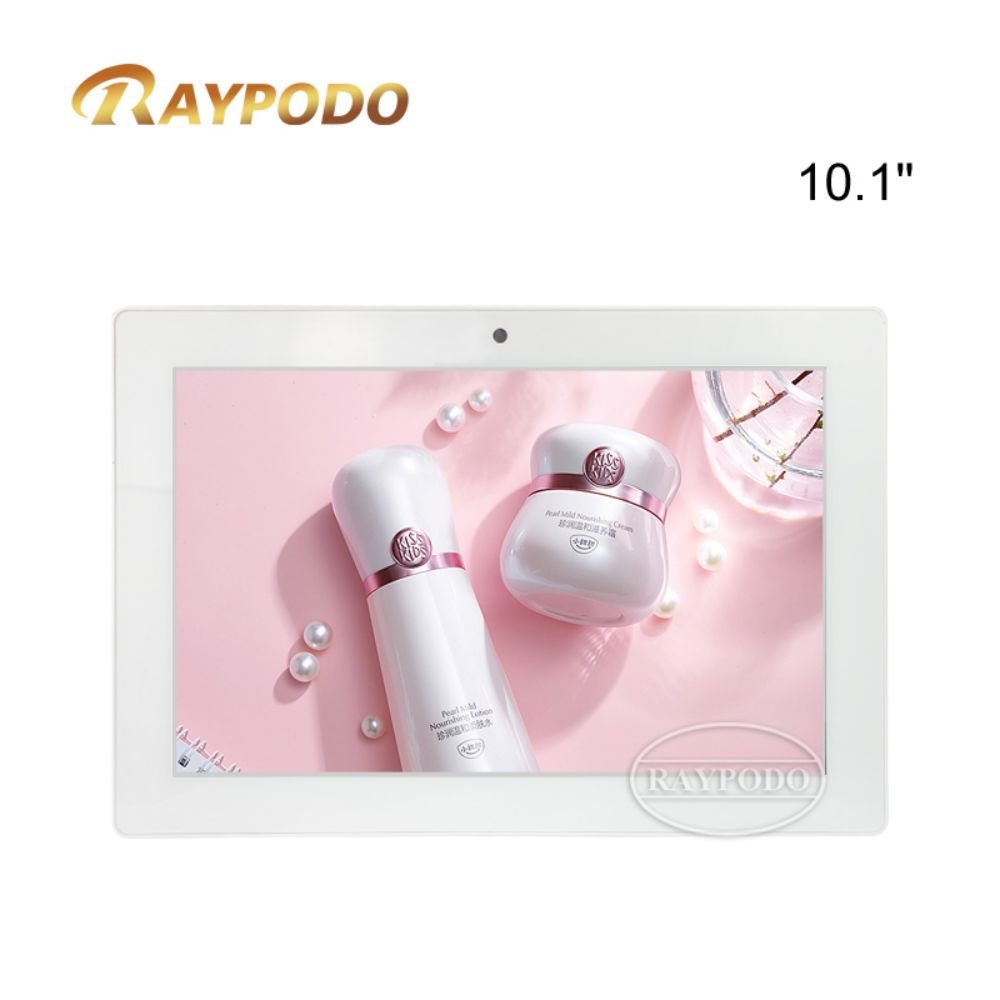
PoE Revolutionizes
Technical Explanation
To understand how PoE simplifies installation, it is first essential to grasp the core technical principles of PoE technology. PoE operates by transmitting electrical power alongside data over standard twisted-pair Ethernet cables, complying with IEEE standards such as 802.3af, 802.3at, and 802.3bt. These standards define the voltage levels, power delivery limits, and signaling methods that ensure compatibility between PoE-enabled devices (such as wall mount tablets) and power sourcing equipment (PSE), which can be either a PoE switch or a PoE injector.
The key technical advantage of PoE in installation simplification lies in its elimination of the need for separate power cables and power outlets. Traditional wall mount tablet installations require two distinct cable runs: one for Ethernet data connectivity and another for AC or DC power. This dual-cable setup increases the complexity of routing, as installers must navigate two sets of cables through walls, ceilings, and conduits, often requiring additional drilling and cable management. In contrast, PoE uses a single Cat5e or Cat6 Ethernet cable to carry both data and power, reducing the number of cables by half and simplifying routing significantly.
Another technical aspect that contributes to installation simplification is the flexibility of PoE power delivery. PoE PSE can detect PoE-enabled devices automatically, ensuring that power is only delivered to compatible devices and preventing damage to non-PoE equipment. This plug-and-play functionality eliminates the need for manual configuration of power settings, reducing the risk of installation errors and speeding up the setup process.
Additionally, PoE supports power delivery over long distances—up to 100 meters for most standards—which allows wall mount tablets to be installed in remote areas of meeting rooms or smart buildings without the need for local power sources. This eliminates the cost and hassle of installing new power outlets, which is often a major bottleneck in traditional installations.
Furthermore, PoE technology integrates seamlessly with existing network infrastructure. Most modern meeting rooms and smart buildings already have Ethernet cabling in place for data networks. By leveraging this existing infrastructure for power delivery, PoE eliminates the need for new power wiring, reducing material costs and installation time. This compatibility with existing networks also means that installers do not need to learn new wiring techniques, as they can use standard Ethernet installation practices. The technical synergy between PoE and existing network systems further simplifies the overall installation process, making it more efficient and cost-effective.
Commercial Impact
The simplification of installation brought about by PoE has profound commercial implications for businesses, building owners, and system integrators involved in meeting room and smart building projects. One of the most significant commercial benefits is the reduction in installation costs. By eliminating the need for separate power cables, power outlets, and the labor required to install them, PoE can cut installation expenses by 30% to 50% compared to traditional setups. For large-scale smart building projects with dozens or hundreds of wall mount tablets, these cost savings can be substantial, directly improving the project’s return on investment.
Another key commercial impact is the acceleration of project timelines. Simplified installation processes mean that PoE-enabled wall mount tablet deployments can be completed in a fraction of the time required for traditional installations. This faster time-to-market is particularly valuable for businesses that need to upgrade their meeting rooms or smart building systems quickly to meet operational demands.
For example, a company renovating multiple meeting rooms can have PoE wall mount tablets installed and operational within days, whereas traditional installations might take weeks. This efficiency not only reduces labor costs but also minimizes disruption to daily operations, a critical factor for commercial environments where downtime can lead to lost productivity.
PoE also enhances the scalability and future-proofing of commercial installations, which has long-term commercial benefits. As smart buildings and meeting rooms evolve, the number of connected devices is likely to increase. PoE-enabled networks can easily accommodate additional wall mount tablets or other PoE devices by simply adding more ports on a PoE switch, without the need for new power infrastructure. This scalability reduces the cost of future expansions and upgrades, making PoE a cost-effective long-term solution.
Additionally, the latest PoE standards (such as 802.3bt) support higher power delivery, enabling the use of more advanced wall mount tablets with additional features (such as touchscreens, cameras, or speakers) without requiring modifications to the power infrastructure. This future-proofing ensures that businesses can invest in PoE solutions with confidence, knowing they can adapt to changing technological needs.
Furthermore, PoE improves the reliability and maintainability of commercial systems, leading to lower operational costs. Single-cable installations reduce the number of potential failure points (such as loose power connections or damaged power cables), minimizing the risk of system downtime. In the event of a problem, troubleshooting is simpler with PoE, as technicians only need to inspect a single cable for both power and data issues.
This reduces maintenance time and costs, improving the overall uptime of the wall mount tablet systems. For commercial entities that rely on these systems for critical functions (such as meeting room scheduling or building security), improved reliability translates to better operational efficiency and customer satisfaction.
Typical Use Cases
The simplification of installation by PoE has made it a preferred solution for a wide range of use cases in meeting rooms and smart buildings. Below are some of the most typical applications where PoE wall mount tablets excel.
4.1 Meeting Room Scheduling and Control
In modern office environments, meeting room scheduling is a critical function that requires efficient and reliable interfaces. PoE wall mount tablets installed outside meeting rooms serve as ideal scheduling displays, showing real-time availability, booking details, and allowing users to reserve rooms on the spot. The PoE installation simplifies the setup of these tablets, as installers only need to run a single Ethernet cable from the tablet to the building’s network switch. This eliminates the need to install power outlets near each meeting room door, which can be costly and aesthetically unappealing.
Additionally, the PoE connection ensures that the tablets receive a stable power supply and consistent data connectivity, ensuring that scheduling information is always up-to-date. Some advanced setups also integrate the PoE tablets with room control systems, allowing users to adjust lighting, temperature, and audio-visual equipment directly from the tablet—all powered and connected via the same Ethernet cable.
4.2 Smart Building Control Centers
Smart buildings rely on centralized control systems to manage various building functions, such as HVAC, lighting, security, and access control. PoE wall mount tablets are often used as local control interfaces in different zones of the building (such as lobbies, floors, or equipment rooms) and as part of the central control center. The simplified installation of PoE tablets makes it easy to deploy these interfaces throughout the building, even in hard-to-reach areas where power outlets are not available.
For example, a PoE tablet installed in a basement equipment room can monitor and control HVAC systems without the need for additional power wiring. The single-cable installation also reduces clutter in control rooms, improving the overall organization and maintainability of the system. Furthermore, the PoE connection allows the tablets to communicate seamlessly with the central building management system (BMS), ensuring that all building functions are coordinated efficiently.
4.3 Retail Store Smart Displays and Control
While primarily focused on meeting rooms and smart buildings, PoE wall mount tablets also find applications in retail environments that are part of smart building ecosystems. Retail stores use these tablets as digital signage, price displays, and customer information kiosks. PoE simplifies the installation of these displays throughout the store, as installers do not need to run separate power cables to each display. This is particularly beneficial in large retail spaces where multiple displays are required, as it reduces installation time and costs.
Additionally, PoE tablets can be integrated with the store’s inventory management and point-of-sale (POS) systems, allowing for real-time updates of product information and prices. The reliable power and data connection provided by PoE ensures that these displays remain operational at all times, improving the customer experience and operational efficiency.
4.4 Healthcare Facility Patient Monitoring and Information
Healthcare facilities, such as hospitals and clinics, are increasingly adopting smart building technologies to improve patient care and operational efficiency. PoE wall mount tablets are used in patient rooms as information displays (showing patient details, care schedules, and visitor information) and as control interfaces for room settings (such as lighting and temperature).
The simplified installation of PoE is particularly valuable in healthcare environments, where minimizing disruption to patient care is essential. Installers can quickly deploy the tablets without the need for extensive power wiring, reducing the time spent on installation and minimizing noise and disturbance. The reliable PoE connection also ensures that the tablets remain powered and connected at all times, which is critical for patient monitoring and communication. Additionally, the single-cable setup is easier to clean and maintain, contributing to the hygiene standards required in healthcare facilities.
- Conclusion
As smart building technology continues to evolve, the demand for efficient and reliable installation solutions will only grow. PoE is well-positioned to meet this demand, with ongoing advancements in standards and technology enabling higher power delivery and greater compatibility with a wide range of devices.
For businesses, building owners, and system integrators, adopting PoE for wall mount tablet installations in meeting rooms and smart buildings is not just a practical choice but a strategic one that delivers long-term value. By simplifying installation and enhancing system performance, PoE helps unlock the full potential of smart environments, improving operational efficiency, user experience, and overall productivity.


Leave a Reply
You must be logged in to post a comment.