

How does screen resolution affect the user experience of smart home wall control tablets?
Screen resolution impact is a crucial factor influencing the user experience of smart home wall control tablets. As the core interactive interface between users and smart home systems, smart home wall control tablets rely heavily on screen performance to deliver intuitive and smooth operation experiences. Screen resolution directly determines the clarity of displayed content, the precision of touch interactions, and ultimately affects users’ satisfaction with the entire smart home system.
With the continuous upgrading of smart home technology, users have increasingly high requirements for the user experience of smart home wall control tablets. From displaying device status information to executing touch control commands, every link is closely related to screen resolution. Understanding how screen resolution affects user experience is of great significance for manufacturers to optimize product design and for users to select suitable smart home wall control tablets.
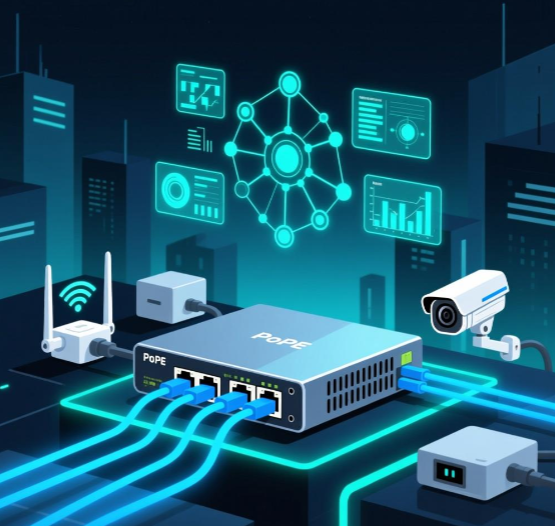
Screen resolution impact, Smart home wall control tablet, Touch operation accuracy
This article will systematically explore the impact of screen resolution on the user experience of smart home wall control tablets. Firstly, it will introduce the application background of smart home wall control tablets and the basic concept of screen resolution. Then, it will technically analyze the specific manifestations of screen resolution impact on user experience, focusing on aspects such as content display clarity and touch operation accuracy. Further, it will discuss the commercial impact of screen resolution selection on manufacturers and users. Finally, it will verify the influence of screen resolution through typical application cases and summarize the screen resolution selection suggestions for smart home wall control tablets.
- Introduction
1.1 Application Scenarios and Functional Requirements of Smart Home Wall Control Tablets
Smart home wall control tablets are widely installed in living rooms, bedrooms, corridors and other areas of smart homes, undertaking functions such as centralized control of smart devices, display of home environment data and remote interaction. Different application scenarios have different requirements for the screen performance of the tablets.
For example, in the living room, the tablet may need to display multi-device status information and video surveillance pictures at the same time; in the bedroom, it may mainly be used for adjusting lighting and temperature. Regardless of the scenario, the screen, as the main interaction medium, its resolution directly affects the effectiveness and comfort of user operations.
1.2 Basic Concept of Screen Resolution and Its Importance for Smart Home Wall Control Tablets
Screen resolution refers to the number of pixels displayed on the screen horizontally and vertically, which directly determines the detail and clarity of the displayed image. Higher resolution means more pixels can be accommodated on the screen, and the displayed text, icons and images will be more delicate. For smart home wall control tablets, which need to display a large amount of information and support precise touch operations, screen resolution is particularly important.
The clarity of the screen directly affects users’ ability to quickly obtain information. Blurred text and icons will increase the difficulty of user identification and reduce the efficiency of operation. At the same time, the accuracy of touch operations is also closely related to screen resolution. A reasonable resolution can ensure that the tablet accurately recognizes user touch commands and avoids misoperation.
1.3 Core Issue: Matching Screen Resolution with User Experience Requirements
The core issue in the screen design of smart home wall control tablets is to match screen resolution with user experience requirements. Excessively low resolution will lead to poor display effects and affect user experience; excessively high resolution may increase product costs and power consumption without significantly improving user experience. Therefore, finding the optimal resolution that balances display effect, cost and power consumption is the key to product design.
Screen resolution impact on user experience is not a one-dimensional positive correlation. It needs to be analyzed in combination with the size of the tablet screen, user usage habits and specific application functions. Only by fully considering these factors can manufacturers design products that meet user expectations.
- Technical Analysis of Screen Resolution Impact on User Experience
2.1 Screen Resolution Impact on Content Display Clarity
Screen resolution impact is most directly reflected in the clarity of content display. For smart home wall control tablets, which often need to display a variety of information such as device icons, status indicators, text descriptions and environmental data, higher resolution can make these contents more delicate and clear.
When the resolution is too low, text may appear jagged, icons may be blurred, and small text or detailed data may be difficult to distinguish. This will force users to get closer to the screen to view information, increasing the difficulty of use. For example, when displaying the parameter values of smart air conditioners or water heaters, low resolution may cause users to misread the data, affecting the accuracy of operation.
In addition, when smart home wall control tablets are used to display video surveillance images, screen resolution also has a significant impact on the clarity of the images. Higher resolution can restore more details of the surveillance scene, helping users better grasp the situation at home. The LCD IPS panel used in the tablets further enhances the display effect, making the colors more realistic and the viewing angle wider under different resolutions.
2.2 Screen Resolution Impact on Touch Operation Accuracy
Touch operation accuracy is another important aspect affected by screen resolution impact. The touch positioning accuracy of smart home wall control tablets is closely related to the number of pixels. Higher resolution means more precise touch sampling points, which can more accurately recognize the user’s touch position and avoid misoperation.
In smart home control scenarios, users often need to click small icons or slide on the screen to adjust parameters. If the resolution is too low, the touch sampling points are sparse, and the tablet may misrecognize a click on a small icon as an operation on an adjacent icon. This will lead to incorrect execution of control commands, affecting the user experience and even causing malfunctions of smart devices.
For example, when adjusting the brightness of smart lights through the tablet, if the touch area corresponding to the brightness adjustment slider is small, low resolution may cause the tablet to fail to accurately recognize the user’s sliding operation, resulting in unstable brightness adjustment. Higher resolution can effectively solve this problem and improve the accuracy and smoothness of touch operations.
2.3 Screen Resolution Impact on Visual Fatigue
Screen resolution impact also extends to the user’s visual fatigue. A screen with appropriate resolution can display content with moderate size and clear details, reducing the burden on the user’s eyes. When the resolution is too low, the screen display is rough, and users need to concentrate more to distinguish the content, which is easy to cause eye fatigue after long-term use.
On the other hand, if the resolution is excessively high for a screen of a certain size, the displayed text and icons will be too small. Although users can adjust the zoom ratio, this may lead to incomplete display of content or increased operation steps, which also affects the user experience. Therefore, the selection of screen resolution must match the screen size to achieve the best visual effect and reduce visual fatigue.
2.4 Technical Matching Between Screen Resolution and Tablet Hardware
The performance of smart home wall control tablets’ hardware also needs to match the screen resolution. Higher resolution requires stronger graphics processing capabilities of the tablet’s processor and larger memory to ensure smooth display of content. If the hardware performance cannot keep up with the resolution, it may lead to problems such as slow screen response and frame dropping when switching interfaces or displaying dynamic content.
For example, when a tablet with low hardware performance is equipped with a high-resolution screen, there may be a delay in displaying the status changes of smart devices, which affects the real-time performance of user operations. Therefore, manufacturers need to comprehensively consider the matching between screen resolution and hardware performance when designing products to ensure the overall stability and fluency of the tablet.
- Commercial Impact of Screen Resolution Selection
3.1 Impact on Product Cost and Pricing
Screen resolution has a direct impact on the production cost of smart home wall control tablets. High-resolution screens have higher manufacturing costs than low-resolution ones, which will be directly reflected in the product pricing. Products equipped with high-resolution screens are usually priced higher, while products with moderate resolution have more advantages in cost control.
For manufacturers, the selection of screen resolution needs to be based on market positioning. High-end smart home systems can be equipped with high-resolution screens to meet the needs of users with high requirements for user experience; mid-to-low-end products can choose moderate resolution to balance cost and performance. Reasonable resolution selection is conducive to manufacturers’ cost control and market competitiveness improvement.
3.2 Impact on User Purchase Decisions
Screen resolution impact is also an important factor affecting users’ purchase decisions. When users choose smart home wall control tablets, they usually pay attention to the screen display effect. A tablet with clear display and accurate touch operation is more likely to be favored by users. The description of screen resolution and its impact on user experience in product promotion can help users make more informed purchase decisions.
However, users also pay attention to the cost-effectiveness of products. Excessively high-resolution products may make users hesitate due to high prices. Therefore, manufacturers need to clearly convey the matching relationship between resolution and application scenarios to users, helping users understand that appropriate resolution can meet their actual needs without overpaying for excessive resolution.
3.3 Impact on Market Competition and Product Differentiation
The rational use of screen resolution can help manufacturers achieve product differentiation and gain an advantage in market competition. By optimizing the matching between screen resolution and user experience, manufacturers can launch products with unique advantages. For example, for tablets used in scenarios that require frequent viewing of detailed data, high-resolution screens can be used as a selling point; for tablets used in simple control scenarios, moderate resolution can be used to highlight cost-effectiveness.
In addition, with the continuous advancement of display technology, the cost gap between high-resolution and moderate-resolution screens is gradually narrowing. Manufacturers can use this opportunity to upgrade the screen resolution of mid-range products, improving product performance and user experience without significantly increasing costs, thereby enhancing market competitiveness.
- Typical Use Cases
4.1 Case of Smart Home Living Room Control Tablet
A smart home project equipped wall control tablets in the living room, which are used to display the status of multiple smart devices such as air conditioners, TVs, curtains and lighting, and to view real-time video of home surveillance. The project initially tested two types of tablets with different resolutions.
The tablet with low resolution had problems such as blurred display of device status icons and unclear surveillance video details. Users often needed to get close to the screen to confirm the information, and there were occasional misoperations when clicking small icons. The tablet with moderate resolution displayed clear icons and text, and the surveillance video details were clearly visible. The touch operation was accurate, and users could easily complete various control commands.
Finally, the project chose the tablet with moderate resolution. It not only met the needs of displaying multiple information and precise control in the living room but also controlled the overall cost. This case shows that appropriate screen resolution can better meet the user experience requirements of smart home living room control tablets.
4.2 Case of Smart Bedroom Control Tablet
A family installed a wall control tablet in the bedroom, mainly used to adjust the lighting brightness, air conditioner temperature and play background music. The family initially considered purchasing a high-resolution tablet, but after understanding the screen resolution impact on user experience, they chose a moderate-resolution product.
In the bedroom scenario, the tablet’s display content is relatively simple, mainly including several control icons and parameter values. The moderate-resolution screen can fully display these contents clearly, and the touch operation is accurate. The high-resolution tablet did not show obvious advantages in user experience but was much higher in price. The actual use effect shows that the moderate-resolution tablet can fully meet the needs of the bedroom scenario, and the user experience is good.
4.3 Case of Smart Home Central Control Tablet for Elderly Users
A smart home project targeting elderly users equipped central control tablets in the homes of the elderly. Considering that elderly users have poor eyesight, the project paid special attention to the screen resolution impact on visual experience. After comparison, it chose a tablet with moderate resolution and optimized the interface font size.
The moderate-resolution screen, combined with the enlarged font, made the text and icons clearly visible to the elderly users. The accurate touch operation also reduced the difficulty of use for the elderly. If a low-resolution screen was used, even if the font was enlarged, the text would appear jagged, affecting the viewing experience. If a high-resolution screen was used, the cost would increase, and the elderly users could not feel obvious experience improvement. This case shows that the selection of screen resolution needs to consider the characteristics of user groups.
- Conclusion
Screen resolution impact on the user experience of smart home wall control tablets is multi-faceted, mainly reflected in content display clarity, touch operation accuracy and visual fatigue. Appropriate screen resolution can significantly improve the user experience, while excessively low or high resolution may lead to poor experience or cost redundancy.
The selection of screen resolution needs to comprehensively consider factors such as application scenarios, screen size, hardware performance, user groups and cost. Manufacturers should optimize the matching between screen resolution and product functions to launch products that meet the actual needs of users; users should choose smart home wall control tablets with appropriate resolution based on their own usage scenarios and experience requirements.
The typical cases in living rooms, bedrooms and central control for elderly users fully verify the importance of screen resolution matching. With the continuous development of display technology and smart home technology, the requirements for screen resolution of smart home wall control tablets will also change. Manufacturers need to keep up with the market demand and continuously optimize product design.
In the future, with the popularization of high-resolution display technology and the reduction of costs, moderate and high-resolution screens will gradually become the mainstream of smart home wall control tablets. At the same time, the combination of screen resolution and other technologies such as LCD IPS panel will further improve the user experience. For users, they will have more choices, and they can select products that balance performance and cost according to their own needs.
Optimal Screen Resolution Impact Guide 5


Leave a Reply
You must be logged in to post a comment.