

What functions are essential for wall mount tablets used as smart building energy management panels?
Wall mount tablets used as smart building energy management panels play a pivotal role in the green and intelligent transformation of modern buildings. As the core human-machine interaction terminal for energy management systems, they are responsible for data collection, real-time monitoring, intelligent control and data visualization, directly affecting the efficiency of building energy utilization and the level of operational management.
In the context of global emphasis on low-carbon development and the advancement of dual-carbon strategies, smart buildings have become the mainstream trend in the construction industry. Traditional building energy management methods rely on manual inspection and experience-based regulation, which are inefficient and prone to energy waste. Wall mount tablets, with their powerful functional expansion capabilities and flexible integration performance, can effectively make up for these shortcomings, providing a reliable technical support for the refined management of building energy.
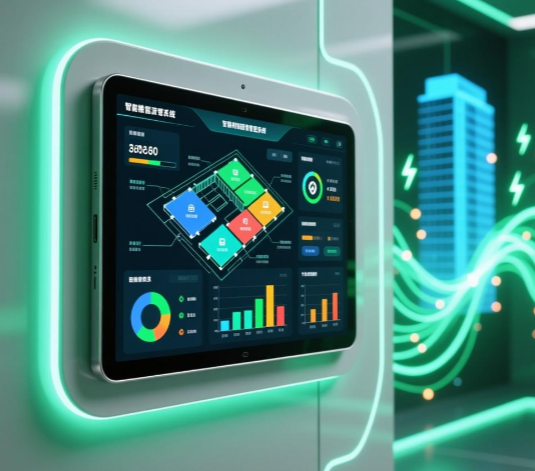
wall mount tablets, smart building energy management panels, LCD IPS panel
This article will explore the essential functions of wall mount tablets when used as smart building energy management panels. It will first introduce the current status of smart building energy management and the core requirements for terminal equipment. Then, it will technically elaborate on the essential functional modules of the tablets, including real-time data acquisition, intelligent control linkage, data analysis and visualization, and remote management.
Further, it will analyze the commercial value brought by these essential functions, such as reducing energy consumption, lowering operational costs, and improving building management efficiency. Practical application effects will be verified through typical cases in different types of smart buildings. Finally, the development direction of functional optimization of wall mount tablets in the field of smart building energy management will be prospected.
Clarifying the essential functions of wall mount tablets as smart building energy management panels is of great significance for building operators to select appropriate terminal equipment and optimize energy management systems. It also provides a clear direction for manufacturers to carry out product research and development, promoting the continuous improvement of the smart building industry chain.
- Introduction
1.1 The Status Quo and Challenges of Smart Building Energy Management
Smart building energy management has become a key link in promoting energy conservation and emission reduction in the construction industry. Current smart buildings are equipped with a variety of energy-consuming equipment such as air conditioning, lighting, and elevators, as well as renewable energy systems including solar and wind power. The complex energy consumption structure requires a comprehensive and refined management system to coordinate and optimize energy use.
However, many existing smart buildings still face challenges in energy management. Some buildings lack a unified energy data collection and analysis platform, leading to fragmented energy information and difficulty in forming an overall energy management strategy. Others have incomplete control functions, unable to realize automatic adjustment of energy-consuming equipment according to actual energy consumption and environmental changes, resulting in unnecessary energy waste.
In addition, the lack of real-time monitoring and early warning mechanisms makes it difficult to detect abnormal energy consumption in a timely manner, which may lead to equipment failures or potential safety hazards. These challenges highlight the importance of high-performance terminal equipment represented by wall mount tablets in smart building energy management systems.
1.2 Core Requirements for Terminal Equipment in Smart Building Energy Management
Terminal equipment used in smart building energy management must meet a series of core requirements to adapt to the complex and diverse application scenarios. Firstly, it must have reliable data collection capabilities, which can accurately and stably collect energy consumption data of various equipment and environmental parameter data in the building.
Secondly, it needs to support intelligent control linkage, which can realize automatic adjustment of energy-consuming equipment through preset strategies or remote instructions, achieving the balance between energy conservation and comfortable use. Thirdly, it should have powerful data analysis and visualization capabilities, which can process and analyze the collected data, and present the results to managers in an intuitive way.
Fourthly, it must have stable and reliable operation performance, as energy management systems need to run continuously for a long time to ensure the real-time and effectiveness of energy monitoring and control. Finally, it should have good compatibility and expandability, which can be seamlessly integrated with other systems in the building and support the addition of new functional modules as needed.
- Technical Explanation of Essential Functions for Wall Mount Tablets
2.1 Real-Time Data Acquisition and Integration Function
Real-time data acquisition and integration is the basic and core function of wall mount tablets used as smart building energy management panels. This function enables the tablets to connect with various sensors and smart meters in the building, collecting energy consumption data such as electricity, water and gas in real time.
To ensure the accuracy and comprehensiveness of data collection, the tablets need to support multiple communication protocols, which can be compatible with different types of smart devices. The collected data is aggregated and preprocessed locally by the tablets, filtering out abnormal data to ensure data quality. This function lays a solid data foundation for subsequent energy analysis and intelligent control.
The tablets are equipped with high-definition LCD IPS panels, which can display the collected real-time data in a clear and intuitive manner. Managers can directly view key energy consumption data through the tablet interface, grasping the energy use status of the building at any time. This real-time data display function enhances the timeliness of energy management and helps managers make quick decisions.
2.2 Intelligent Control and Linkage Function
Intelligent control and linkage is an essential function to realize energy-saving operation of smart buildings. Wall mount tablets with this function can issue control instructions to various energy-consuming equipment in the building according to preset energy management strategies and real-time data analysis results.
For example, the tablets can automatically adjust the operating parameters of air conditioning systems according to the monitored indoor temperature and humidity data, ensuring a comfortable indoor environment while minimizing energy consumption. They can also link with lighting systems, automatically turning on or off lights according to the intensity of natural light and personnel distribution, achieving intelligent energy conservation.
This function also supports manual intervention. Managers can manually issue control commands through the tablet interface when necessary, realizing the combination of automatic control and manual management. The intelligent control and linkage function effectively improves the automation level of building energy management, reducing the reliance on manual operation and the probability of human error.
2.3 Data Analysis and Visualization Function
Data analysis and visualization function is crucial for wall mount tablets to realize refined energy management. The tablets can process and analyze the collected historical and real-time energy data through built-in data analysis algorithms, extracting valuable information such as energy consumption trends, peak and valley periods of energy use, and energy-saving potential.
Through data analysis, the tablets can identify abnormal energy consumption behaviors and generate early warning prompts to help managers discover and solve energy waste problems in a timely manner. They can also establish energy consumption baseline models, comparing the actual energy consumption with the baseline to evaluate the effect of energy-saving measures.
The visualization function presents the analysis results in the form of charts, curves and dashboards. The high-quality LCD IPS panels of the tablets ensure that the visual content is clear and easy to understand, allowing managers to intuitively grasp the overall energy consumption status of the building and the energy use details of each equipment. This function provides a strong data support for managers to formulate scientific and reasonable energy management strategies.
2.4 Remote Management and Maintenance Function
Remote management and maintenance function is an important guarantee for the stable and efficient operation of wall mount tablets in smart building energy management systems. This function enables managers to remotely access the tablet system through a mobile terminal or a computer, realizing remote monitoring of the tablet’s operating status and energy management data.
Managers can remotely issue control instructions, modify energy management parameters, and view historical data records through the remote management platform, without the need to be on site. This greatly improves the efficiency of management and maintenance, reducing the time and cost of on-site operations.
In addition, the function supports remote fault diagnosis and software updates. The system can automatically detect the operating status of the tablets, and send fault alarms to managers when abnormalities occur. Managers can remotely diagnose the cause of the fault and carry out remote maintenance. At the same time, the latest system software and function modules can be remotely updated to ensure that the tablets always have the most advanced performance and functions.
2.5 System Compatibility and Expansion Function
System compatibility and expansion function is essential for wall mount tablets to adapt to the continuous development of smart building energy management systems. This function enables the tablets to seamlessly integrate with other systems in the building, such as building automation systems, security systems and property management systems, realizing the sharing and interconnection of data.
The tablets support a variety of standard communication interfaces and protocols, which can be easily connected with different types of hardware equipment and software systems. This compatibility ensures the integrity and consistency of the smart building’s overall management system, avoiding the formation of information islands.
At the same time, the expandable hardware and software design of the tablets allows for the addition of new functional modules according to the changing needs of building energy management. For example, with the popularization of renewable energy, new functional modules for monitoring and managing solar and wind energy systems can be added to the tablets, realizing the comprehensive management of various energy sources in the building.
- Commercial Value of Essential Functions for Wall Mount Tablets
3.1 Reduction of Building Energy Consumption and Operational Costs
The essential functions of wall mount tablets used as smart building energy management panels can effectively reduce building energy consumption and operational costs. The real-time data acquisition and analysis function helps managers accurately grasp the energy use status of the building, identify energy-saving potential, and formulate targeted energy-saving strategies.
The intelligent control and linkage function realizes the automatic adjustment of energy-consuming equipment, avoiding energy waste caused by improper operation. For example, the intelligent adjustment of air conditioning and lighting systems can reduce energy consumption by 15% to 30% compared with traditional manual control methods. The reduction in energy consumption directly lowers the energy expenditure of the building, bringing significant economic benefits to the building operator.
In addition, the remote management and maintenance function reduces the need for on-site inspection and maintenance, saving labor costs. The early warning function of abnormal energy consumption also helps to avoid equipment damage caused by long-term abnormal operation, reducing maintenance costs.
3.2 Improvement of Building Management Efficiency and Level
The essential functions of wall mount tablets greatly improve the efficiency and level of smart building management. The real-time monitoring and data visualization functions enable managers to grasp the energy consumption status and equipment operation status of the building in real time, without the need for tedious manual data collection and sorting.
The intelligent control function reduces the manual intervention in the operation of energy-consuming equipment, improving the automation level of management. The remote management function allows managers to carry out management work anytime and anywhere, breaking the limitations of time and space. These functions comprehensively improve the efficiency of building energy management, enabling managers to focus more on strategic decision-making rather than daily trivial operations.
Moreover, the data analysis function provides scientific basis for building management decisions. Managers can formulate reasonable management strategies based on accurate data analysis results, improving the scientificity and rationality of management, and thus enhancing the overall management level of the building.
3.3 Enhancement of Building Comfort and User Experience
The essential functions of wall mount tablets also help to enhance the comfort of smart buildings and improve user experience. The intelligent control and linkage function can automatically adjust the indoor temperature, humidity, lighting and other environmental parameters according to the actual needs of users, creating a comfortable and livable indoor environment.
For example, in office buildings, the tablets can adjust the lighting brightness according to the intensity of natural light and the distribution of personnel, ensuring a comfortable visual environment for employees. In residential buildings, they can adjust the operating mode of the air conditioning according to the living habits of residents, improving the quality of life.
The real-time monitoring function also ensures the stability of the building’s energy supply and equipment operation, avoiding discomfort caused by equipment failures such as power outages and air conditioning malfunctions. These improvements in comfort and user experience enhance the competitiveness of smart buildings in the market.
3.4 Promotion of Green and Low-Carbon Development of Buildings
The essential functions of wall mount tablets play an important role in promoting the green and low-carbon development of smart buildings. By reducing energy consumption and improving energy utilization efficiency, the tablets help buildings reduce carbon emissions, in line with the global low-carbon development trend and the requirements of dual-carbon strategies.
The data collection and analysis function of the tablets can accurately record the carbon emission data of the building, providing a reliable basis for carbon emission accounting and carbon footprint tracking. This is conducive for buildings to obtain relevant green building certifications and enhance their social image.
In addition, the compatibility and expansion functions of the tablets support the integration of renewable energy systems, promoting the application of clean energy in buildings. This further reduces the reliance on traditional fossil energy, advancing the green and low-carbon transformation of the construction industry.
- Typical Use Cases
4.1 Application in a Large Commercial Complex
A large commercial complex with a construction area of over 200,000 square meters faced significant challenges in energy management. The complex had a large number of energy-consuming equipment, including central air conditioning, elevators, lighting and catering equipment, resulting in high energy consumption and operational costs. The management team needed an efficient energy management solution to reduce energy waste and improve management efficiency.
The complex deployed wall mount tablets as smart building energy management panels in key areas such as the central control room, floor corridors and equipment rooms. The tablets were equipped with essential functions such as real-time data acquisition, intelligent control linkage, and data analysis and visualization. They connected with over 500 smart meters and sensors in the complex, collecting real-time energy consumption data of electricity, water and gas.
Through the data analysis function, the tablets identified the peak periods of energy consumption and high-energy-consuming equipment, and the management team formulated targeted energy-saving strategies. The intelligent control linkage function realized the automatic adjustment of central air conditioning and lighting systems. For example, during non-business hours, the tablets automatically reduced the operating load of the central air conditioning and turned off the lighting in non-traffic areas.
The remote management function allowed the management team to monitor the energy consumption status of the complex in real time through mobile phones and computers, and issue control instructions remotely. After one year of operation, the energy consumption of the commercial complex decreased by 22%, saving more than 1.5 million yuan in energy costs. The management efficiency was significantly improved, and the number of on-site maintenance personnel was reduced by 30%.
4.2 Application in an Intelligent Office Building
An intelligent office building focusing on green and low-carbon development needed to improve the level of energy management to meet the needs of employees for a comfortable office environment while reducing energy consumption. The building had a variety of intelligent systems, but the original energy management terminal equipment had single functions and poor compatibility, making it difficult to realize integrated management.
The building chose wall mount tablets with comprehensive essential functions as energy management panels. The tablets were seamlessly integrated with the building’s automation system, security system and employee attendance system. They collected real-time data such as indoor temperature, humidity, lighting intensity and personnel distribution through sensors.
Based on the collected data, the tablets automatically adjusted the air conditioning temperature and lighting brightness of each office area. When there were no employees in the office area, the tablets automatically turned off the air conditioning and lighting to save energy. The data visualization function displayed the daily, weekly and monthly energy consumption data of the building in the form of charts on the tablet interface, allowing the management team to intuitively grasp the energy use status.
The remote maintenance function of the tablets ensured the stable operation of the system. The management team could remotely update the system software and diagnose faults, reducing the maintenance cycle. After the deployment of the tablets, the energy consumption of the office building decreased by 18%, and the employee satisfaction with the office environment increased by 40%. The building successfully passed the green building certification, enhancing its market image.
4.3 Application in a Smart Residential Community
A smart residential community with 5,000 households needed to provide residents with a comfortable living environment while realizing energy-saving management. The community had a centralized water supply and heating system, as well as public lighting and greening irrigation equipment. The original energy management method relied on manual inspection, which was inefficient and could not meet the individual needs of residents.
The community deployed wall mount tablets in each building’s lobby and the property management center as energy management panels. The tablets collected real-time energy consumption data of each household and public areas, including electricity, water and heating. They also collected environmental data such as outdoor temperature, humidity and wind speed through outdoor sensors.
Residents could view their own energy consumption data through the tablet interface in the building’s lobby, understanding their energy use status. The property management team used the tablets’ data analysis function to formulate energy-saving strategies for public areas. For example, according to the outdoor light intensity and pedestrian flow, the tablets automatically adjusted the switching time and brightness of public lighting.
The intelligent control function of the tablets also realized the precise control of the centralized heating system. According to the outdoor temperature and the heating needs of residents, the tablets adjusted the heating supply volume, ensuring the indoor temperature of residents while reducing energy waste. After the application of the tablets, the energy consumption of the residential community decreased by 15%, and the property management costs decreased by 25%. Residents’ satisfaction with the community’s energy management and living environment was significantly improved.
- Conclusion
Wall mount tablets used as smart building energy management panels require a series of essential functions to meet the needs of refined and intelligent energy management. These functions include real-time data acquisition and integration, intelligent control and linkage, data analysis and visualization, remote management and maintenance, and system compatibility and expansion. Each of these functions plays an irreplaceable role, and together they form a comprehensive energy management terminal solution.
Technically, these essential functions rely on the powerful hardware performance and flexible software expansion capabilities of the tablets. The high-definition LCD IPS panels ensure the clarity and intuitiveness of data display. The support for multiple communication protocols and interfaces enables seamless integration with various systems and equipment in smart buildings. The built-in data analysis algorithms provide a core driving force for intelligent decision-making.
Commercially, these essential functions bring significant value to smart building operation and management. They help reduce energy consumption and operational costs, improve management efficiency and level, enhance building comfort and user experience, and promote green and low-carbon development. The typical application cases in commercial complexes, office buildings and residential communities fully verify the practical effect and broad application prospects of these essential functions.
Looking to the future, with the continuous development of technologies such as the Internet of Things, big data and artificial intelligence, the essential functions of wall mount tablets used as smart building energy management panels will continue to be optimized and upgraded. They will be more intelligent, with stronger data analysis capabilities and more accurate control performance. They will also be more integrated, realizing deeper integration with other smart systems in buildings.
For building operators, choosing wall mount tablets with complete essential functions is an important investment in improving energy management level and realizing green development. For manufacturers, focusing on the research and development and optimization of these essential functions will be the key to enhancing product competitiveness. With the joint efforts of all parties, wall mount tablets will play a more important role in the smart building industry, contributing more to the global low-carbon development and the advancement of dual-carbon strategies.


Leave a Reply
You must be logged in to post a comment.