

Ultimate PoE and DC Power Showdown: Optimal Choices for Commercial Android Tablets | Raypodo
- Introduction
Commercial Android tablets have become indispensable tools in modern business environments, powering operations ranging from retail point-of-sale systems to corporate smart building controls. The choice between PoE and DC power for these devices is a critical decision that directly impacts installation efficiency, operational reliability, and long-term cost-effectiveness. PoE and DC power each offer distinct advantages tailored to specific deployment scenarios, making it essential for system integrators and business owners to understand their core differences before making a selection. This article delves into a comprehensive comparison of PoE and DC power, equipping readers with the insights needed to make optimal power supply decisions for commercial Android tablet deployments.
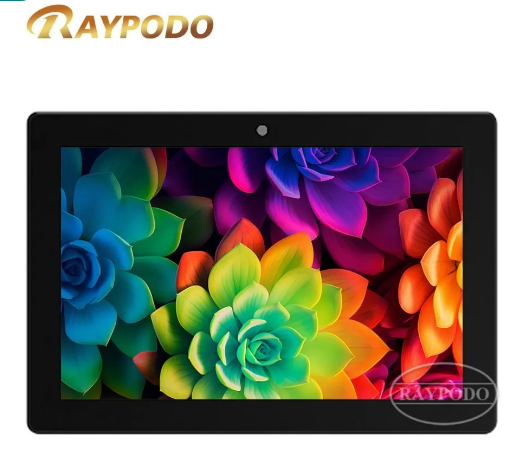
PoE and DC power
- Technical Explanation
Core Working Principles
PoE, or Power over Ethernet, delivers both electrical power and data transmission through a single standard Ethernet cable, adhering to IEEE 802.3af/at/bt standards. This technology eliminates the need for separate power wiring, as power is injected into the Ethernet cable at the switch or midspan device and extracted at the commercial Android tablet. DC power, by contrast, relies on a dedicated power adapter that converts alternating current from a wall outlet to direct current, which is then supplied to the tablet via a separate power cable. The fundamental difference lies in PoE’s integration of power and data, while DC power requires independent infrastructure for power delivery and data connectivity.
Power Supply Stability and Reliability
PoE power supply offers exceptional stability due to its regulated delivery mechanism. Most PoE switches feature built-in surge protection and voltage regulation, ensuring a consistent power flow even during minor fluctuations in the main electrical grid. This stability is crucial for commercial Android tablets operating 24/7, as it prevents unexpected shutdowns caused by voltage spikes or drops. DC power, while generally reliable, is more susceptible to disruptions from power grid inconsistencies. The performance of DC power supplies also varies significantly based on the quality of the adapter; low-grade adapters may fail to maintain stable voltage output, leading to intermittent device issues or reduced component lifespan.
Installation and Infrastructure Requirements
PoE simplifies infrastructure requirements by leveraging existing Ethernet networks. For new deployments, this means running a single cable per device instead of two separate cables for power and data. For retrofits, it eliminates the need to install additional power outlets, which is particularly beneficial in older buildings where electrical wiring upgrades are costly or impractical. DC power, however, demands a dedicated power outlet within reach of each commercial Android tablet. This requirement can significantly increase installation complexity in large-scale deployments, such as shopping malls or office campuses, where running new power cables may involve extensive construction work and compliance with electrical codes.
Power Capacity and Device Compatibility
PoE power capacity varies by standard: IEEE 802.3af provides up to 15.4 watts, 802.3at (PoE+) delivers up to 30 watts, and 802.3bt (PoE++) offers up to 60 or 90 watts. Most commercial Android tablets operate within the 15-30 watt range, making them compatible with 802.3af or 802.3at PoE standards. DC power supplies are available in a wide range of wattages, with commercial Android tablet adapters typically ranging from 12W to 60W.
While DC power can easily match the power needs of most tablets, compatibility depends on the voltage and current specifications of the device—using an incompatible DC adapter can cause immediate device damage or long-term component degradation. PoE, by contrast, features automatic negotiation between the power source and the device, ensuring only the required power is delivered, thus enhancing compatibility and safety.
Environmental Adaptability
PoE exhibits superior environmental adaptability in harsh commercial settings. The integration of power and data in a single cable reduces the number of connection points, minimizing the risk of moisture or dust ingress—a common issue in industrial warehouses or outdoor kiosk deployments. Additionally, PoE cables are often rated for greater durability, with options for shielded cables that resist electromagnetic interference (EMI) from nearby industrial equipment. DC power systems, with their separate power and data cables, have more exposed connection points, increasing vulnerability to environmental factors. DC adapters also tend to be less robust than PoE switches, with plastic casings that may degrade over time in extreme temperature conditions, leading to reduced reliability.
- Commercial Impact
Installation Cost Analysis
The initial installation cost of PoE systems is often lower than DC power in large-scale deployments. For a deployment of 50 commercial Android tablets, PoE eliminates the need for 50 additional power outlets, which can save an average of $100-$200 per outlet in electrical work and materials. The use of a single cable also reduces labor costs, as technicians require less time to run and terminate cables. DC power, while potentially cheaper for small-scale deployments (e.g., 5 or fewer tablets), becomes cost-prohibitive as the number of devices increases. The need for electricians to install new outlets and route power cables adds significant overhead, especially in commercial spaces where downtime during installation must be minimized.
Long-Term Operational Costs
The centralized nature of PoE also simplifies monitoring and maintenance; network administrators can remotely check power status and identify issues using network management tools, eliminating the need for on-site inspections of individual DC adapters. DC power systems, by contrast, require manual checks of each adapter and power outlet, increasing maintenance labor costs over time.
Downtime and Productivity Impact
Downtime associated with power issues is significantly lower with PoE than with DC power. PoE systems can be integrated with uninterruptible power supplies (UPS) at the switch level, providing backup power to all connected commercial Android tablets in the event of a main power outage. This centralized backup ensures continuous operation of critical systems, such as access control or emergency response tablets.
DC power systems require individual UPS units for each tablet to achieve similar redundancy, which is both costly and logistically complex. Furthermore, DC power failures often occur at the adapter or outlet level, requiring on-site troubleshooting that can take hours to resolve. Each hour of downtime for commercial Android tablets can cost businesses hundreds or thousands of dollars in lost revenue or productivity, making PoE’s superior uptime a valuable asset.
Scalability and Future-Proofing
PoE offers exceptional scalability for growing businesses. Expanding a PoE-powered commercial Android tablet deployment simply involves adding more devices to the existing Ethernet network and ensuring the PoE switch has available power ports. Most modern PoE switches support hot-swappable modules, allowing for easy capacity upgrades without disrupting existing operations. DC power systems, however, require additional power outlets and adapters for each new device, which can become a bottleneck in rapidly expanding businesses.
Additionally, PoE is compatible with emerging technologies such as IoT sensors and smart building systems, enabling businesses to integrate commercial Android tablets with a broader ecosystem of devices. DC power, being a more traditional solution, lacks this level of integration flexibility, potentially requiring costly infrastructure overhauls when adopting new technologies.
Risk Mitigation and Safety Compliance
PoE systems inherently reduce safety risks compared to DC power. PoE operates at low voltage (typically 44-57V DC), which is significantly safer than the 120/240V AC used in wall outlets for DC adapters. This reduces the risk of electrical shock during installation and maintenance, a critical consideration in public spaces or busy commercial environments. PoE also complies with global safety standards such as UL, CE, and FCC, simplifying compliance for businesses operating across multiple regions.
DC power systems face greater compliance challenges, as power adapters must meet regional safety standards and may require separate certifications for different markets. Additionally, the use of multiple DC adapters increases the risk of overheating or fire if adapters are of poor quality or improperly installed, adding to the overall risk profile of DC-powered deployments.
- Typical Use Cases
Large-Scale Retail Deployments
In large retail chains with dozens of commercial Android tablets used for inventory management, price checking, and point-of-sale operations, PoE is the optimal power solution. PoE’s single-cable installation allows tablets to be mounted anywhere with Ethernet access, reducing installation time and minimizing disruption to store operations. The centralized power management of PoE also enables IT teams to remotely monitor device power status, ensuring all tablets remain operational during peak shopping hours. DC power would be impractical here due to the high number of power outlets needed and the difficulty of maintaining dozens of individual adapters.
Smart Building Control Systems
Commercial Android tablets used as smart building control panels for lighting, HVAC, and security systems benefit greatly from PoE power. These tablets are often installed in remote locations such as stairwells, basements, and ceiling cavities, where access to power outlets is limited. PoE’s ability to deliver power and data over a single cable simplifies installation in these hard-to-reach areas, eliminating the need for expensive electrical work. The integration of PoE with building management systems also allows for seamless synchronization of power and data, ensuring control panels respond quickly to system commands. DC power would require running dedicated power cables to each control panel, increasing installation costs and extending project timelines.
Small Business POS Systems
For small businesses with 1-3 commercial Android tablets used as POS systems, DC power may be the more cost-effective choice. Small deployments do not require the scalability or centralized management offered by PoE, and DC adapters are readily available at low cost. Most small businesses already have existing power outlets near checkout counters, eliminating the need for additional electrical work. DC power also offers simplicity in this context, as business owners can easily replace adapters if needed without specialized IT knowledge. However, even in small deployments, some businesses may opt for PoE if they plan to expand in the future or require a cleaner installation with fewer cables.
Industrial Manufacturing Facilities
In industrial settings, commercial Android tablets are used for production line monitoring, inventory tracking, and equipment control. These environments are characterized by high levels of electromagnetic interference, vibration, and dust, making PoE the superior power solution. Shielded PoE cables resist EMI from industrial machinery, ensuring stable data transmission and power delivery. The robust design of PoE switches and devices also withstands vibration and dust better than DC adapters, which are often fragile and prone to failure in harsh industrial conditions. DC power would require frequent adapter replacements and maintenance, leading to increased downtime and reduced productivity in manufacturing operations.
- Conclusion
The choice between PoE and DC power for commercial Android tablets is not a one-size-fits-all decision but rather depends on the specific needs of the deployment. PoE emerges as the superior choice for large-scale deployments, remote or hard-to-reach locations, harsh environmental conditions, and businesses prioritizing scalability, low long-term costs, and centralized management. Its integration of power and data simplifies installation, enhances reliability, and reduces safety risks, making it ideal for smart buildings, retail chains, and industrial facilities.
DC power, while more cost-effective for small-scale, simple deployments, lacks the flexibility and efficiency of PoE, making it best suited for small businesses with limited expansion plans. By understanding the technical and commercial differences outlined in this article, system integrators and business owners can select the power solution that optimizes performance, minimizes costs, and supports long-term business objectives for their commercial Android tablet deployments.


Leave a Reply
You must be logged in to post a comment.