

What factors determine the choice of screen size for wall mount tablets in retail stores?
Retail stores encompass a wide range of spaces and functional areas, from narrow aisles and small checkout zones to spacious product halls and entrance lobbies. Each of these areas presents unique viewing conditions and content requirements, which in turn dictate the optimal screen size for wall mount tablets. Moreover, factors such as viewing distance, the complexity of displayed content, and integration with the store’s overall design aesthetic further complicate the decision-making process.
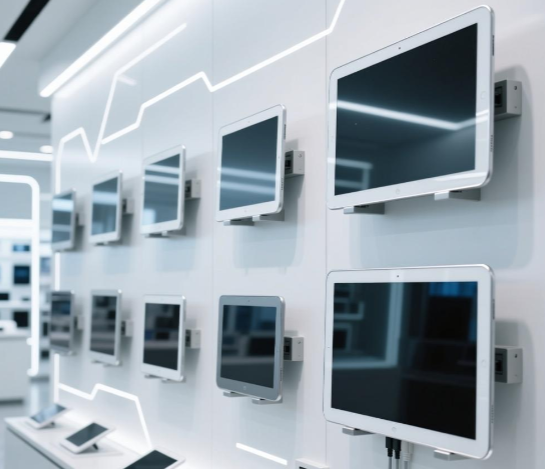
Wall Mount Tablets for retail stores
Understanding the key factors that determine screen size selection is essential for retailers aiming to maximize the value of their wall mount tablet investments. It ensures that the devices not only fulfill their functional purposes but also contribute positively to the overall shopping experience without appearing obtrusive or ineffective. This article will explore these determining factors in detail, examining their technical and practical implications, analyzing their commercial impact on retail operations, and presenting real-world application cases to illustrate how informed screen size choices drive successful outcomes.
By delving into the multifaceted considerations that guide screen size selection for wall mount tablets in retail settings, this article aims to provide retailers and industry professionals with a comprehensive framework for making optimal decisions. This guidance will help align device specifications with operational needs, ultimately enhancing customer engagement, improving operational efficiency, and boosting the return on investment in retail technology.
- Introduction
1.1 The Role of Wall Mount Tablets in Modern Retail
The retail landscape is increasingly embracing digital transformation, with wall mount tablets emerging as versatile tools that support a variety of retail functions. These devices are deployed across different areas of retail stores to serve purposes such as product information display, promotional content delivery, self-service checkout assistance, inventory查询, and wayfinding guidance.
The effectiveness of these wall mount tablets hinges significantly on their screen size, as it directly affects how easily customers and staff can interact with the displayed content. A well-chosen screen size ensures that text, images, and videos are legible and engaging, while a poorly selected size can render the device ineffective—either by being too small to be seen from a distance or too large to fit seamlessly into the store’s layout.
1.2 The Significance of Screen Size Selection
Screen size is a foundational specification that impacts nearly every aspect of a wall mount tablet’s performance in a retail environment. It influences visibility under different lighting conditions, the amount of content that can be displayed simultaneously, and the overall user experience. For retailers, investing time in evaluating the factors that determine optimal screen size is a strategic move that can enhance the functionality of the devices, reduce unnecessary costs, and improve customer satisfaction.
In an era where customer experience is a key differentiator, the ability of wall mount tablets to deliver clear, accessible content is paramount. The right screen size ensures that these devices integrate harmoniously into the retail environment, providing value without disrupting the shopping experience. This article will systematically explore the various factors that retailers must consider when selecting screen sizes for their wall mount tablets, from practical environmental constraints to user-centric content requirements.
- Technical Explanation of Determining Factors for Screen Size Selection
2.1 Viewing Distance and Angle Considerations
Viewing distance is one of the most fundamental factors that dictate the appropriate screen size for wall mount tablets in retail stores. The distance between the intended viewer and the device directly impacts the minimum screen size required to ensure content legibility. For instance, in large retail halls or entrance areas where customers may be several meters away from the tablet, a larger screen size is necessary to make text and images visible without straining the eyes.
Conversely, in narrow aisles or checkout counters where viewers are typically within arm’s reach of the device, a smaller screen size is sufficient. A screen that is too large in these close-proximity settings can be overwhelming and may not fit within the available space. Additionally, the LCD IPS panel’s inherent wide viewing angle capabilities must be considered alongside screen size; while these panels ensure visibility from multiple angles, the screen size still needs to be proportionate to the viewing distance to maintain clarity.
Viewing angle distribution within the retail space also plays a role. In areas where customers may approach the wall mount tablet from various directions, such as intersection points of aisles, the combination of an appropriately sized screen and the LCD IPS panel’s wide viewing angles ensures that content remains visible and legible to all potential viewers.
2.2 Content Type and Complexity
The type and complexity of the content displayed on the wall mount tablet are key determinants of screen size. Retailers use these devices to display a wide range of content, from simple text-based product descriptions to complex multimedia presentations, interactive product catalogs, and real-time data dashboards.
Simple content, such as short promotional messages or basic product prices, can be effectively displayed on smaller screens. However, complex content—such as detailed product specifications, high-resolution images, video tutorials, or interactive maps—requires a larger screen size to ensure that all elements are clearly visible and that the user interface remains intuitive. For example, an interactive product catalog that allows customers to browse multiple product images and details simultaneously will benefit from a larger screen to prevent overcrowding and maintain ease of navigation.
The density of content also influences screen size selection. Content with high information density, such as inventory lists or detailed promotional schedules, requires more screen real estate to display clearly without forcing users to scroll excessively. The LCD IPS panel’s high resolution complements the screen size in such cases, ensuring that even dense content remains sharp and readable.
2.3 Retail Space Constraints
The physical constraints of the retail space where the wall mount tablet is deployed directly limit the available screen size options. Retail stores vary widely in layout, with different areas offering varying amounts of wall space and mounting possibilities. For example, small convenience stores or narrow boutique aisles may have limited wall space, making compact screen sizes the only feasible option.
In contrast, large department stores or big-box retailers may have ample wall space in high-traffic areas, allowing for larger screen sizes that can attract more attention. Additionally, the proximity of other store fixtures—such as shelves, display cases, and checkout counters—must be considered. A wall mount tablet’s screen size must be compatible with its surrounding environment to avoid obstructing access to products or disrupting the flow of customer traffic.
Mounting height is another spatial factor that interacts with screen size. Tablets mounted at higher heights, such as near the ceiling in entrance lobbies, require larger screen sizes to ensure visibility from ground level. Conversely, tablets mounted at eye level in checkout areas can utilize smaller screen sizes while maintaining readability.
2.4 Functional Purpose of the Tablet
The specific functional role of the wall mount tablet in the retail store is a critical factor in determining screen size. Different use cases have distinct requirements that influence the optimal screen size.
For example, tablets used for wayfinding or store maps typically require larger screens to display the entire store layout clearly, allowing customers to easily locate departments or products. In contrast, tablets used for individual product information at the shelf edge can be smaller, as they only need to display details about a specific product and are viewed from close range.
Self-service checkout assistance tablets often benefit from medium to large screen sizes to guide customers through the checkout process with clear, step-by-step instructions. Promotional display tablets deployed in high-traffic areas may use larger screens to attract customer attention with vivid videos and images, while inventory management tablets used by staff may utilize smaller, more portable-sized screens that are still large enough to display inventory data clearly.
2.5 Lighting Conditions in the Retail Environment
Lighting conditions within the retail store influence screen size selection by affecting content visibility. Retail environments feature a range of lighting scenarios, from bright natural light in stores with large windows to dimly lit sections in specialty retail areas such as jewelry or apparel departments.
In brightly lit areas, glare and reflections can reduce the visibility of content on smaller screens. Larger screen sizes can help mitigate this issue by providing a larger surface area for content, making it easier to read even in suboptimal lighting conditions. The LCD IPS panel’s brightness and contrast capabilities work in tandem with screen size; however, a larger screen can still enhance visibility by making text and images more prominent against bright backgrounds.
In dimly lit areas, smaller screen sizes may be sufficient, as the reduced ambient light minimizes glare and makes content more readable. However, even in these settings, the screen size must be large enough to ensure that content is easily visible without requiring customers to move too close to the device.
- Commercial Impact of Screen Size Selection
3.1 Impact on Customer Engagement and Shopping Experience
The screen size of wall mount tablets has a direct impact on customer engagement and the overall shopping experience. An appropriately sized screen ensures that content is easily accessible and engaging, encouraging customers to interact with the device and absorb the information presented. For example, a large screen displaying high-quality promotional videos in a store’s entrance can capture customer attention and draw them into the store, while a well-sized product information tablet can help customers make informed purchasing decisions.
Conversely, an improperly sized screen can frustrate customers and deter engagement. A screen that is too small may require customers to squint or stand uncomfortably close to read content, while a screen that is too large may be overwhelming or out of place in the retail environment. Positive customer engagement driven by optimal screen size can lead to increased brand loyalty and higher sales, as customers perceive the store as modern and customer-centric.
The LCD IPS panel’s role in enhancing the viewing experience further amplifies the impact of screen size. When paired with the right screen size, the panel’s wide viewing angles and high color accuracy ensure that all customers, regardless of their position relative to the device, can enjoy a consistent and high-quality viewing experience.
3.2 Impact on Deployment Costs and ROI
Screen size directly influences the cost of wall mount tablets, with larger screens typically commanding higher price points. This has a significant impact on deployment costs, especially for retailers planning to install multiple devices across their stores. Selecting the optimal screen size helps retailers balance functionality and cost, ensuring that they do not overinvest in unnecessarily large screens or underinvest in screens that are too small to be effective.
A well-chosen screen size also improves return on investment by maximizing the effectiveness of the wall mount tablets. For example, a properly sized promotional tablet can drive higher sales through increased customer engagement, while a correctly sized inventory management tablet can improve staff efficiency, reducing operational costs. Additionally, selecting a screen size that is compatible with the store’s existing infrastructure and mounting solutions can reduce installation costs.
Long-term maintenance costs are also influenced by screen size. Larger screens may have higher maintenance costs if they are more prone to damage or require specialized cleaning, while smaller screens may be more durable and easier to maintain. Retailers must consider these long-term costs when selecting screen sizes to ensure that the total cost of ownership remains manageable.
3.3 Impact on Brand Image and Store Aesthetics
Wall mount tablets are not just functional tools; they also contribute to the overall aesthetic of the retail store and the perception of the brand. The screen size of these devices must align with the store’s design theme and brand image to create a cohesive and professional appearance.
For luxury retail brands, sleek, appropriately sized screens that integrate seamlessly into the store’s high-end design can enhance the brand’s premium image. In contrast, discount retailers may opt for more practical, cost-effective screen sizes that prioritize functionality without compromising the store’s clean and organized appearance. A screen size that is out of proportion with the store’s layout or design can detract from the overall aesthetic, creating a disjointed shopping environment that may negatively impact brand perception.
Consistency in screen size across multiple devices within a store also contributes to a polished and professional look. Retailers that standardize on appropriate screen sizes for different functional areas create a cohesive experience that reinforces brand identity and makes the store easier to navigate for customers.
- Typical Use Cases
4.1 Large Retail Supermarket Wayfinding Tablets
A large regional supermarket chain sought to improve customer wayfinding by deploying wall mount tablets at key locations throughout its stores, including entrance lobbies, aisle intersections, and near the customer service desk. The primary goal was to help customers quickly locate products and departments, reducing the time spent searching and improving the overall shopping experience.
The supermarket’s design team conducted a thorough analysis of viewing distances and space constraints. In entrance lobbies, where customers were typically 5-7 meters away from the tablets, the team selected 21.5-inch screens. These larger screens ensured that the store’s full layout map was clearly visible from a distance, allowing customers to orient themselves before entering the main shopping area. The LCD IPS panels provided wide viewing angles, ensuring that multiple customers could view the map simultaneously without loss of clarity.
At aisle intersections, where viewing distances were shorter (2-3 meters), the team opted for 15.6-inch screens. These medium-sized screens were large enough to display detailed aisle-specific maps and product category information, while fitting seamlessly into the available wall space between shelves. The tablets were programmed to display interactive maps that allowed customers to search for specific products, with the screen size ensuring that search results and navigation instructions were easily readable.
Following deployment, customer surveys revealed a 32% reduction in the time customers spent searching for products. Store staff also reported a decrease in customer inquiries about product locations. The optimal screen size selection, paired with the LCD IPS panel’s performance, ensured that the wayfinding tablets were highly effective, contributing to improved customer satisfaction and increased loyalty to the supermarket chain.
4.2 Boutique Apparel Store Product Information Tablets
A high-end boutique apparel store specializing in designer clothing wanted to enhance the in-store shopping experience by providing detailed product information through wall mount tablets deployed alongside clothing racks. The store aimed to offer customers information such as fabric composition, care instructions, sizing guides, and styling suggestions, without cluttering the display areas with printed materials.
Given the boutique’s narrow aisles and limited wall space near the clothing racks, the store’s management team selected 10.1-inch screens for the wall mount tablets. These compact screens were small enough to fit seamlessly between the racks without obstructing access to the clothing, while still being large enough to display the required product information clearly. The viewing distance for these tablets was typically less than 1 meter, making the smaller screen size appropriate for close-range reading.
The LCD IPS panels were chosen for their high color accuracy, ensuring that images of the clothing items displayed on the tablets matched the actual products perfectly. The tablets were integrated into the store’s overall design aesthetic, with sleek mounting solutions that complemented the boutique’s upscale ambiance. Customers were able to easily access detailed information by tapping on the screen, with the compact size making the interaction intuitive and unobtrusive.
The deployment of the product information tablets was met with positive feedback from customers, who appreciated the convenient access to detailed information without the need to ask store staff. Sales data showed a 15% increase in the sale of items paired with the tablets, as customers felt more confident in their purchasing decisions due to the comprehensive information provided. The optimal screen size selection ensured that the tablets enhanced the shopping experience without detracting from the boutique’s elegant design.
4.3 Electronics Retail Store Promotional and Demo Tablets
A national electronics retail chain wanted to showcase its latest products and promotions through interactive wall mount tablets deployed in high-traffic areas of its stores, such as near the entrance, in the smartphone section, and in the home entertainment department. The goal was to attract customer attention, provide interactive product demonstrations, and drive sales of featured items.
In the store entrance and home entertainment departments, where viewing distances were 4-6 meters and the goal was to attract attention with high-quality video content, the chain selected 27-inch large screens. These screens displayed high-definition promotional videos of the latest electronics products, with the large size ensuring that the content was visible from across the store floor. The LCD IPS panels delivered vibrant colors and wide viewing angles, making the videos engaging for customers from all directions.
In the smartphone section, where customers were typically 1-2 meters away from the tablets and the focus was on interactive product demonstrations, the chain opted for 18.5-inch screens. These medium-sized screens were large enough to display detailed product specifications, comparison charts, and interactive demos of smartphone features, while fitting within the dedicated display areas. Customers could tap on the screen to explore different phone models, view camera samples, and test software features, with the screen size ensuring that all interactive elements were easy to navigate.
The promotional and demo tablets proved highly effective, with store management reporting a 28% increase in inquiries about featured products and a 21% increase in sales of the products showcased on the tablets. Customers particularly praised the clarity of the content and the ease of interaction, attributes that were directly enhanced by the optimal screen size selection. The combination of large screens for high-impact promotion and medium screens for detailed interaction ensured that the tablets met the chain’s diverse marketing objectives.
- Conclusion
The choice of screen size for wall mount tablets in retail stores is a multifaceted decision shaped by a combination of technical, environmental, and commercial factors. Viewing distance, content type and complexity, retail space constraints, the functional purpose of the tablet, and lighting conditions all play critical roles in determining the optimal screen size. Each of these factors interacts with one another, requiring retailers to take a holistic approach to screen size selection to ensure that their wall mount tablets are both effective and efficient.
From a technical perspective, the alignment of screen size with viewing distance and content requirements ensures that the content displayed on the LCD IPS panel is visible, legible, and engaging. The inherent capabilities of LCD IPS panels, such as wide viewing angles and high color accuracy, complement the chosen screen size, enhancing the overall viewing experience for customers and staff alike. Retailers must also consider the physical constraints of their store layout to ensure that the selected screen size fits seamlessly into the environment without causing disruptions.
Commercially, optimal screen size selection directly impacts customer engagement, deployment costs, return on investment, and brand image. An appropriately sized screen enhances customer experience by making content accessible and interactive, driving higher engagement and potentially increasing sales. It also helps retailers balance cost and functionality, ensuring that they invest in devices that deliver maximum value without unnecessary expenditure. Additionally, screen size contributes to the overall aesthetic of the store, reinforcing brand identity and creating a cohesive shopping environment.
The typical use cases presented in this article illustrate how informed screen size decisions translate into successful retail deployments. Whether for wayfinding in large supermarkets, product information in boutique stores, or promotional content in electronics retail, the right screen size ensures that wall mount tablets fulfill their intended purpose and deliver tangible benefits.
Looking to the future, as retail technology continues to evolve, the factors determining screen size selection will remain relevant, though new considerations may emerge as content becomes more advanced and retail environments become more digitally integrated. Retailers should continue to prioritize a user-centric approach to screen size selection, focusing on the needs of their customers and the specific requirements of their retail operations.
In conclusion, the successful selection of screen size for wall mount tablets in retail stores requires a comprehensive understanding of the interplay between technical factors, environmental constraints, and commercial objectives. By carefully evaluating these factors and aligning them with their specific retail needs, retailers can deploy wall mount tablets that enhance the shopping experience, improve operational efficiency, and drive business success.


Leave a Reply
You must be logged in to post a comment.