

Is it possible to upgrade the processor or memory of existing wall mount tablets?
Wall mount tablet hardware upgrade has become a hot topic among enterprises that use wall mount tablets for a long time. As business needs evolve and application scenarios become more complex, the performance of existing wall mount tablets may gradually fail to meet operational requirements. Many enterprises are considering whether to upgrade the core hardware components such as processors or memory of existing devices to improve performance, rather than directly replacing them with new devices. This exploration is closely related to the cost control and resource utilization of enterprises.
Existing wall mount tablets are widely used in various fields such as enterprise office, industrial control, and public service. These devices are usually designed with specific application scenarios in mind, and their hardware structures have certain particularities. Whether the processor or memory can be upgraded is affected by multiple factors such as hardware design, interface compatibility, and system support. Clarifying the feasibility of such upgrades and the key points that need attention is of great significance for enterprises to make scientific decisions.
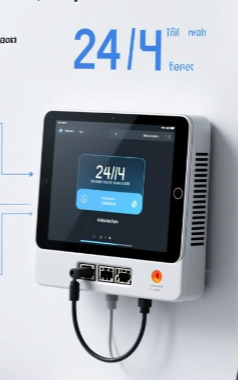
Wall mount tablet hardware upgrade, Processor memory upgrade, Existing device upgrade feasibility
This article will focus on wall mount tablet hardware upgrade, systematically analyze the feasibility of upgrading the processor or memory of existing wall mount tablets, elaborate on the technical difficulties and key factors involved in the upgrade process, explore the commercial impact of hardware upgrades on enterprises, verify the practical effect of related upgrades through typical application cases, and finally summarize practical suggestions for enterprises considering hardware upgrades of existing wall mount tablets.
The following discussion will first clarify the application background and upgrade demands of wall mount tablet hardware upgrade, then deeply analyze the technical feasibility of processor and memory upgrades, explore the commercial value and potential risks brought by hardware upgrades, present real cases reflecting the effect of hardware upgrades, and finally synthesize key conclusions to provide targeted guidance for enterprises in the hardware upgrade of existing wall mount tablets.
- Introduction: Background and Demands of Wall Mount Tablet Hardware Upgrade
1.1 Application Status and Performance Bottlenecks of Existing Wall Mount Tablets
Existing wall mount tablets have been serving enterprises for a long time, undertaking important tasks such as data processing, information display, and human-computer interaction. In enterprise office scenarios, they are used as intelligent terminal devices to realize remote collaboration and document processing; in industrial control scenarios, they are responsible for real-time data monitoring and equipment operation control; in public service scenarios, they serve as self-service terminals to provide convenience for the public.
However, with the continuous development of technology and the increasing complexity of business applications, the performance of existing wall mount tablets is gradually showing bottlenecks. For example, when running multiple complex applications at the same time, the device may experience lag; when processing large amounts of data, the processing speed is slow, which affects the efficiency of business operations. These problems make enterprises consider upgrading the hardware of existing devices to improve performance.
1.2 Core Demands of Wall Mount Tablet Hardware Upgrade for Enterprises
Enterprises’ demands for wall mount tablet hardware upgrade are mainly concentrated on improving device performance and extending service life. On the one hand, by upgrading the processor or memory, the data processing speed and multitasking capability of the device can be improved, so that it can adapt to more complex application scenarios. On the other hand, compared with replacing new devices, upgrading the hardware of existing devices can save a lot of procurement costs and reduce enterprise expenditure.
In addition, some enterprises also hope to realize the compatibility of new applications through hardware upgrades. With the emergence of new business software and application systems, the hardware requirements for terminal devices are constantly increasing. Upgrading the processor or memory of existing wall mount tablets can make them compatible with new applications, avoiding the waste of resources caused by the inability to use existing devices.
1.3 Significance of Exploring the Feasibility of Wall Mount Tablet Hardware Upgrade
Exploring the feasibility of wall mount tablet hardware upgrade is of great practical significance for enterprises. For enterprises that have a large number of existing wall mount tablets, clarifying whether hardware upgrades are feasible can help them formulate more reasonable equipment update plans, balance performance requirements and cost control, and improve the efficiency of resource utilization.
From the perspective of the industry, in-depth research on the hardware upgrade of wall mount tablets can also promote the optimization of product design by manufacturers. Understanding the upgrade needs of enterprises can help manufacturers design more flexible and scalable wall mount tablets in the process of product research and development, improving the market competitiveness of products. Therefore, exploring the feasibility of upgrading the processor or memory of existing wall mount tablets has important theoretical and practical value.
- Technical Explanation: Feasibility and Key Factors of Wall Mount Tablet Hardware Upgrade
2.1 Hardware Design Characteristics of Existing Wall Mount Tablets
The hardware design of existing wall mount tablets has significant particularities compared with ordinary consumer-grade tablets. In order to meet the needs of wall-mounted installation and long-term stable operation, the internal structure of wall mount tablets is usually more compact, and the layout of components is more fixed. Most of the core components such as processors and memory are soldered directly to the motherboard, rather than using detachable slots.
This integrated design can improve the stability and reliability of the device, reduce the failure rate caused by loose components, and is suitable for the long-term continuous operation needs of wall mount tablets. However, this design also brings great difficulties to hardware upgrades. The soldered components are not easy to disassemble and replace, and professional equipment and technical capabilities are required to complete the replacement work.
In addition, the power supply module and heat dissipation system of existing wall mount tablets are designed according to the original processor and memory specifications. If the processor or memory is upgraded to a higher-performance model, the power consumption and heat generation will usually increase, which may exceed the load capacity of the original power supply module and heat dissipation system, affecting the stable operation of the device.
2.2 Feasibility Analysis of Processor Upgrade for Existing Wall Mount Tablets
The feasibility of upgrading the processor of existing wall mount tablets is relatively low. First of all, as mentioned earlier, most processors of wall mount tablets are soldered to the motherboard. Disassembling the original processor requires the use of professional equipment such as hot air guns, and the operation process is complicated. If the operation is improper, the motherboard may be damaged, resulting in the complete failure of the device.
Secondly, processor upgrades are subject to motherboard chipset compatibility. Different processors require matching chipsets to support their normal operation. The chipset of the motherboard of existing wall mount tablets is usually fixed and cannot be replaced. If the selected new processor is not compatible with the original chipset, it cannot be used normally even if it is installed.
In addition, the upgrade of the processor will also involve the issue of system compatibility. The original operating system of the wall mount tablet is pre-installed and optimized according to the original processor. After replacing the new processor, the system may not be able to recognize the new hardware, or there may be problems such as unstable operation. Although some systems can be adapted through driver updates, the difficulty is relatively high and requires professional technical support.
2.3 Feasibility Analysis of Memory Upgrade for Existing Wall Mount Tablets
Compared with processor upgrades, the feasibility of memory upgrade for existing wall mount tablets is relatively higher, but it is also subject to many restrictions. First of all, it depends on the memory slot design of the wall mount tablet. A small number of high-end wall mount tablets are designed with detachable memory slots, which can directly replace the memory module to achieve capacity expansion or performance improvement.
However, most ordinary wall mount tablets adopt the design of soldering memory to the motherboard, which is similar to the processor. This design makes memory replacement very difficult and requires professional disassembly and soldering operations. In addition, memory upgrades also need to consider factors such as memory type, frequency, and voltage. The new memory must be compatible with the original motherboard in these aspects, otherwise, it will cause problems such as failure to boot or unstable operation.
It should also be noted that even if the memory is successfully upgraded, the performance improvement of the device may be limited. The overall performance of the wall mount tablet is determined by multiple components such as the processor, memory, and storage. If only the memory is upgraded, while the processor performance is still low, the bottleneck of the device performance will still exist, and the expected upgrade effect cannot be achieved.
2.4 Key Factors Affecting the Feasibility of Wall Mount Tablet Hardware Upgrade
There are many key factors affecting the feasibility of wall mount tablet hardware upgrade, mainly including hardware design, component compatibility, technical capabilities, and cost. Hardware design is the fundamental factor. The integrated soldering design of the motherboard directly determines the difficulty of upgrading the processor and memory.
Component compatibility includes the compatibility between the new processor, memory and the original motherboard chipset, power supply module, and heat dissipation system, as well as the compatibility between the new hardware and the operating system. Any link of incompatibility will lead to the failure of the upgrade. Technical capability is also an important factor. Hardware upgrade requires professional disassembly, soldering, and system debugging capabilities. Enterprises that do not have relevant technical capabilities need to entrust professional institutions to complete, which will increase the difficulty and cost of the upgrade.
Cost is another key factor that enterprises need to consider. The cost of hardware upgrades includes the cost of new components, labor costs, and potential risks such as device damage during the upgrade process. If the upgrade cost is too high, even if the upgrade is technically feasible, it may not be cost-effective for enterprises compared with replacing new devices.
2.5 Existing Device Upgrade Feasibility Evaluation Methods
Enterprises can evaluate the existing device upgrade feasibility through the following steps. First, collect the hardware parameters of the existing wall mount tablets, including motherboard model, chipset type, processor model, memory type and slot design, power supply module parameters, and heat dissipation system specifications. This information can be obtained through the product manual, official website, or professional hardware detection tools.
Secondly, according to the collected hardware parameters, consult professional technical personnel or manufacturers to understand whether there are compatible processor and memory models that can be upgraded. At the same time, evaluate whether the original power supply module and heat dissipation system can meet the needs of the new hardware. Then, calculate the total cost of the upgrade, including the cost of new components, labor costs, and maintenance costs after the upgrade.
Finally, compare the upgrade cost with the cost of purchasing new devices, and comprehensively consider the performance improvement effect and service life after the upgrade to determine whether the upgrade is feasible. If the upgrade cost is much lower than the cost of purchasing new devices, and the performance after the upgrade can meet the business needs, the upgrade is worthy of consideration; otherwise, it is more reasonable to choose to replace new devices.
- Commercial Impact: Value and Risks of Wall Mount Tablet Hardware Upgrade for Enterprises
3.1 Cost Control and Resource Utilization Improvement
If wall mount tablet hardware upgrade is feasible, it can help enterprises effectively control costs and improve resource utilization. Compared with purchasing new wall mount tablets, upgrading the processor or memory of existing devices only requires paying the cost of new components and labor, which is usually much lower than the cost of purchasing new devices. For enterprises that have a large number of existing wall mount tablets, this cost saving is particularly significant.
In addition, upgrading existing devices can avoid the waste of resources caused by discarding usable devices. Existing wall mount tablets may still have a certain service life except that the processor or memory performance cannot meet the requirements. Upgrading the core hardware can make these devices continue to play a role, realizing the rational utilization of resources and conforming to the concept of green development.
3.2 Business Efficiency Improvement and Operational Flexibility Enhancement
Successful wall mount tablet hardware upgrade can improve the performance of the device, thereby improving business efficiency. For example, after upgrading the processor and memory, the device’s data processing speed and multitasking capability are significantly improved, which can speed up the processing of business data and reduce the waiting time of employees or users. In industrial control scenarios, faster data processing speed can help enterprises better grasp the operation status of equipment and improve the efficiency of production scheduling.
At the same time, hardware upgrades can also enhance the operational flexibility of enterprises. Upgraded devices can adapt to more complex application scenarios and new business software, enabling enterprises to respond more quickly to changes in market demand. For example, when enterprises introduce new data analysis software, upgraded wall mount tablets can run the software smoothly, providing strong support for enterprises to carry out new business.
3.3 Potential Risks and Cost Losses of Hardware Upgrade
Wall mount tablet hardware upgrade also faces certain potential risks, which may bring cost losses to enterprises. First of all, there is a risk of upgrade failure. Due to factors such as component incompatibility, improper operation, or system incompatibility, the upgrade may fail, and even the original device may be damaged, resulting in the loss of the device’s value.
Secondly, there may be problems of unstable operation after the upgrade. Even if the upgrade is successful, the new hardware and the original components may not be perfectly matched, leading to frequent device failures, which affects the continuity of business operations. In addition, the service life of the upgraded device may be shorter than that of the new device. The original components of the existing wall mount tablets have been used for a period of time and have a certain degree of aging. Upgrading only the core hardware may not significantly extend the overall service life of the device, and enterprises may need to carry out new equipment updates in a short time.
3.4 Impact on Enterprise IT Management and Maintenance Work
Wall mount tablet hardware upgrade will also have an impact on enterprise IT management and maintenance work. On the one hand, the upgrade process requires IT management personnel to participate in the formulation of upgrade plans, the selection of components, and the coordination of technical personnel, which increases the workload of IT management personnel in the short term.
On the other hand, after the upgrade, the hardware configuration of the device becomes more complex, and the types of components may be different from the original ones, which increases the difficulty of daily maintenance work. IT management personnel need to learn new maintenance knowledge and skills to adapt to the changes of the upgraded devices. In addition, the compatibility between the upgraded devices and the enterprise’s existing IT system also needs to be tested and adjusted, which requires the investment of a lot of time and energy.
- Typical Use Cases: Practical Effect of Wall Mount Tablet Hardware Upgrade
4.1 Case of Hardware Upgrade of Office Wall Mount Tablets in a Financial Enterprise
A financial enterprise has a large number of wall mount tablets installed in its business halls, which are used for customer information inquiry, business handling guidance, and document scanning. With the expansion of the enterprise’s business and the increase of customer flow, the original wall mount tablets gradually showed performance bottlenecks. When multiple customers used the devices at the same time, the devices were seriously lagging, affecting the efficiency of business handling and customer satisfaction.
The enterprise considered upgrading the hardware of the existing wall mount tablets. First, through professional testing, it was found that the memory of the existing devices was insufficient, and the processor performance was low. After consulting the manufacturer, it was learned that the motherboards of these wall mount tablets had detachable memory slots and could support memory upgrades, but the processors were soldered to the motherboards and could not be upgraded. Therefore, the enterprise decided to upgrade the memory of the devices.
The enterprise selected memory modules compatible with the original motherboards, and invited professional technical personnel to complete the memory replacement work. At the same time, the enterprise updated the device system and drivers to ensure the compatibility between the new memory and the system. After the upgrade, the performance of the wall mount tablets was significantly improved. The lag phenomenon when multiple customers used the devices at the same time was eliminated, the efficiency of business handling was greatly improved, and customer satisfaction was significantly enhanced.
Compared with purchasing new devices, the enterprise saved a lot of procurement costs through memory upgrades. At the same time, the original devices continued to be used, avoiding resource waste. This upgrade case shows that for wall mount tablets that support memory slot design, memory upgrade is a feasible and cost-effective way to improve performance.
4.2 Case of Attempted Processor Upgrade of Industrial Control Wall Mount Tablets in a Manufacturing Enterprise
A manufacturing enterprise used a batch of wall mount tablets in its production workshop as industrial control terminals, responsible for real-time monitoring of production equipment and data collection. With the upgrade of the enterprise’s production automation system, the requirements for the data processing capability of the control terminals were significantly improved. The original processors of the wall mount tablets could not meet the new data processing requirements, so the enterprise decided to try to upgrade the processors.
However, during the preliminary evaluation, it was found that the processors of the existing wall mount tablets were soldered to the motherboards, and the chipset of the motherboards was not compatible with the new high-performance processors. Even if the processors were replaced by force, the devices could not run normally. In addition, the power supply module and heat dissipation system of the original devices could not meet the power consumption and heat generation requirements of the new processors.
After comprehensive evaluation, the enterprise found that the cost of processor upgrade was very high, and there was a great risk of failure. Therefore, it abandoned the processor upgrade plan and chose to purchase new wall mount tablets with higher performance. This case shows that the feasibility of processor upgrade for wall mount tablets is relatively low, and enterprises need to conduct sufficient feasibility evaluation before making upgrade decisions.
4.3 Case of Comprehensive Upgrade Evaluation of Wall Mount Tablets in a Public Service Institution
A public service institution has a large number of wall mount tablets installed in public service halls, which are used for self-service business handling by citizens. After long-term use, some devices have problems such as slow operation and unsmooth interface response. The institution hopes to solve these problems through hardware upgrades to improve the service experience of citizens.
The institution invited professional technical teams to conduct a comprehensive evaluation of the existing wall mount tablets. The evaluation content included hardware design, component compatibility, upgrade cost, and performance improvement effect. The results showed that some of the wall mount tablets had detachable memory slots and could be upgraded to improve performance; while the processors of most devices were soldered and could not be upgraded.
In addition, the technical team also found that the cost of upgrading the memory of some old devices was close to the cost of purchasing new devices, and the service life after upgrading was limited. Therefore, the institution formulated a differentiated upgrade plan: for devices with low upgrade cost and obvious performance improvement effect, memory upgrade was carried out; for old devices with high upgrade cost and limited service life, new devices were directly replaced.
This plan not only solved the performance problems of the devices but also controlled the cost reasonably. After the implementation of the plan, the service efficiency of the public service hall was significantly improved, and the satisfaction of citizens was greatly enhanced. This case shows that enterprises and institutions should formulate personalized upgrade plans based on the actual situation of existing devices when considering wall mount tablet hardware upgrade.
- Conclusion: Key Insights and Practical Suggestions
5.1 Summary of Feasibility of Wall Mount Tablet Hardware Upgrade
The feasibility of wall mount tablet hardware upgrade varies according to the hardware design of the device. The feasibility of memory upgrade is relatively higher for wall mount tablets with detachable memory slots, while the feasibility of processor upgrade is generally low due to factors such as soldered motherboards and chipset compatibility restrictions. The existing device upgrade feasibility is comprehensively affected by hardware design, component compatibility, technical capabilities, and cost factors.
Enterprises need to conduct in-depth investigation and evaluation of existing devices before deciding to upgrade, and cannot blindly carry out hardware upgrades. For feasible upgrade projects, enterprises should formulate detailed upgrade plans to ensure the smooth progress of the upgrade; for unfeasible upgrade projects, they should choose to replace new devices in a timely manner to avoid unnecessary cost losses.
5.2 Suggestions for Enterprises Considering Wall Mount Tablet Hardware Upgrade
Enterprises considering wall mount tablet hardware upgrade should first conduct a comprehensive investigation of existing devices, collect detailed hardware parameters, and understand the design characteristics of the motherboard, processor, memory, and other components. This is the basis for evaluating the feasibility of the upgrade.
Secondly, enterprises should entrust professional technical teams to conduct feasibility evaluations, including component compatibility analysis, upgrade cost calculation, and performance improvement effect prediction. Professional technical teams can provide more accurate evaluation results and avoid risks caused by insufficient professional knowledge.
Enterprises should also establish a complete upgrade risk control mechanism. Before the upgrade, conduct a full backup of the device’s data and system to avoid data loss caused by upgrade failures. During the upgrade process, arrange professional personnel to supervise the operation to ensure that the upgrade operation is standardized. After the upgrade, conduct a long-term stability test on the device to find and solve potential problems in a timely manner.
In addition, enterprises should comprehensively consider the cost-effectiveness of upgrades. Compare the upgrade cost with the cost of purchasing new devices, and consider factors such as the service life and performance improvement effect of the upgraded devices. If the upgrade cost is too high or the performance improvement effect is not obvious, it is not recommended to upgrade.
5.3 Suggestions for Wall Mount Tablet Manufacturers
Wall mount tablet manufacturers should pay attention to the upgrade needs of enterprises in product research and development, and appropriately optimize the hardware design of products. For example, adopt a modular design for some core components such as memory, and use detachable slots to improve the scalability of the device. This can not only meet the current use needs of enterprises but also lay a foundation for future hardware upgrades.
Manufacturers should also provide professional hardware upgrade guidance and technical support for enterprises. For example, formulate detailed upgrade manuals for products, clearly indicating the compatible component models, upgrade steps, and precautions. At the same time, set up a professional technical support team to provide timely solutions for enterprises encountering problems during the upgrade process.
In addition, manufacturers can launch customized upgrade services for enterprises, providing personalized upgrade solutions according to the specific needs and existing device conditions of enterprises. This can not only help enterprises solve the problem of hardware upgrades but also enhance the competitiveness of their products in the market.
5.4 Suggestions for Enterprise IT Management Departments
Enterprise IT management departments should take the lead in formulating and implementing the wall mount tablet hardware upgrade plan. Strengthen the management of existing device information, establish a complete device hardware parameter database, and provide data support for the feasibility evaluation of upgrades.
IT management departments should also strengthen the training of technical personnel, improving their professional capabilities in hardware disassembly, soldering, and system debugging. If the enterprise does not have the corresponding technical capabilities, it should select professional and reliable third-party technical institutions to carry out the upgrade work. After the upgrade, strengthen the daily maintenance and monitoring of the devices, establish a fault response mechanism, and ensure the stable operation of the upgraded devices.
5.5 Final Takeaways
The feasibility of upgrading the processor or memory of existing wall mount tablets is not absolute, but is affected by multiple factors such as hardware design, component compatibility, technical capabilities, and cost. For enterprises, wall mount tablet hardware upgrade is a double-edged sword. It can help enterprises control costs and improve performance, but it also faces the risk of failure and unstable operation.
Enterprises need to treat hardware upgrades rationally, conduct in-depth feasibility evaluations based on the actual situation of existing devices, and formulate scientific and reasonable upgrade plans. Manufacturers should optimize product design according to market needs and provide better upgrade support services. Only in this way can the hardware upgrade of wall mount tablets truly play a positive role in promoting the development of enterprises.
Premium Wall mount tablet hardware upgrade Guide 6


Leave a Reply
You must be logged in to post a comment.