

How to apply wall mount tablets in restaurant table ordering and menu display systems?
Restaurant tablet ordering application has become a key trend in the modern catering industry, bringing innovative changes to the traditional table ordering and menu display modes. Wall mount tablets, with their flexible installation and intuitive display features, are gradually replacing traditional paper menus and fixed ordering devices, becoming an important part of restaurant table ordering and menu display systems.
In the highly competitive catering market, restaurants are constantly seeking ways to improve service efficiency and enhance customer experience. The rational application of wall mount tablets in table ordering and menu display systems is an effective way to achieve these goals. This article explores how to scientifically apply wall mount tablets in restaurant table ordering and menu display systems, starting from the current development status of the catering service industry, analyzing the technical support required for the application, discussing the commercial impact brought by the application, listing typical application scenarios, and finally drawing relevant conclusions and suggestions.
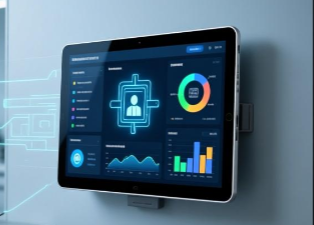
Restaurant tablet ordering application, Interactive menu integration, Food service efficiency
- Introduction
1.1 Current Status of Restaurant Table Ordering and Menu Display Modes
Traditional restaurant table ordering and menu display modes mainly rely on paper menus and manual ordering. Paper menus have many limitations, such as easy wear and tear, high update costs, and inability to display rich food information. Manual ordering is not only inefficient but also prone to order errors, which affects the dining experience of customers and increases the workload of restaurant staff.
With the development of digital technology, some restaurants have begun to adopt mobile ordering and fixed digital ordering devices, but these modes still have certain defects. For example, mobile ordering requires customers to use their own mobile phones and connect to the restaurant’s network, which has certain limitations for some customers. Fixed digital ordering devices are usually bulky and not flexible enough in installation. Under this background, wall mount tablets have attracted more and more attention from the catering industry due to their unique advantages, and restaurant tablet ordering application has gradually become a new trend.
1.2 Significance of Restaurant Tablet Ordering Application in Catering Services
Restaurant tablet ordering application plays an important role in optimizing restaurant service processes, improving service efficiency and enhancing customer experience. By applying wall mount tablets, restaurants can realize the digitization and intelligence of table ordering and menu display, reducing the time for customers to wait for ordering and the probability of order errors.
At the same time, wall mount tablets can display rich food information, such as food ingredients, production methods and nutritional values, helping customers make more informed ordering decisions. For restaurants, restaurant tablet ordering application can also reduce the cost of menu production and update, and facilitate the statistics and analysis of ordering data, providing a basis for the optimization of dishes and business strategies.
1.3 Advantages of Wall Mount Tablets in Restaurant Application Scenarios
Wall mount tablets have obvious advantages in restaurant table ordering and menu display scenarios. First of all, they have a small size and flexible installation, which can be installed in appropriate positions according to the layout of the restaurant without occupying too much space. Secondly, the application of LCD IPS panel ensures clear display effect and wide viewing angle, allowing customers to clearly see the menu content from different angles.
In addition, wall mount tablets have strong interactivity, supporting touch operation, which is convenient for customers to order and operate by themselves. They also have stable performance and can run for a long time, meeting the continuous operation needs of restaurants during business hours. These advantages make wall mount tablets very suitable for application in restaurant table ordering and menu display systems.
1.4 Research Purpose and Content Framework of This Article
The purpose of this article is to explore the scientific application method of wall mount tablets in restaurant table ordering and menu display systems, so as to provide practical guidance for restaurants that intend to adopt this mode. The content framework of this article is as follows: first, it introduces the current status of restaurant table ordering and menu display modes and the significance of restaurant tablet ordering application; then, it analyzes the technical support required for the application of wall mount tablets in this scenario; next, it discusses the commercial impact brought by the application; then, it lists typical application scenarios; finally, it draws conclusions and puts forward relevant suggestions.
- Technical Explanation
2.1 Core Technical Support for Restaurant Tablet Ordering Application
The smooth implementation of restaurant tablet ordering application relies on multiple core technical supports. First of all, the network communication technology is the basis. Stable wired or wireless network connection ensures the real-time transmission of ordering data between wall mount tablets and the restaurant’s background management system, ensuring that the order information can be quickly sent to the kitchen and cash register.
Secondly, the embedded operating system provides a stable running environment for the ordering software, ensuring the smooth operation of the software and avoiding crashes or freezes during use. In addition, the touch screen technology is also an important support, which requires sensitive touch response to ensure that customers can quickly and accurately complete the ordering operation. The hardware configuration of the wall mount tablet, such as the processor and memory, also needs to meet the requirements of running the ordering software and displaying rich multimedia content.
2.2 Technical Requirements for Interactive Menu Integration
Interactive menu integration is an important part of restaurant tablet ordering application, which has corresponding technical requirements. First of all, the menu system needs to have a friendly interface design, which is easy for customers to understand and operate. The menu classification should be clear, and the search function should be supported to facilitate customers to quickly find the desired dishes.
Secondly, the menu system needs to support rich multimedia display, such as displaying food pictures, videos and other content, to enhance the attractiveness of the dishes. At the same time, the menu system should have the function of real-time update, which allows the restaurant to quickly update the dish information, such as price adjustment, dish addition and deletion, without changing the physical menu. The realization of these functions requires the coordination of software development technology and database management technology.
Interactive menu integration also needs to consider the compatibility with different devices and systems. The menu system should be able to run stably on the wall mount tablet’s operating system and be compatible with the restaurant’s existing background management system, cash register system and kitchen printing system to ensure the smooth operation of the entire ordering process.
2.3 Hardware Configuration Requirements for Wall Mount Tablets in Restaurants
To meet the needs of restaurant tablet ordering application, wall mount tablets need to have corresponding hardware configuration. In terms of the processor, it is necessary to select a processor with moderate performance and low power consumption, which can ensure the smooth operation of the ordering software and multimedia display, and at the same time reduce energy consumption and heat generation.
In terms of the display screen, LCD IPS panel should be adopted, which has the advantages of high definition, high color reproduction, wide viewing angle and high brightness, ensuring that customers can clearly see the menu content in different lighting environments of the restaurant. In terms of memory and storage, sufficient memory should be configured to ensure the smooth operation of the system and software, and sufficient storage space should be used to store menu data, multimedia files and other content.
In addition, the wall mount tablet should be equipped with a high-sensitivity touch screen to ensure the accuracy and responsiveness of customer operations. It should also have a reliable power supply system to support long-term stable operation, avoiding shutdown due to power problems during business hours.
2.4 Data Security and Privacy Protection Technology
In the process of restaurant tablet ordering application, data security and privacy protection are crucial. The ordering data contains important information such as customer consumption records and restaurant business data, which needs to be protected from leakage, tampering and loss. First of all, data encryption technology should be adopted to encrypt the transmission and storage of ordering data, ensuring that the data cannot be intercepted and deciphered by unauthorized personnel.
Secondly, the background management system should have strict authority management functions, controlling the access rights of different staff to the data, preventing data leakage caused by improper operation. In addition, regular data backup should be carried out to ensure that the data can be quickly recovered in case of loss. For the personal information of customers involved in the ordering process, it is necessary to comply with relevant laws and regulations and take corresponding protective measures to protect customer privacy.
- Commercial Impact
3.1 Impact on Restaurant Operating Costs
The application of wall mount tablets in restaurant table ordering and menu display systems has a significant impact on restaurant operating costs. On the one hand, it can reduce the cost of menu production and update. Compared with traditional paper menus, digital menus displayed on wall mount tablets do not need to be printed, and the update of dishes and prices can be completed through the background system, saving the cost of paper, printing and distribution.
On the other hand, it can reduce labor costs. The self-service ordering function of wall mount tablets reduces the need for waiters to take orders, allowing restaurants to appropriately reduce the number of waiters, especially during peak dining hours, which can effectively reduce labor input. In addition, the reduction of order errors also reduces the cost of food waste and customer compensation caused by order errors.
3.2 Impact on Customer Dining Experience
Restaurant tablet ordering application can significantly improve the customer’s dining experience. First of all, it shortens the waiting time for ordering. Customers can directly order through the wall mount tablet without waiting for the waiter to take orders, which improves the efficiency of ordering. Secondly, the rich menu display makes it easier for customers to understand the dishes.
The clear food pictures, detailed ingredient descriptions and nutritional information displayed on the LCD IPS panel help customers make more satisfactory ordering choices. In addition, the self-service ordering mode also gives customers more autonomy, allowing them to order at their own pace without being disturbed by the waiter, improving the comfort of dining.
3.3 Impact on the Market Competitiveness of Restaurants
Restaurants that adopt wall mount tablets for table ordering and menu display can enhance their market competitiveness. In the current catering market where customer experience is highly valued, the intelligent and digital ordering mode can bring a new dining experience to customers, leaving a deep impression on them and increasing customer loyalty.
At the same time, the data collected through the ordering system can help restaurants better understand customer preferences, optimize the dish structure and business strategies, and improve the quality of dishes and services. These advantages make restaurants more competitive in the market and help them attract more customers and gain more market share.
3.4 Impact on the Development of the Catering Digital Industry
The widespread application of restaurant tablet ordering application has promoted the development of the catering digital industry. As an important part of catering digitalization, the wall mount tablet ordering system has driven the development of related industries, such as tablet hardware manufacturing, catering software development, network communication services and so on.
It has also promoted the innovation and progress of catering digital technology, such as the improvement of interactive menu technology, the optimization of data analysis technology and the enhancement of data security technology. The development of the catering digital industry has further promoted the transformation and upgrading of the entire catering industry, making the catering industry more intelligent, efficient and standardized.
- Typical Use Cases
4.1 Restaurant Dining Area Table Ordering Scenario
In the dining area of the restaurant, wall mount tablets are installed next to each dining table. Customers can directly operate the tablet to browse the menu, select dishes, adjust the number of dishes and submit orders. After submitting the order, the order information is automatically sent to the kitchen and cash register system. During the dining process, customers can also use the tablet to call the waiter, apply for adding dishes or checking out. This scenario realizes the self-service of the whole ordering process, improving the dining efficiency and customer experience.
The application of restaurant tablet ordering application in this scenario fully embodies the advantages of wall mount tablets in interactivity and convenience. The clear display effect of the LCD IPS panel allows customers to easily browse the menu content, and the sensitive touch operation ensures the smoothness of the ordering process.
4.2 Restaurant Entrance Menu Display Scenario
At the entrance of the restaurant, several wall mount tablets are installed to display the restaurant’s signature dishes, recommended combinations, promotional activities and other content. Customers can browse the menu information through the tablets before entering the restaurant, understand the characteristics and prices of the dishes, and make preliminary ordering plans. This not only helps customers save ordering time after seating, but also plays a role in promoting dishes and attracting customers to order.
In this scenario, the wall mount tablets can also play food production videos and restaurant environment introductions, enhancing the appeal of the restaurant to customers. The wide viewing angle of the LCD IPS panel ensures that multiple customers can browse the menu content at the same time without being affected by the viewing angle.
4.3 Restaurant Private Room Customized Ordering Scenario
In the private rooms of the restaurant, wall mount tablets are installed to provide customized ordering services for customers. The menu in the tablet can be customized according to the needs of the private room, such as providing set menus for banquets, family dinners and other occasions. Customers can also use the tablet to communicate with the kitchen about the taste and production requirements of the dishes, such as adjusting the spiciness, avoiding certain ingredients and so on.
This scenario meets the personalized needs of customers in private rooms, improves the quality of service in private rooms, and enhances the satisfaction of customers. The stable performance of the wall mount tablets ensures the smooth progress of the customized ordering process.
4.4 Restaurant Buffet Area Dish Introduction Scenario
In the buffet area of the restaurant, wall mount tablets are installed next to each type of dish to display the detailed information of the dish, such as ingredients, production methods, nutritional composition, suitable groups and so on. Customers can view the relevant information through the tablets before taking the dishes, helping them make more appropriate choices according to their own tastes and physical conditions.
This scenario enriches the information display of buffet dishes, improves the professionalism of the restaurant’s service, and enhances the customer’s dining experience. The small size and flexible installation of the wall mount tablets make them very suitable for application in the limited space of the buffet area.
- Conclusion
5.1 Summary of Restaurant Tablet Ordering Application Methods
The application of wall mount tablets in restaurant table ordering and menu display systems requires scientific planning and configuration. First of all, it is necessary to select wall mount tablets with appropriate hardware configurations, especially adopting LCD IPS panel to ensure good display effect. Secondly, it is necessary to integrate interactive menu systems with friendly interfaces and rich functions, realizing the digitization and intelligence of ordering and menu display.
At the same time, it is necessary to ensure the stability of network communication and the security of data, and do a good job in the training of staff to ensure that they can proficiently operate and maintain the system. Restaurant tablet ordering application is not only a simple replacement of ordering tools, but also a comprehensive upgrade of the restaurant’s service process and management mode.
5.2 Suggestions for Restaurants to Apply Wall Mount Tablets
Restaurants should fully consider their own business scale, customer groups and financial situation when deciding to apply wall mount tablets in table ordering and menu display systems. First of all, they should choose reliable wall mount tablet products and software systems, and conduct in-depth communication with suppliers to ensure that the products and systems can meet their own actual needs.
Secondly, they should formulate a reasonable installation plan according to the layout of the restaurant, ensuring that the wall mount tablets are installed in convenient and appropriate positions. In addition, they should strengthen the training of staff, including the use of the ordering system, the handling of common faults and the service skills under the new ordering mode. At the same time, they should pay attention to collecting customer feedback, continuously optimize the ordering system and service process, and improve the application effect.
5.3 Suggestions for Wall Mount Tablet and Software Suppliers
Suppliers should increase investment in research and development, continuously optimize the performance and functions of wall mount tablets and ordering software to adapt to the special needs of the catering industry. In terms of hardware, they should further improve the display effect and stability of the tablets, and develop products with lower power consumption and longer service life.
In terms of software, they should strengthen the innovation of interactive menu functions, improve the user experience of the software, and enhance the compatibility and scalability of the system. At the same time, suppliers should provide perfect after-sales service, including technical support, maintenance and software updates, to help restaurants solve problems encountered in the application process.
5.4 Future Development Prospect of Restaurant Tablet Ordering Application
In the future, with the continuous development of digital technology and artificial intelligence technology, restaurant tablet ordering application will show a more intelligent and personalized development trend. The application of artificial intelligence technology will enable the ordering system to provide personalized dish recommendations according to customer preferences and consumption records.
The integration of voice recognition technology will allow customers to order through voice commands, further improving the convenience of ordering. At the same time, wall mount tablets will be integrated with more functions, such as customer evaluation, membership management and payment, realizing the integration of multiple services. The data analysis function will also be more powerful, helping restaurants to carry out more refined operation and management.
Excellent Restaurant Tablet Ordering Application Guide 7


Leave a Reply
You must be logged in to post a comment.