

Optimal Processor Selection: RK3288 vs RK3568 vs RK3588 for Wall Tablet Projects
RK3288, RK3568, and RK3588 are three prominent processors widely considered for wall tablet projects. The right processor choice directly determines a wall tablet’s performance, power efficiency, and compatibility with target applications. This article explores the key characteristics of RK3288, RK3568, and RK3588, guides optimal processor selection for wall tablet projects, delves into technical differences between the three chips, analyzes their commercial impact on project development and deployment, showcases typical use cases for each processor, and concludes with actionable insights for project stakeholders.
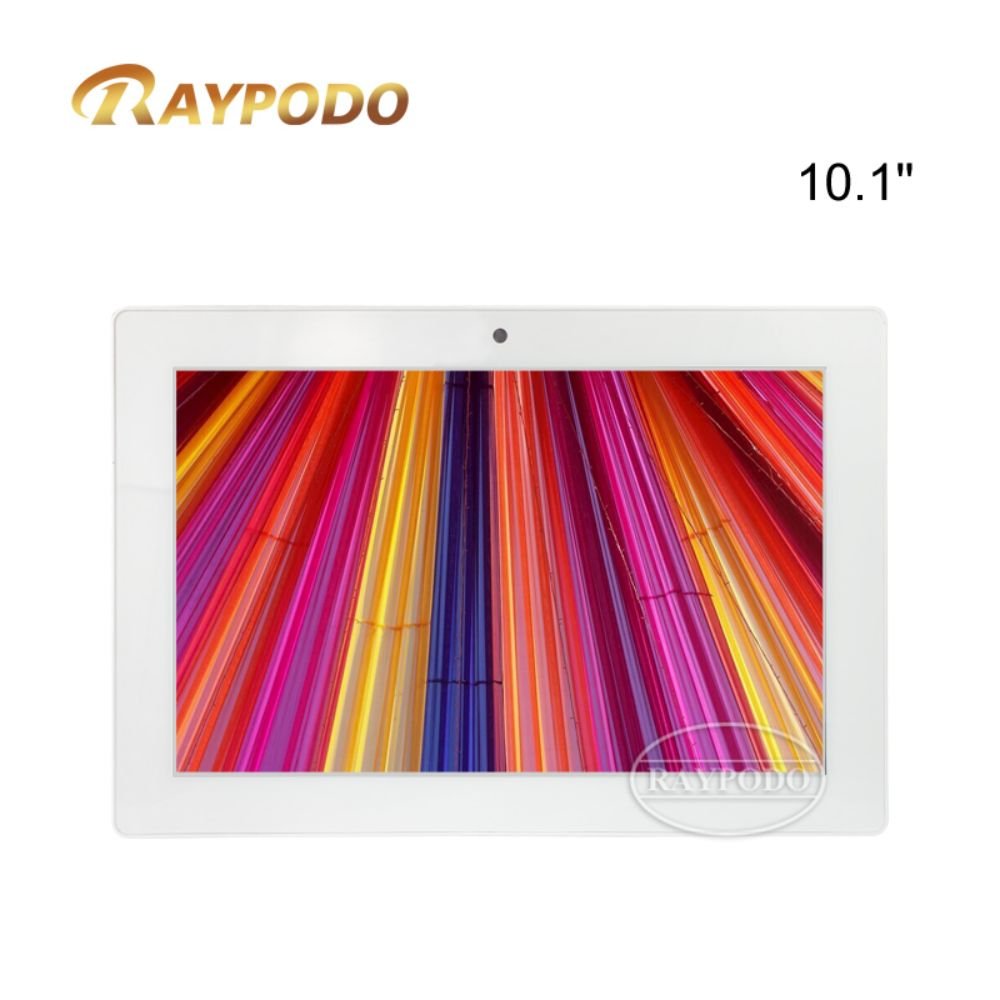
Wall Tablet Projects
- Introduction
Wall tablets have become integral components in smart buildings, industrial control systems, retail displays, and smart homes. Their performance and reliability are heavily dependent on the underlying processor, which serves as the “brain” of the device. Among the numerous processors available in the market, RK3288, RK3568, and RK3588 stand out for their widespread application in embedded devices like wall tablets.
RK3288, a mature processor with proven stability, has long been a staple in entry to mid-range wall tablet projects. RK3568, as an upgraded mid-tier solution, offers improved performance and power efficiency, catering to the growing demand for more capable yet energy-saving devices. RK3588, a high-end flagship processor, delivers exceptional computing power, supporting complex applications that require intensive data processing and multimedia capabilities.
Selecting between RK3288, RK3568, and RK3588 is a critical decision for wall tablet project teams. It involves balancing factors such as project requirements, performance needs, power consumption constraints, and budget limitations. Making the wrong choice can lead to subpar device performance, increased development costs, or unnecessary overengineering.
This article aims to provide a comprehensive comparison of RK3288, RK3568, and RK3588, equipping project managers, engineers, and decision-makers with the information needed to select the optimal processor for their wall tablet projects. It covers technical specifications, commercial implications, real-world use cases, and practical selection guidelines.
- Technical Explanation
To make an informed processor selection for wall tablet projects, it is essential to understand the core technical differences between RK3288, RK3568, and RK3588. These differences span CPU architecture, GPU capabilities, memory support, video processing, power consumption, and peripheral interfaces—all of which directly impact a wall tablet’s performance and functionality.
2.1 CPU Architecture and Performance
RK3288 adopts the ARM Cortex-A17 architecture, a 32-bit design manufactured using a 28nm process. It features four CPU cores, with a maximum clock speed of 1.8GHz. This architecture is optimized for balanced performance and power consumption, making it suitable for basic to mid-level computing tasks typical of entry-range wall tablets.
RK3568 steps up to the 64-bit ARM Cortex-A55 architecture, built on a more advanced 22nm process. It also boasts four CPU cores but with a higher maximum clock speed of 2.0GHz. The Cortex-A55 architecture brings significant improvements in instruction efficiency and power management compared to Cortex-A17, enabling RK3568 to deliver better performance while consuming less power than RK3288.
RK3588 represents a major leap forward with its 64-bit ARM Cortex-A76 and Cortex-A55 heterogeneous multi-core architecture. It features four high-performance Cortex-A76 cores (up to 2.4GHz) and four energy-efficient Cortex-A55 cores (up to 1.8GHz), manufactured using a 7nm process. This big.LITTLE design allows RK3588 to dynamically allocate tasks between high-performance and low-power cores, delivering exceptional computing power for complex tasks while maintaining energy efficiency during light loads.
2.2 GPU Capabilities
The GPU (Graphics Processing Unit) is crucial for wall tablets that require graphics-intensive tasks such as high-resolution display rendering, video playback, and touch interface responsiveness. RK3288 is equipped with an ARM Mali-T764 GPU, which supports OpenGL ES 3.0 and can handle 1080p video playback and basic 2D/3D graphics rendering—sufficient for simple wall tablet interfaces and basic multimedia applications.
RK3568 integrates an ARM Mali-G52 2EE GPU, an upgrade over the Mali-T764. It supports OpenGL ES 3.2, Vulkan 1.1, and OpenCL 2.0, offering improved graphics performance and efficiency. The Mali-G52 2EE can smoothly drive 1080p high-brightness displays and handle more complex UI animations, making it suitable for wall tablets with enhanced visual requirements.
RK3588 comes with a powerful ARM Mali-G610 MP4 GPU, supporting the latest graphics APIs including OpenGL ES 3.2, Vulkan 1.1, and OpenCL 2.2. This GPU delivers industry-leading graphics performance, capable of driving 4K UHD displays at high frame rates and supporting advanced features like HDR and multi-layer composition. It is ideal for wall tablets that require 4K video playback, real-time video analytics, or complex 3D visualization.
2.3 Memory and Storage Support
Memory and storage support directly affects a wall tablet’s multitasking capabilities and data storage capacity. RK3288 supports DDR3/DDR3L memory with a maximum capacity of 4GB and a memory bandwidth of up to 12.8GB/s. It also supports eMMC 5.0 and SATA storage interfaces, meeting the basic storage needs of entry-level wall tablets.
RK3568 enhances memory and storage capabilities with support for LPDDR4/LPDDR4X memory, offering a maximum capacity of 8GB and a higher memory bandwidth of 21.3GB/s. It also supports eMMC 5.1 and NVMe SSD storage, providing faster data read/write speeds and larger storage expansion options compared to RK3288.
RK3588 takes memory and storage support to the next level, supporting LPDDR4X/LPDDR5 memory with a maximum capacity of 32GB and an impressive memory bandwidth of up to 100GB/s. It also supports dual-channel eMMC 5.1, SATA 3.0, and NVMe SSD storage interfaces, enabling ultra-fast data access and massive storage capacity—critical for wall tablets running complex applications with large data sets.
2.4 Video Processing and Peripheral Interfaces
Video processing capabilities are important for wall tablets used as video displays or surveillance monitors. RK3288 features a VPU (Video Processing Unit) that supports 1080p video decoding at 60fps and 1080p video encoding at 30fps, covering basic video playback needs.
RK3568’s VPU supports 4K video decoding at 60fps and 1080p video encoding at 60fps, a significant upgrade over RK3288. This makes it suitable for wall tablets that require high-definition video playback, such as digital signage in retail stores.
RK3588 is equipped with a powerful NPU (Neural Processing Unit) and VPU, supporting 8K video decoding at 60fps and 4K video encoding at 60fps. The NPU delivers up to 6TOPS of computing power, enabling real-time AI-based applications like face recognition, object detection, and video analytics—features increasingly demanded in high-end wall tablet projects.
In terms of peripheral interfaces, all three processors offer standard interfaces like USB, UART, I2C, and GPIO, ensuring compatibility with common wall tablet peripherals such as touch screens, cameras, and sensors. RK3568 and RK3588 add more advanced interfaces like USB 3.0, PCIe 2.0, and Gigabit Ethernet, providing greater flexibility for connecting high-speed devices and expanding functionality.
2.5 Power Consumption
Power consumption is a critical factor for wall tablets, especially those powered by PoE or battery. RK3288, with its 28nm process and Cortex-A17 architecture, has a typical power consumption of 2-3W under normal operation, making it energy-efficient for basic applications.
RK3568, built on the 22nm process with Cortex-A55 cores, achieves even better power efficiency, with a typical power consumption of 1.5-2.5W. This lower power draw extends the battery life of portable wall tablets and reduces energy costs for PoE-powered devices.
RK3588, despite its high performance, maintains reasonable power efficiency thanks to the 7nm process and big.LITTLE architecture. Its typical power consumption ranges from 3-5W under normal operation, increasing to 8-10W under full load. While higher than RK3288 and RK3568, this power consumption is justified for high-end applications that require its exceptional computing capabilities.
- Commercial Impact
The selection of RK3288, RK3568, or RK3588 has far-reaching commercial implications for wall tablet projects, affecting development costs, production budgets, market positioning, and return on investment. Understanding these impacts is crucial for making a financially sound processor choice.
3.1 Cost Implications
RK3288, as a mature processor, has the lowest cost among the three. Its long production cycle has led to optimized manufacturing processes, reducing chip costs. Additionally, the mature ecosystem around RK3288 means that development kits, software tools, and third-party support are readily available at low cost, lowering development expenses for wall tablet projects.
RK3568 comes at a moderate cost, higher than RK3288 but lower than RK3588. The 22nm process and improved performance justify the price premium, especially for projects that require better performance than RK3288 can offer but cannot afford the high cost of RK3588. The development costs for RK3568 are also reasonable, with a growing ecosystem of tools and support.
RK3588 is the most expensive of the three, reflecting its high-end performance and advanced 7nm process. The higher chip cost directly increases the BOM (Bill of Materials) cost of wall tablets. Additionally, RK3588’s complex architecture requires more advanced development skills and tools, leading to higher development and testing costs. These factors make RK3588 suitable only for high-budget projects that demand its exceptional capabilities.
3.2 Market Positioning and Competitiveness
Processor selection directly influences a wall tablet’s market positioning. RK3288-powered wall tablets are typically positioned as entry-level or budget-friendly devices, targeting cost-sensitive markets such as small retail stores, basic smart home control panels, and low-cost industrial monitoring systems. Their competitive advantage lies in affordability and proven reliability.
RK3568 enables wall tablets to be positioned in the mid-range market, offering a balance of performance and cost. These devices cater to applications that require better graphics, faster processing, and more advanced features than entry-level models, such as mid-sized retail digital signage, smart building control interfaces, and healthcare facility patient information displays. RK3568-powered wall tablets compete on value for money, delivering enhanced capabilities without the premium price tag of high-end models.
RK3588 powers high-end wall tablets targeting premium markets and complex applications. These devices are positioned as high-performance solutions for applications like 4K smart building control centers, AI-enabled surveillance monitors, advanced retail analytics displays, and industrial automation systems. RK3588’s exceptional performance gives these wall tablets a competitive edge in markets where performance and functionality are prioritized over cost.
3.3 Development Cycle and Time-to-Market
The maturity of a processor’s ecosystem affects the development cycle and time-to-market of wall tablet projects. RK3288 has a well-established ecosystem with abundant software resources, mature drivers, and extensive third-party support. This reduces development time, allowing projects to be completed and launched quickly—typically within 3-6 months.
RK3568’s ecosystem is rapidly maturing, with most major operating systems and software frameworks supporting the chip. Development cycles for RK3568-based wall tablet projects are slightly longer than RK3288, ranging from 4-8 months, due to the need to adapt to the newer architecture and optimize for improved performance.
RK3588, being a relatively new high-end processor, has a less mature ecosystem compared to the other two. Development teams may face challenges with driver compatibility, software optimization, and debugging. This extends the development cycle to 6-12 months or more, delaying time-to-market. However, the long-term benefits of RK3588’s performance may outweigh the longer development time for projects with specific high-performance requirements.
3.4 Long-Term Sustainability and Support
Long-term processor support is critical for wall tablet projects, as these devices often have a lifespan of 5-7 years. RK3288, as a mature product, will continue to receive software updates and technical support for the foreseeable future, ensuring the longevity of wall tablets based on this processor.
RK3568, being a mid-tier processor with strong market demand, is expected to have a long support cycle. Rockchip, the manufacturer, has committed to providing ongoing software and technical support for RK3568, making it a reliable choice for long-term projects.
RK3588, as Rockchip’s flagship processor, will receive the highest level of long-term support. The company is likely to invest heavily in optimizing software, adding new features, and addressing issues for RK3588, ensuring that high-end wall tablets based on this processor remain functional and up-to-date throughout their lifespan.
- Typical Use Cases
The unique technical characteristics of RK3288, RK3568, and RK3588 make each processor suitable for specific wall tablet use cases. Matching the processor to the application’s requirements ensures optimal performance, cost-effectiveness, and reliability.
4.1 RK3288: Entry-Level Wall Tablet Applications
RK3288 is ideal for entry-level wall tablet projects that require basic functionality and prioritize cost efficiency. One typical use case is basic smart home control panels. These panels need to display simple interfaces for controlling lighting, thermostats, and door locks, with minimal processing requirements. RK3288’s stable performance and low cost make it a perfect fit for this application.
Another common use case is small retail store price displays. These wall tablets need to show static or slowly updating price information and basic product details. RK3288 can easily handle the simple graphics rendering and data synchronization required for this task, while its low power consumption reduces energy costs for 24/7 operation.
Basic industrial monitoring systems also benefit from RK3288-powered wall tablets. These systems display real-time data such as temperature, pressure, and machine status, requiring stable performance but no intensive computing. RK3288’s proven reliability and low cost make it a popular choice for small-scale industrial applications.
4.2 RK3568: Mid-Range Wall Tablet Applications
RK3568 excels in mid-range wall tablet projects that require enhanced performance, better graphics, and more advanced features. A typical use case is mid-sized retail digital signage. These wall tablets need to display high-definition videos, dynamic advertisements, and real-time promotional content. RK3568’s 4K video decoding capability and improved GPU performance ensure smooth playback and engaging visuals.
Smart building control interfaces are another ideal application for RK3568. These wall tablets serve as central control points for multiple building systems, including HVAC, lighting, and security. They require responsive touch interfaces, real-time data processing, and the ability to connect to multiple peripherals. RK3568’s balanced performance, low power consumption, and rich interface options make it well-suited for this role.
Healthcare facility patient information displays also benefit from RK3568. These wall tablets show patient details, care schedules, and medical instructions, requiring clear high-resolution displays and reliable operation. RK3568’s power efficiency and stable performance ensure continuous operation, while its improved graphics capabilities make patient information easy to read and understand.
4.3 RK3588: High-End Wall Tablet Applications
RK3588 is designed for high-end wall tablet projects that demand exceptional performance, advanced AI capabilities, and 4K/8K multimedia support. One key use case is 4K smart building control centers. These high-end wall tablets integrate multiple advanced features, including real-time video surveillance feeds, AI-based occupancy detection, and complex building management analytics. RK3588’s powerful CPU, GPU, and NPU handle these tasks with ease, providing building managers with comprehensive control and insights.
AI-enabled surveillance monitors are another typical application for RK3588. These wall tablets process real-time video feeds from multiple cameras, using AI algorithms to detect faces, objects, and unusual activities. RK3588’s NPU delivers the necessary computing power for real-time AI processing, enabling proactive security monitoring in commercial and industrial environments.
Advanced industrial automation systems also rely on RK3588-powered wall tablets. These devices are used to control complex manufacturing processes, process large amounts of sensor data in real-time, and display 3D visualizations of production lines. RK3588’s high computing power, large memory support, and fast data interfaces ensure precise control and efficient data processing, improving productivity and reducing downtime.
- Conclusion
RK3288, RK3568, and RK3588 each offer distinct technical characteristics that make them suitable for different types of wall tablet projects. RK3288, with its mature design, low cost, and proven stability, is the optimal choice for entry-level projects that prioritize affordability and basic functionality. RK3568, as a balanced mid-tier solution, delivers improved performance, better graphics, and enhanced power efficiency, catering to mid-range projects that require more advanced features without the premium cost.
RK3588, the high-end flagship processor, provides exceptional computing power, advanced AI capabilities, and 4K/8K multimedia support, making it ideal for high-budget projects with complex application requirements. The commercial impact of processor selection is significant, affecting project costs, market positioning, development cycles, and long-term sustainability.
When selecting a processor for a wall tablet project, stakeholders should conduct a thorough assessment of their specific requirements, including performance needs, functional features, budget constraints, and long-term support expectations. By matching the processor’s capabilities to the project’s requirements, teams can ensure optimal device performance, cost-effectiveness, and market competitiveness.


Leave a Reply
You must be logged in to post a comment.