

School Interactive Display Tablet Transforms Classroom Learning
School interactive display tablet has become a revolutionary tool in education, redefining how teachers deliver lessons and students engage with learning materials. In 2025, as educational institutions worldwide shift toward digital learning environments, school interactive display tablet has emerged as a core component of modern classrooms, replacing traditional chalkboards and static projectors. This device combines high-quality display with interactive features, creating immersive learning experiences that cater to diverse student learning styles.
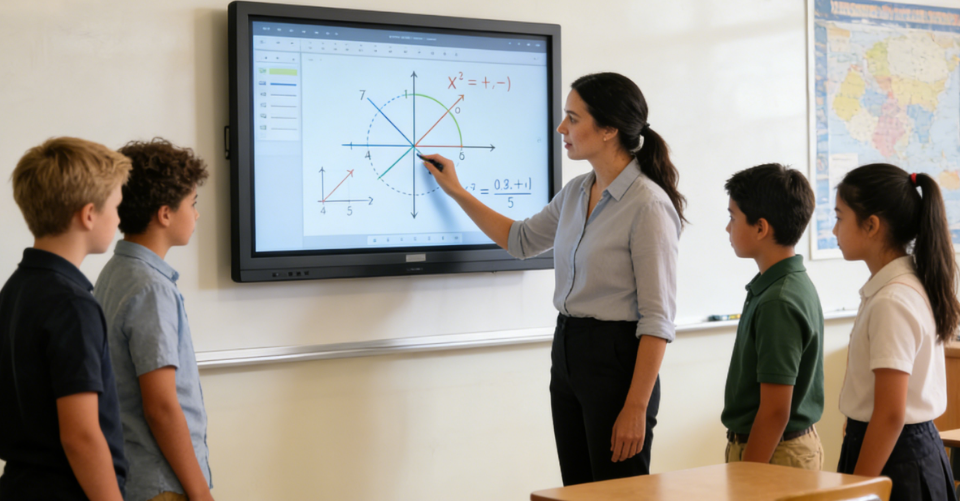
School interactive display tablet
Market Growth Driven by Educational Digitization
The global educational technology market is experiencing substantial growth, with school interactive display tablet leading the adoption of digital tools in classrooms. According to a 2025 report from Research and Markets, the global interactive display market in education is growing significantly due to increased government investments in digital education and the need for engaging learning solutions . Schools and universities are increasingly investing in school interactive display tablet to enhance student participation, facilitate collaborative learning, and prepare students for a digital workforce.
A key strength of interactive display tablet is its integration with tablet interactive touchscreen technology. These responsive touchscreens allow both teachers and students to write, draw, and manipulate digital content directly on the display, mimicking the tactile experience of a traditional whiteboard while adding digital functionality. Unlike basic projectors that require separate input devices, the tablet interactive touchscreen enables real-time interaction, with multiple students able to contribute to lessons simultaneously. Additionally, many models include tablet-based content management systems, allowing teachers to easily access, organize, and share lesson plans, worksheets, and multimedia resources from a central platform.
Practical Applications and Learning Outcomes
Schools across Europe and Asia have reported impressive improvements in learning outcomes after deploying school interactive display tablet. For example, a primary school in Singapore implemented school interactive display tablet with tablet interactive touchscreen and tablet-based content management in all classrooms. After six months, student engagement scores increased by 35%, with teachers noting that students were more likely to participate in class discussions and group activities. The tablet interactive touchscreen allowed students to solve math problems directly on the display, while the content management system made it easy for teachers to adapt lessons to different learning levels.
Secondary schools have also benefited from interactive display tablet. A high school in the UK used the devices to enhance science lessons, with students using the tablet interactive touchscreen to manipulate 3D models of cells and chemical reactions. This hands-on interaction led to a 25% improvement in test scores for science subjects, as students developed a deeper understanding of complex concepts. The tablet-based content management system also allowed teachers to share recorded lessons with students who missed class, improving attendance-related learning gaps.
Technological Advancements and Future Trends
As we progress through 2025, interactive display tablet is becoming even more advanced, with manufacturers integrating artificial intelligence (AI) to personalize learning experiences. AI-powered features can analyze student responses during lessons and provide real-time feedback, helping teachers identify areas where students need additional support. Additionally, wireless tablet display solutions are being incorporated, allowing teachers to connect their personal tablets to the main display and move freely around the classroom while presenting.
The adoption of interactive display tablet is also expected to grow in emerging markets, as governments in regions like Africa and Southeast Asia invest in upgrading educational infrastructure. The durability of the tablet interactive touchscreen and the flexibility of tablet-based content management make these devices well-suited for diverse classroom environments, from urban schools to rural learning centers. According to a 2025 industry report, the Asia-Pacific educational technology market is projected to grow at a CAGR of over 10% due to increased digital learning adoption .
Another emerging trend is the integration of school interactive display tablet with virtual reality (VR) and augmented reality (AR) tools. This allows students to explore virtual environments, such as historical sites or outer space, directly on the display, creating even more immersive learning experiences. Teachers can use AR to overlay digital content onto physical objects, like textbooks, enhancing the connection between theoretical and practical learning.


Leave a Reply
You must be logged in to post a comment.