

 The COVID-19 pandemic has created new challenges for companies worldwide, particularly for electronic manufacturers who have been suffering from serious supply chain disruptions and component shortages. Here are some insights into what is causing these ongoing electronic components shortages, what do stats indicate for the future, and especially, what options do companies have to mitigate supply disruptions and prevent money losses.
TSMC and Samsung compromised at the last moment and handed over their trade secrets to the United States. What is the cost?
The day before yesterday was the deadline for the United States to require TSMC and other semiconductor companies to submit commercial confidential data. TSMC “compromised” and handed in the data, while emphasizing that “protect customer confidentiality as always.”
In the context of a global shortage of cores, in order to strengthen its control over the global semiconductor industry chain, on September 24, the Bureau of Industry and Security of the US Department of Commerce issued the “Semiconductor Supply Chain Risk Public Comment”, requiring TSMC, Samsung, etc. A number of chip-related companies handed over data such as inventory, orders, sales records, etc., which are regarded as trade secrets, with a deadline of November 8.
Although the comment document says “voluntary”, it is not mandatory. But in fact, US Secretary of Commerce Raymondo said in an interview with the media, “If they don’t want to, there are other methods in our toolbox (invoking the National Defense Production Act or other laws)… I hope we don’t get there”. These remarks can be described as a political threat.
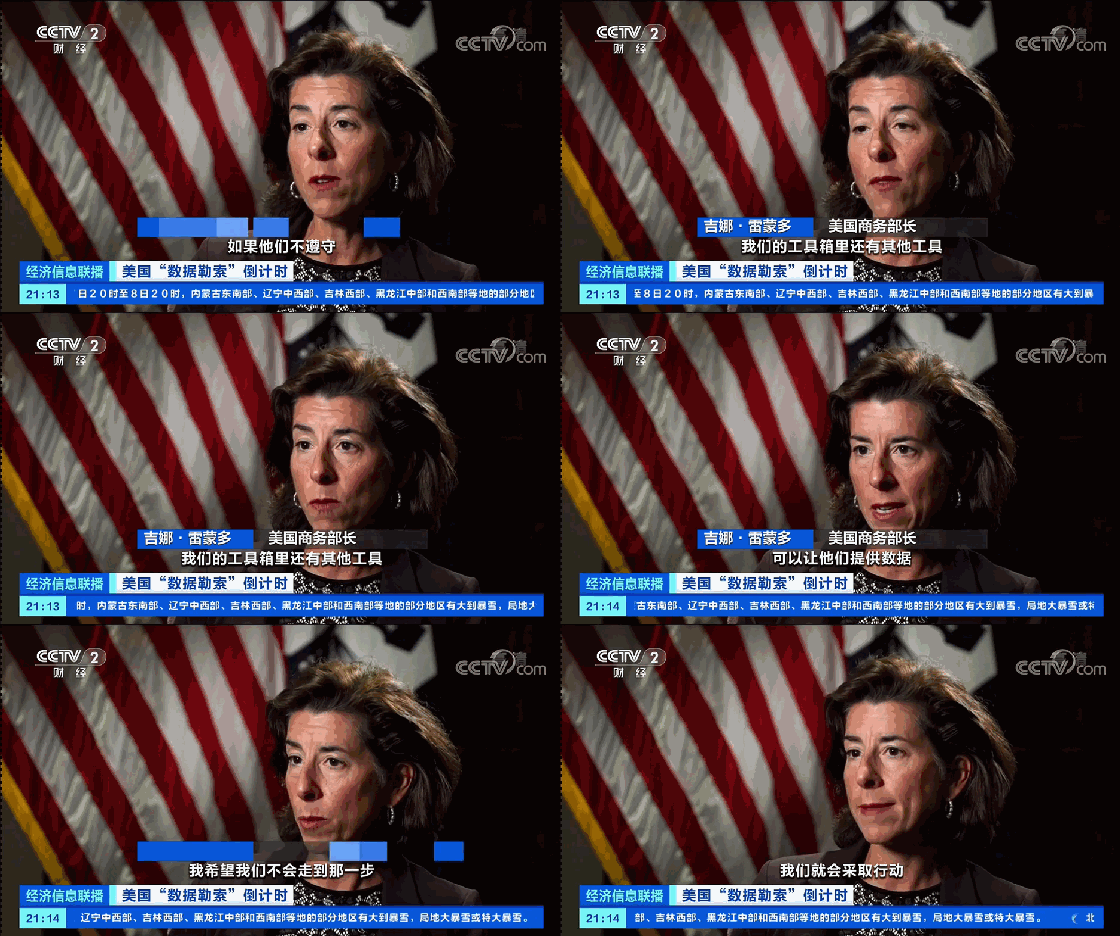
The U.S.’s move was denounced by netizens from all over the world as “robber logic” and “unsightly”, and it was a data blackmail.
According to US business information, TSMC, UMC, Tower, Micron, ASE, Western Digital, Global Wafer, and many other companies have submitted data, and some of the documents are confidential and will not be disclosed to the public.
Yesterday, according to Yonhap News Agency, Samsung, the world’s second-largest foundry manufacturer with market share second only to TSMC, “surrendered” at the last minute and submitted semiconductor supply chain data, excluding sensitive information such as customer information. Samsung said that in accordance with the confidentiality clause of the contract, customer information cannot be disclosed to the public, so it was omitted after consultation with the US Department of Commerce.
Prior to this, Samsung still refused. Samsung officials said that sharing data with the United States would greatly weaken the ability of Korean chip manufacturers to negotiate prices.
What is the purpose of collecting the trade secrets of various chip companies in the United States?
It is widely speculated that the United States may inform its own semiconductor manufacturer Intel of TSMC, Samsung, and other companies’ trade secret data to support domestic companies.
This is related to the current predicament of the US semiconductor industry. According to the American Semiconductor Industry Association (SIA) data, 75% of the world’s semiconductor production capacity is concentrated in East Asia. The global share of US semiconductor manufacturing capacity has been declining from 37% in 1990 to 12% today.
According to the association’s estimates, only 6% of global production centers will be located in the United States in the future. In contrast, in the next ten years, mainland China is expected to increase its production capacity by about 40% and become the world’s largest semiconductor manufacturing base.
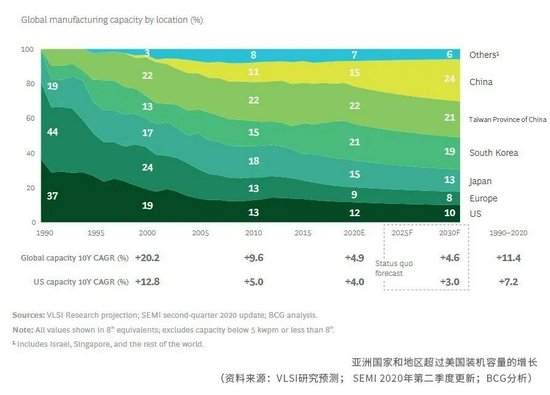
For this reason, the United States is trying to transfer more chip production to its homeland. Among them, TSMC is one of the supporters of the localization of semiconductor manufacturing in the United States, but TSMC Chairman Liu Deyin also admitted that the construction of the factory is “politically driven” because the cost is much higher than TSMC expected, and the cost of building a new factory in the United States will be higher than that of mainland China. 37% to 50%.
In the eyes of Zhang Zhongmou, the godfather of semiconductors and founder of TSMC, this American move is difficult to return to glory.
On October 26, Zhang Zhongmou publicly stated that Taiwan’s semiconductor manufacturing industry is still quite competitive in the future. As for the US to promote localized manufacturing of the semiconductor industry, it is impossible to succeed. Even if you spend tens of billions of dollars to rebuild the semiconductor supply chain in the United States, you will still find that the cost is too high and lacks competitiveness.
But obviously, the United States will not give up easily and continue to “behave”, including this time reaching out to ask for confidential data from a number of semiconductor companies.
Among them, TSMC is the world’s largest foundry manufacturer. According to industry analysis agency TrendForce, TSMC’s share of the global foundry market reached 52.9% in the second quarter of this year.
More importantly, the semiconductor industry is the “nuclear weapon” used by the US government to curb China’s high-tech rise, and TSMC has just been pushed to the point of the big power game.
The question is, what does TSMC’s compromise mean? Is there a solution to the war in the semiconductor industry triggered by the United States? Next, let’s take a look at RAYPODO‘s analysis.
In the past two years, apart from Huawei, TSMC has been ranked at the forefront of the Sino-US technology war. In particular, the continuous chip shortage since 2020, and the various tricks used by European and American politicians against Taiwan, have pushed TSMC to the edge of the political game among major powers.
The past success of high-tech in the United States follows the inherent logic of technological development and conforms to the laws of the market and innovation. Today, the US government fantasizes about using political power to forcibly change the market trend and global pattern of the semiconductor industry, and history will not be shifted by its will.
After the wave of mobile Internet, the Asian market with China as the core has become the leading driving force for global semiconductors and has also led to the change in the global semiconductor industry.
TSMC and Nvidia, which lead the global semiconductor industry today, were created by two Chinese, Zhang Zhongmou and Huang Renxun. Su Zifeng, who created the miracle of AMD’s counterattack, is also Chinese.
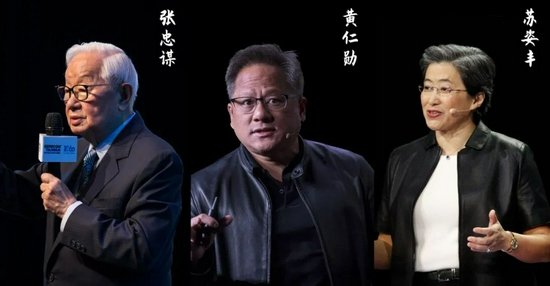
There is a historical inevitability behind the seemingly accidental story. Starting in 2020, the number of netizens in Asia will exceed 2.5 billion, which has already accounted for half of the world’s netizens. Of the nearly 3 billion people who do not use the Internet to determine the future increase in Internet users, nearly 60% are in Asia.
The semiconductor industry is a “nuclear weapon” used by the US government to curb China’s high-tech rise, and TSMC is the first to bear the brunt. In order to achieve its strategic goals, the U.S. government has spared no effort to do both “carrots” and “sticks.”
On the one hand, government subsidies are used to attract semiconductor companies to build factories in the United States. On the other hand, they are constantly pressured by political influence to suppress Chinese semiconductors in the “two generations” behind the United States. Of course, the results so far have not been satisfactory.
TSMC, in the crevice and whirlpool of history, is also facing a historic choice. Choosing the source between China and the United States, strengthening one’s own competitive advantage, and maximizing business interests is obviously the best choice for a company. Further delaying the rise of the mainland’s semiconductor industry is clearly in line with TSMC’s strategic goals.
However, the mainland market is TSMC’s largest source of income and the biggest growth point in the future. Therefore, TSMC sometimes has to use the baton of the U.S. government to follow the boat.
Faced with the U.S. request for the submission of “commercial secrets,” TSMC’s most likely solution is to submit as much data as it should to the U.S. government, but it may conceal specific customer names, etc., in order to achieve “both sides.” “Best of both worlds”.
In the face of technology and market trends, the U.S. government is obviously not willing to give up its efforts easily. It will further embrace the political will of “man will conquer the sky” and strengthen the containment of China’s high technology. TSMC will also be based on its own interests and play its own Taijiquan according to the opportunity.
The political power and market power of global semiconductors are mixed together, which is quite chaotic and quite chaotic, but the underlying logic, long-term trends, technology, and the nature of the market ultimately determine the future.
China’s semiconductor industry has no choice but to let go of illusions and be down-to-earth. No matter how hard it is, there is no choice. No way to go is the way to victory.
TSMC walking on the blade, can the game of right and left be long-lasting? Using politics as a weapon or being used by political forces will eventually pay the price in the market.
The short-term factor of the US move is the background of the current global core shortage. In the long run, it is essentially a political issue.
This is related to the political and public opinion atmosphere formed in the US political arena and all walks of life regarding the so-called “strategic industry” in recent years. In the past, the United States has always emphasized a laissez-faire market economy and opposed any industrial policy formulated by the government.
In recent years, as the competition with China and other countries has become increasingly fierce, it seems that the formulation of industrial policies and the adoption of protective measures to maintain the future “competitive advantage” of the United States has become a consensus among the United States, and the Democratic Party’s coming to power is even more important. Reinforced this understanding.
For this reason, the United States feels that it should increase the “localized manufacturing” of “strategic industries” such as semiconductors to ensure “chip security”. To achieve this goal, it is natural to first understand the global semiconductor industry chain and accurately grasp all aspects of information.
So, this is just the first step.
The key is that it is still unclear how the US government intends to formulate “industrial policies” on chips in the future, so it is still difficult for us to judge how this matter will affect TSMC and other Chinese companies.
In essence, this is a political issue. Every once in a while, there will be a collective emotional imbalance in the United States about rivals “crushing the United States.” The last time was more than 30 years ago, that is, the panic about “Made in Japan” in the late 1980s, and the target was mainly home appliance and electronic manufacturing industries. This time the target is China, chips, new energy, and other industries.
At present, this round may continue for some time. In the final analysis, a new balance must be reached in politics.



Leave a Reply
You must be logged in to post a comment.