

What compliance certifications are required for PoE wall mount tablets exported to the European market?
PoE wall tablet EU certification is a crucial prerequisite for PoE wall mount tablets to enter the European market. With the deepening of global economic integration, more and more electronic equipment manufacturers are targeting the European market, which has strict regulatory requirements for imported electronic products.
PoE wall mount tablets, as important intelligent terminal equipment, must comply with relevant European certification standards to ensure their safety, environmental protection and compatibility with local systems. This article explores the compliance certifications required for PoE wall mount tablets exported to the European market, focusing on the relevant content of CE RoHS compliance and EU market product approval.
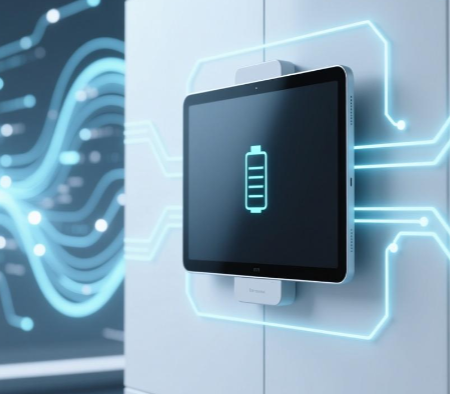
PoE wall tablet EU certification, CE RoHS compliance, EU market product approval
This article will carry out in-depth discussions in a systematic logical structure. First, it will introduce the background of PoE wall mount tablets entering the European market and clarify the important role of PoE wall tablet EU certification in market access. Then, it will technically explain the specific requirements and testing standards of relevant compliance certifications. Further, it will analyze the commercial impact of obtaining these certifications on equipment manufacturers and European market operations. Finally, it will verify the practical significance of complying with certification requirements through typical cases and summarize the core compliance certifications required for PoE wall mount tablets to enter the European market.
- Overview of PoE Wall Mount Tablets Entering the European Market
1.1 Market Background of PoE Wall Mount Tablets Exported to Europe
The European market is one of the important markets for global electronic equipment, with high consumer demand for high-quality, safe and environmentally friendly intelligent equipment. PoE wall mount tablets, with their advantages of PoE power supply, stable performance and flexible installation, are widely used in European commercial, industrial and public service fields, such as intelligent building control, office information release and industrial site monitoring.
However, the European Union has formulated a series of strict technical regulations and certification systems for imported electronic products to protect the safety of consumers, the environment and public interests. PoE wall mount tablets exported to the European market must pass the corresponding compliance certifications before they can be legally sold and used. The LCD IPS panel equipped with the tablets also needs to meet relevant European standards to ensure display quality and safety.
1.2 Core Significance of PoE Wall Tablet EU Certification for Market Access
PoE wall tablet EU certification is the key to PoE wall mount tablets entering the European market. It is not only a legal requirement for products to enter the European market, but also a manifestation of product quality and safety. Products that have obtained relevant certifications can gain the trust of European consumers and distributors, improving market acceptance.
In addition, PoE wall tablet EU certification also helps products avoid trade barriers. The European Union may impose restrictions or even bans on products that do not meet certification requirements, which will bring huge losses to manufacturers. Therefore, for manufacturers exporting PoE wall mount tablets to the European market, obtaining corresponding compliance certifications is an indispensable link.
1.3 Core Issue: Key Compliance Certifications for PoE Wall Mount Tablets in European Market
The core issue explored in this article is the compliance certifications that PoE wall mount tablets need to obtain when exported to the European market. There are many types of European compliance certifications, and different products have different certification requirements. For PoE wall mount tablets, which integrate PoE power supply, display and data transmission functions, it is necessary to clarify the key certifications that must be obtained.
This involves multiple aspects such as electrical safety, electromagnetic compatibility, environmental protection and product quality. By analyzing the specific requirements of these certifications, manufacturers can better carry out product design and testing, ensuring that products meet European market access standards. This is of great significance for manufacturers to expand the European market and enhance market competitiveness.
- Key Compliance Certifications for PoE Wall Mount Tablets Exported to European Market
2.1 CE Certification: Basic Requirement for PoE Wall Tablet EU Certification
CE certification is a mandatory certification for products to enter the European Economic Area (EEA). It indicates that the product meets the basic safety requirements of relevant European directives and can be freely circulated in the EEA. For PoE wall mount tablets, CE certification covers multiple directives, including the Low Voltage Directive (LVD) and the Electromagnetic Compatibility (EMC) Directive.
The LVD directive requires that PoE wall mount tablets must be safe under normal use conditions, with no electrical shock, fire and other hazards. The EMC directive requires that the product does not generate excessive electromagnetic interference to the surrounding environment and has good anti-interference ability. To obtain CE certification, manufacturers need to conduct relevant tests on products through qualified testing institutions and issue a declaration of conformity.
2.2 RoHS Compliance: Environmental Protection Requirement in PoE Wall Tablet EU Certification
CE RoHS compliance is an important part of PoE wall tablet EU certification, focusing on the restriction of hazardous substances in products. The RoHS directive restricts the use of six hazardous substances in electronic and electrical products, including lead, mercury and cadmium. PoE wall mount tablets must strictly control the content of these hazardous substances in raw materials and production processes to meet RoHS compliance requirements.
Manufacturers need to conduct testing on product components and materials to ensure that the content of each hazardous substance does not exceed the limit specified by the RoHS directive. CE RoHS compliance not only meets the environmental protection requirements of the European Union, but also reflects the manufacturer’s sense of social responsibility, which is conducive to improving the brand image of the product in the European market.
2.3 Other Relevant Certifications for EU Market Product Approval
In addition to CE and RoHS certifications, PoE wall mount tablets may also need to obtain other relevant certifications according to specific application scenarios to achieve EU market product approval. For example, if the product is used in medical, industrial control and other fields that require higher safety, it may need to obtain corresponding professional certifications.
In addition, for products with wireless communication functions, such as Wi-Fi and Bluetooth, they need to obtain the Radio Equipment Directive (RED) certification to ensure that the wireless communication performance meets European standards. These certifications complement each other, forming a complete certification system to ensure that PoE wall mount tablets can safely and reliably adapt to various application scenarios in the European market.
- Technical Requirements and Testing Standards for Compliance Certifications
3.1 Electrical Safety Testing Requirements for PoE Wall Tablet EU Certification
Electrical safety testing is an important part of PoE wall tablet EU certification. It mainly includes tests on insulation resistance, dielectric strength, leakage current and short-circuit protection of PoE wall mount tablets. The insulation resistance test ensures that the product has good insulation performance to prevent electrical shock hazards.
The dielectric strength test verifies the ability of the product to withstand overvoltage. The leakage current test ensures that the leakage current of the product during use is within a safe range. The short-circuit protection test checks whether the product’s short-circuit protection function can work normally to avoid fire and other hazards caused by short circuits. These tests must be carried out in accordance with European standard EN 60950-1 or other relevant standards.
3.2 Electromagnetic Compatibility Testing for CE RoHS Compliance
Electromagnetic compatibility testing is an important content of CE certification and an auxiliary requirement for CE RoHS compliance. It includes electromagnetic interference (EMI) testing and electromagnetic susceptibility (EMS) testing. EMI testing checks the electromagnetic radiation and conduction interference generated by PoE wall mount tablets during operation to ensure that they do not affect the normal operation of other electronic equipment.
EMS testing verifies the ability of the product to work normally in the surrounding electromagnetic environment, resisting interference from other equipment. The testing standards mainly refer to European standard EN 55022 for EMI and EN 55024 for EMS. Products must pass these tests to meet the electromagnetic compatibility requirements of the European Union.
3.3 Display Performance Testing Related to EU Market Product Approval
The display performance of PoE wall mount tablets also needs to meet relevant testing standards for EU market product approval. The LCD IPS panel used by the tablets needs to undergo tests on brightness, contrast, viewing angle, response time and other indicators. These tests ensure that the display effect of the product meets European market requirements and can provide clear and stable display content in different application environments.
In addition, the screen’s durability and reliability also need to be tested to ensure that it can maintain good performance during long-term use. The testing standards can refer to relevant European display product standards to ensure that the display part of the product meets the quality requirements of the European market.
- Commercial Impact of Obtaining Compliance Certifications
4.1 Impact on Manufacturers’ Access to European Market
Obtaining PoE wall tablet EU certification has a decisive impact on manufacturers’ access to the European market. Without relevant certifications, products cannot be legally sold in the European Economic Area, which means manufacturers will lose the huge European market. With CE, RoHS and other certifications, manufacturers can smoothly enter the European market and expand their sales channels.
In addition, certifications can enhance the competitiveness of products in the European market. European consumers and distributors pay more attention to product quality and safety, and certified products are more likely to gain their trust. This helps manufacturers establish a good market reputation in Europe and increase product sales volume.
4.2 Impact on Manufacturers’ Production Costs and Product Pricing
Obtaining compliance certifications will have a certain impact on manufacturers’ production costs. The process of product design, testing and certification requires a certain amount of investment, including the cost of hiring professional testing institutions, the cost of modifying product design to meet certification requirements, and the cost of long-term follow-up certification maintenance.
These costs will be reflected in the product pricing, which may make the price of certified PoE wall mount tablets slightly higher than that of uncertified products. However, from a long-term perspective, the market access and competitive advantages brought by certifications far outweigh the increased costs. For manufacturers, it is a necessary investment to obtain long-term development in the European market.
4.3 Impact on Market Competition Pattern of European Intelligent Terminal Equipment
The compliance certification requirements of the European market also affect the market competition pattern of intelligent terminal equipment. Manufacturers that can quickly obtain PoE wall tablet EU certification and produce products that meet European standards can gain a first-mover advantage in the market, occupying more market share.
On the contrary, manufacturers that cannot meet the certification requirements will be eliminated from the European market. This promotes the optimization and upgrading of the industry, prompting manufacturers to pay more attention to product quality, safety and environmental protection. At the same time, it also reduces the phenomenon of low-quality and low-price competition in the market, creating a fairer competition environment for qualified manufacturers.
- Typical Application Cases
5.1 Case of a Chinese Manufacturer Obtaining CE and RoHS Certifications for PoE Wall Mount Tablets
A Chinese manufacturer specializing in the production of intelligent terminal equipment plans to export PoE wall mount tablets to the European market. The manufacturer is well aware of the importance of PoE wall tablet EU certification, so it starts to carry out product design and testing in accordance with CE and RoHS certification requirements at the early stage of product development.
The manufacturer optimizes the product’s electrical circuit design to meet the electrical safety requirements of the LVD directive, and strictly selects raw materials to control the content of hazardous substances to meet CE RoHS compliance. After repeated testing and modification, the product successfully obtains CE and RoHS certifications. With the certifications, the manufacturer’s PoE wall mount tablets smoothly enter the European market and are well received by local customers. The clear display effect of the LCD IPS panel also wins the recognition of users. This case shows that obtaining relevant compliance certifications is the key for manufacturers to enter the European market.
5.2 Case of a European Distributor Requiring PoE Wall Mount Tablets to Have Complete Certifications
A large European electronic product distributor has strict requirements for the products it distributes. When selecting PoE wall mount tablets, the distributor clearly requires that the products must have complete PoE wall tablet EU certification, including CE, RoHS and RED certifications (for products with wireless functions).
The distributor believes that certified products can ensure the safety and quality of products, reducing the risk of after-sales problems and legal disputes. It has rejected cooperation with multiple manufacturers whose products do not meet the certification requirements. This case reflects the high attention paid to compliance certifications by European market distributors, and also shows that certifications are an important condition for manufacturers to cooperate with European distributors.
5.3 Case of a PoE Wall Mount Tablet Manufacturer Optimizing Products Based on Certification Requirements
A manufacturer of PoE wall mount tablets found that its products failed to pass the electromagnetic compatibility test during the process of applying for PoE wall tablet EU certification. To solve this problem, the manufacturer organized technical personnel to conduct in-depth research and optimized the product’s shielding design and circuit layout.
After optimization, the product successfully passed the electromagnetic compatibility test and obtained CE certification. In the process of optimizing the product, the manufacturer also improved the product’s stability and reliability. The optimized product not only meets the requirements of the European market, but also has improved performance in the domestic market. This case shows that the process of obtaining compliance certifications can also promote manufacturers to optimize product design and improve product quality.
- Conclusion
PoE wall mount tablets exported to the European market need to obtain a series of compliance certifications, among which PoE wall tablet EU certification represented by CE certification is the basic requirement, CE RoHS compliance is the environmental protection requirement, and other relevant certifications according to application scenarios are supplementary requirements for EU market product approval.
These certifications cover multiple aspects such as electrical safety, electromagnetic compatibility, environmental protection and product quality. Manufacturers need to conduct product design and testing in accordance with relevant technical requirements and testing standards to ensure that products meet the certification standards.
From the commercial perspective, obtaining these compliance certifications is the key for manufacturers to enter the European market, which can help manufacturers gain market trust, expand sales channels and enhance market competitiveness. Although obtaining certifications will increase certain production costs, it is a necessary investment for long-term development in the European market. The typical cases of Chinese manufacturers, European distributors and product optimization based on certification requirements fully verify the practical significance of compliance certifications for PoE wall mount tablets to enter the European market.
With the continuous improvement of European market regulatory requirements, the requirements for compliance certifications will become more and more strict. Manufacturers need to pay close attention to the update of European certification standards and timely adjust product design and testing strategies to ensure that products can always meet the market access requirements.
They should strengthen the research and development of core technologies, improve the level of product design and production, and take compliance certifications as an important part of product quality management. At the same time, manufacturers can also strengthen cooperation with professional certification institutions to improve the efficiency of certification and reduce certification risks.
Top Tier PoE Wall Tablet EU Certification Guide 14


Leave a Reply
You must be logged in to post a comment.