

Why do enterprise-grade wall mount tablets focus more on processor stability than peak performance?
Enterprise tablet processor stability is the core demand for enterprise-grade wall mount tablets in practical applications. Compared with consumer-grade tablets that pursue temporary smoothness and high performance, enterprise-grade wall mount tablets are often used in long-term continuous operation scenarios such as enterprise office, industrial control, and public security monitoring. Therefore, they pay more attention to processor stability rather than peak performance. Clarifying the reasons for this focus is of great significance for enterprises to select suitable wall mount tablets and ensure the stable operation of business systems.
This article focuses on enterprise tablet processor stability, starting from the application characteristics of enterprise-grade wall mount tablets, deeply analyzing the technical connotation of processor stability and the limitations of peak performance in enterprise scenarios, exploring the commercial impact brought by focusing on processor stability, listing typical enterprise application scenarios, and finally drawing conclusions and putting forward targeted suggestions to provide professional reference for enterprise procurement personnel and relevant industry practitioners.
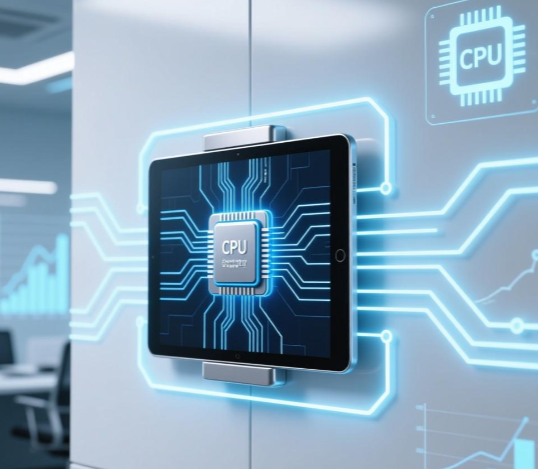
Enterprise tablet processor stability, Long-term operation reliability, Peak performance vs stability
- Introduction
1.1 Application Characteristics of Enterprise-Grade Wall Mount Tablets
Enterprise-grade wall mount tablets are important terminal equipment in enterprise digital transformation, with obvious differences from consumer-grade tablets in application scenarios and usage requirements. Firstly, they have the characteristics of long-term continuous operation. Most enterprise-grade wall mount tablets need to run 24 hours a day and 7 days a week, undertaking core business tasks such as data collection, information display, and command and control. Once they stop running due to failures, it may cause serious losses to the enterprise.
Secondly, the application environment is complex. They may be used in harsh environments such as high temperature, low temperature, and strong electromagnetic interference in industrial workshops, as well as in public areas with large personnel flow such as enterprise lobbies and office buildings. This puts higher requirements on the adaptability and stability of the equipment. Finally, the data processing is highly reliable. Enterprise-grade wall mount tablets often need to process sensitive business data of the enterprise. The stability of data processing directly affects the accuracy and security of business decisions.
1.2 The Core Position of Enterprise Tablet Processor Stability in Enterprise Applications
The processor is the “brain” of enterprise-grade wall mount tablets, and its performance directly determines the overall operation effect of the tablet. In enterprise applications, enterprise tablet processor stability is in a core position. Stable processor operation can ensure that the tablet continuously and reliably completes various business tasks, avoiding system crashes, freezes, and data loss caused by processor failures.
Compared with peak performance, which represents the maximum processing capacity of the processor in a short time, processor stability is more related to the long-term reliable operation of the enterprise business system. For example, in the enterprise access control and attendance system, the wall mount tablet needs to continuously process employee attendance data and access verification requests. Only with stable processor operation can the normal progress of attendance management and access control work be guaranteed. Therefore, enterprise-grade wall mount tablets take enterprise tablet processor stability as the primary indicator in the design and production process.
1.3 Current Status of Enterprise Cognition on Processor Stability and Peak Performance
At present, some enterprises still have misunderstandings in the selection of enterprise-grade wall mount tablets, blindly pursuing processors with high peak performance, ignoring the importance of enterprise tablet processor stability. This is mainly because some equipment manufacturers overemphasize peak performance parameters in product promotion, making enterprises ignore the actual application needs.
In addition, some enterprise procurement personnel lack professional knowledge of tablet hardware, and it is difficult to accurately distinguish the importance of processor stability and peak performance in enterprise scenarios. This often leads to the selection of wall mount tablets that are not suitable for enterprise actual needs, resulting in frequent system failures, increased maintenance costs, and even affecting the normal operation of the enterprise’s core business. Therefore, it is urgent to clarify the reasons why enterprise-grade wall mount tablets focus on processor stability, helping enterprises establish a correct selection concept.
1.4 Significance of Exploring the Reasons for Focusing on Processor Stability
Exploring why enterprise-grade wall mount tablets focus more on processor stability than peak performance can help enterprises accurately grasp the core needs of enterprise-grade terminal equipment, avoid wrong choices in the procurement process, and reduce procurement and operation and maintenance costs. For equipment manufacturers, it can provide a clear direction for product research and development, guiding them to focus on improving processor stability and developing products that are more in line with enterprise application needs.
For the entire industry, it is conducive to standardizing the market competition order of enterprise-grade wall mount tablets, promoting the healthy development of the industry, and improving the overall level of enterprise digital construction. In addition, this exploration can also enrich the theoretical system of enterprise terminal equipment selection, providing important theoretical support for the development of related fields.
- Technical Explanation
2.1 Core Connotation of Enterprise Tablet Processor Stability
Enterprise tablet processor stability refers to the ability of the processor of enterprise-grade wall mount tablets to maintain stable and reliable operation for a long time under specified working conditions, without failures such as crashes, freezes, or reduced performance. It includes multiple aspects such as voltage stability, frequency stability, temperature control stability, and compatibility stability with other hardware and software.
Voltage stability ensures that the processor can work normally under fluctuating power supply voltages; frequency stability ensures that the processor can maintain a stable operating frequency and avoid performance fluctuations caused by frequency jitter; temperature control stability ensures that the processor can effectively dissipate heat and maintain a safe operating temperature even under long-term high-load operation; compatibility stability ensures that the processor can work harmoniously with other components such as memory, hard disk, and operating system, avoiding conflicts and failures.
2.2 Limitations of Peak Performance in Enterprise Application Scenarios
Peak performance refers to the maximum processing capacity that the processor can achieve under ideal test conditions, which is often a theoretical value. In actual enterprise application scenarios, peak performance has obvious limitations. Firstly, peak performance can only be maintained for a short time. Most enterprise-grade wall mount tablets are in long-term medium and low-load operation, and there are few opportunities to use peak performance. Blindly pursuing peak performance will not only fail to improve business efficiency but also increase energy consumption and hardware loss.
Secondly, the exertion of peak performance is affected by many factors such as the operating system, software optimization, and ambient temperature. Even if the processor has high peak performance, if the supporting software and hardware are not optimized, it will be difficult to exert its due performance. Finally, high peak performance often means complex processor architecture and high integration, which may reduce the stability of the processor and increase the probability of failures. Therefore, peak performance cannot fully reflect the actual application value of enterprise-grade wall mount tablets.
2.3 Technical Requirements for Ensuring Enterprise Tablet Processor Stability
Ensuring enterprise tablet processor stability requires strict technical requirements in the processor design, production, and testing links. In the design link, it is necessary to adopt a mature and stable processor architecture, optimize the power management module and heat dissipation design, and improve the adaptability of the processor to complex environments. For example, using a multi-core low-frequency architecture can balance performance and power consumption while ensuring stability.
In the production link, it is necessary to use high-quality electronic components and strict production processes to reduce the failure rate of the processor. In the testing link, it is necessary to carry out a series of strict tests on the processor, such as long-term stability testing, high and low temperature testing, electromagnetic compatibility testing, and voltage fluctuation testing. Only processors that pass all tests can be used in enterprise-grade wall mount tablets. In addition, the matching optimization between the processor and the operating system and application software is also an important part of ensuring stability, which can reduce software and hardware conflicts and improve the overall stability of the system.
2.4 Relationship Between Enterprise Tablet Processor Stability and Long-Term Operation Reliability
Enterprise tablet processor stability and long-term operation reliability are closely related, and the former is the core guarantee of the latter. Long-term operation reliability refers to the ability of enterprise-grade wall mount tablets to maintain normal operation for a long time without failures. For enterprise-grade equipment, long-term operation reliability is a key indicator to measure product quality.
Only with stable processor operation can the tablet ensure the normal operation of other components and avoid system failures caused by processor problems. For example, in the industrial control system, the wall mount tablet needs to continuously collect production data and issue control commands. If the processor is unstable, it may cause data collection errors or command issuance delays, affecting the normal progress of production. Therefore, enterprise tablet processor stability is the foundation of long-term operation reliability, and improving processor stability is an important way to enhance the long-term operation reliability of enterprise-grade wall mount tablets.
2.5 Comparison Between Processor Stability and Peak Performance in Enterprise Scenarios
In enterprise application scenarios, there are obvious differences between processor stability and peak performance in terms of practical value and impact on business. From the perspective of practical value, processor stability is directly related to the continuous operation of the business system, while peak performance only affects the processing speed of individual tasks in a short time. In most enterprise scenarios, such as daily office data processing and real-time monitoring information display, the requirements for processor performance are within a reasonable range, and stable operation is more important than temporary high speed.
From the perspective of business impact, processor instability may lead to system crashes, data loss, and business interruptions, bringing direct economic losses to the enterprise; while insufficient peak performance may only reduce the efficiency of individual tasks and have little impact on the overall business. Therefore, in the selection and use of enterprise-grade wall mount tablets, enterprises should prioritize processor stability and rationally view peak performance, instead of blindly pursuing high peak performance.
- Commercial Impact
3.1 Impact on Enterprise-Grade Wall Mount Tablet Manufacturers
Enterprise tablet processor stability has an important impact on the market competition strategy and product research and development direction of enterprise-grade wall mount tablet manufacturers. Manufacturers that focus on improving processor stability can better meet the core needs of enterprises, gain more market recognition, and occupy a favorable position in the fierce market competition. For example, manufacturers that adopt mature and stable processors and carry out strict stability testing are more likely to win large enterprise orders.
In terms of product research and development, manufacturers need to increase investment in processor stability technology, optimize product design, and improve product quality. This may increase the production cost of products in the short term, but in the long run, it can enhance the brand image and customer loyalty of manufacturers, bringing more economic benefits. In addition, manufacturers can also take enterprise tablet processor stability as a core selling point to distinguish their products from competitors and form a unique market advantage.
3.2 Impact on Enterprise Procurement and Operation Costs
Focusing on enterprise tablet processor stability can help enterprises reduce procurement and operation costs. In terms of procurement costs, although the initial procurement cost of enterprise-grade wall mount tablets with high stability may be higher, their low failure rate and long service life can reduce the frequency of equipment replacement, thereby reducing long-term procurement costs.
In terms of operation and maintenance costs, stable processor operation can reduce the probability of system failures, reducing the workload of operation and maintenance personnel and the cost of maintenance materials. At the same time, avoiding business interruptions caused by equipment failures can also reduce the economic losses caused by business downtime. For example, a stable access control tablet can avoid the cost of rework and personnel deployment caused by attendance data loss due to system crashes.
3.3 Impact on Enterprise Business Efficiency and Risk Control
Enterprise tablet processor stability directly affects enterprise business efficiency and risk control. Stable operation of wall mount tablets can ensure the continuous progress of business processes, avoiding delays and interruptions caused by equipment failures. For example, in the enterprise’s production scheduling system, stable wall mount tablets can ensure the real-time transmission and processing of production scheduling information, improving production efficiency.
In terms of risk control, stable processor operation can ensure the security and integrity of business data, avoiding data loss and errors caused by system failures. This is particularly important for enterprises in financial, legal, and other industries that have strict requirements on data security. In addition, stable equipment operation can also enhance the enterprise’s ability to respond to emergencies, reducing the risk of business disruption caused by equipment problems.
3.4 Impact on the Development of the Enterprise Terminal Equipment Industry
The widespread attention to enterprise tablet processor stability has promoted the transformation and upgrading of the enterprise terminal equipment industry. It has guided manufacturers to shift their focus from blind pursuit of peak performance to improving product stability, promoting the optimization of the industrial structure. Manufacturers are more willing to invest in R&D of stable and reliable technologies, which has improved the overall technical level of the industry.
At the same time, the demand for processor stability has also driven the development of related supporting industries, such as high-quality processor chip manufacturers, testing equipment manufacturers, and technical service providers. The development of these industries has provided better technical support for the production and application of enterprise-grade wall mount tablets, promoting the healthy and sustainable development of the entire enterprise terminal equipment industry. In addition, the emphasis on stability has also promoted the formulation and improvement of industry standards, standardizing market competition and protecting the legitimate rights and interests of enterprises.
- Typical Use Cases
4.1 Enterprise Office Access Control and Attendance Scenario
In the enterprise office access control and attendance scenario, enterprise-grade wall mount tablets are used for employee identity verification, attendance data collection, and access permission management. These tablets need to run continuously during working hours, and even 24 hours a day in some cases. Enterprise tablet processor stability is crucial to ensure the normal operation of the access control and attendance system.
Stable processor operation can ensure that the tablet quickly and accurately completes employee identity verification, avoiding queuing and congestion at the entrance. At the same time, it can ensure the real-time and accurate collection and transmission of attendance data, providing reliable data support for enterprise personnel management. If the processor is unstable, it may cause system crashes, leading to the failure of employee attendance registration and access control verification, affecting the normal office order of the enterprise.
4.2 Industrial Control Production Scheduling Scenario
In the industrial control production scheduling scenario, enterprise-grade wall mount tablets are installed in workshops and production lines, responsible for displaying production data in real time, receiving production scheduling commands, and feeding back production status. These tablets need to work in harsh environments such as high temperature and strong electromagnetic interference for a long time, and have extremely high requirements for enterprise tablet processor stability.
Stable processor operation can ensure the real-time and accurate display of production data, avoiding errors in production scheduling caused by data delay or loss. At the same time, it can ensure the timely execution of production commands, ensuring the smooth progress of the production process. If the processor fails, it may cause the interruption of the production scheduling system, leading to production stagnation and huge economic losses.
4.3 Enterprise Digital Signage and Information Release Scenario
In the enterprise digital signage and information release scenario, enterprise-grade wall mount tablets are used to display enterprise culture, product information, notice announcements, and other content in public areas such as enterprise lobbies and exhibition halls. These tablets need to run continuously for a long time to ensure the continuous display of information.
Enterprise tablet processor stability can ensure that the tablet runs smoothly for a long time without crashes or black screens, ensuring the normal release of enterprise information. Stable operation can also avoid the impact on the enterprise image caused by equipment failures. For example, if the tablet in the enterprise lobby crashes, it will affect the first impression of visitors on the enterprise.
4.4 Enterprise Security Monitoring and Command Scenario
In the enterprise security monitoring and command scenario, enterprise-grade wall mount tablets are used to display real-time monitoring images, receive alarm information, and issue command and control instructions. These tablets are the core terminal of the security monitoring system, requiring 24-hour continuous and stable operation.
Stable processor operation can ensure the smooth display of real-time monitoring images, avoiding frame freezing or blurring caused by processor performance problems. At the same time, it can ensure the timely response to alarm information, enabling security personnel to take measures quickly. If the processor is unstable, it may cause the monitoring system to fail, making it impossible to timely detect and handle security incidents, and increasing the security risk of the enterprise.
4.5 Enterprise Financial Data Processing Scenario
In the enterprise financial data processing scenario, enterprise-grade wall mount tablets are used for financial data entry, statistics, and query. These tablets need to process a large amount of sensitive financial data, requiring high stability and security of the processor.
Enterprise tablet processor stability can ensure the accurate processing of financial data, avoiding data errors or loss caused by system crashes. Stable operation can also ensure the security of financial data, preventing data leakage caused by processor vulnerabilities. For financial departments, the stability of the tablet directly affects the normal progress of financial work and the security of enterprise assets.
- Conclusion
5.1 Summary of the Reasons for Enterprise-Grade Wall Mount Tablets Focusing on Processor Stability
Enterprise-grade wall mount tablets focus more on enterprise tablet processor stability than peak performance, which is determined by their application characteristics and enterprise business needs. The long-term continuous operation, complex application environment, and high-reliability data processing requirements of enterprise-grade wall mount tablets require the processor to have stable and reliable operation capabilities.
Peak performance has obvious limitations in enterprise application scenarios, and cannot meet the requirements of long-term stable operation of enterprise business systems. Enterprise tablet processor stability is the core guarantee of long-term operation reliability, and has a more important impact on enterprise business efficiency and risk control than peak performance. Therefore, focusing on processor stability is the inevitable choice of enterprise-grade wall mount tablets.
5.2 Suggestions for Enterprise-Grade Wall Mount Tablet Manufacturers
For enterprise-grade wall mount tablet manufacturers, first of all, they should take enterprise tablet processor stability as the core of product research and development, increase investment in stability technology, adopt mature and stable processor chips, optimize product design such as heat dissipation and power management, and improve the overall stability of products. Secondly, they should establish a strict product testing system, conduct comprehensive and in-depth stability tests on products, and ensure that products meet the application requirements of enterprise scenarios.
In addition, manufacturers should strengthen communication and cooperation with enterprises, understand the actual needs of different industries and scenarios for processor stability, and develop targeted products. They should also strengthen the publicity and popularization of processor stability, guide enterprises to establish a correct product selection concept, and avoid blind pursuit of peak performance. Finally, manufacturers should pay attention to the development of new technologies, continuously improve the stability and performance of processors, and maintain market competitiveness.
5.3 Suggestions for Enterprise Procurement Personnel
For enterprise procurement personnel, first of all, they should establish a correct selection concept, prioritize enterprise tablet processor stability when selecting enterprise-grade wall mount tablets, and not blindly pursue peak performance parameters. They should conduct in-depth investigations on the application scenarios and business needs of the enterprise, and select products that are suitable for the enterprise’s actual situation.
Secondly, procurement personnel should pay attention to the stability test reports and after-sales service guarantees of products, select manufacturers with strong technical strength and good reputation. They can conduct on-site tests on products, simulate the actual application environment of the enterprise, and verify the stability of the product processor. In addition, procurement personnel should strengthen the learning of professional knowledge, improve their ability to distinguish product quality, and avoid economic losses caused by wrong procurement.
5.4 Suggestions for Enterprise Operation and Maintenance Personnel
For enterprise operation and maintenance personnel, first of all, they should establish a regular equipment maintenance system, conduct regular inspections and maintenance on enterprise-grade wall mount tablets, check the operating status of the processor, and find and solve potential problems in a timely manner. They should pay attention to the heat dissipation of the equipment, ensure that the processor works within a safe temperature range, and avoid performance degradation or failures caused by overheating.
Secondly, operation and maintenance personnel should strengthen the optimization of the operating system and application software, reduce software and hardware conflicts, and improve the overall stability of the system. They should also establish a fault response mechanism, quickly handle equipment failures caused by processor problems, and minimize the impact of failures on the business. In addition, operation and maintenance personnel should collect and sort out fault data, provide feedback to manufacturers, and help manufacturers improve product quality.
5.5 Future Development Trend of Enterprise Tablet Processor Stability
In the future, with the continuous development of enterprise digital transformation and the continuous improvement of enterprise requirements for terminal equipment, enterprise tablet processor stability will face higher requirements. On the one hand, with the wide application of technologies such as 5G, artificial intelligence, and the Internet of Things, enterprise-grade wall mount tablets will bear more complex tasks, requiring processors to have higher stability and compatibility.
On the other hand, the requirements for energy saving and environmental protection of enterprise equipment will also be continuously improved, requiring processors to maintain stable operation while reducing energy consumption. In addition, the integration of processor stability monitoring and early warning technologies will become a new development trend. Through real-time monitoring of processor operating status, potential failures can be predicted in advance, and preventive measures can be taken to improve the reliability of equipment operation.
Manufacturers, enterprises, and relevant research institutions should work together to promote the innovation and development of enterprise tablet processor stability technology. Manufacturers should increase R&D investment, develop more stable and efficient processors; enterprises should put forward clear requirements for processor stability, and promote the improvement of product quality through market demand; research institutions should strengthen theoretical research and provide technical support for the development of the industry. Only in this way can the enterprise terminal equipment industry develop in a healthier and more sustainable direction, providing strong support for enterprise digital transformation.
Trusted Enterprise Tablet Processor Stability Guide 3


Leave a Reply
You must be logged in to post a comment.